
Advertisement
Cashed-up seniors with multimillion-dollar homes are in some cases eligible for double the concessions and financial support of a single mother who rents, a leading think tank has found, prompting calls for an overhaul of how governments spend $12 billion in cost-of-living measures.
The Policy Institute Australia report, published on Tuesday, said wealthy households gain significant benefit from a jumble of payments ranging from energy rebates to the NSW government’s toll relief measures. It proposed these be replaced with a single lump-sum to help lower-income households fund expenses such as council rates and public transport.
The top 40 per cent of Australians by income or wealth received $3.6 billion in cost of living support and other concessions from Commonwealth, state and territory governments this year, according to the report titled Hit or Miss: Who benefits from state concessions and cost-of-living support?
The institute’s principal economist Nicholas Tarrant said the costly patchwork of existing policies, which had built up over decades, was no longer providing support to people who needed it most.
Advertisement
“It’s a judgment of, what is the point of cost-of-living relief? Is the point to support those really struggling or is the point to give money to everyone?” he said.
“Support is too often based on how much petrol or energy you use, or how much your home is worth, but this favours the well-off. If state governments want to help with cost-of-living pressures, they need to rethink the way they do it.”
One of the problems, the institute argued, was that NSW and other jurisdictions tied eligibility for some supports to the Commonwealth seniors health card, which is available to those who have reached age pension age, but do not qualify for Centrelink support. That means, for example, a wealthy retired couple with a home worth $5 million, as well as up to $5 million in assets, was still eligible for a $200 energy rebate each year.
The report also used an example of a retiree who held a pensioner concession card and had a $3 million home they owned outright, $500,000 in superannuation, and a car, receiving $2800 in benefits a year. That was compared to a single mother who rented and caught the bus, who might get $1500 a year.
Advertisement
Another factor was that concessions – ongoing discounts for common household expenses such as energy bills, rates and public transport – are often linked to consumption (such as how much energy a household uses) or asset ownership in NSW. This means financial support flows to well-off households who consume more, or those who own homes and cars. An example was the NSW government’s recently announced $100 discount on all car registration fees.
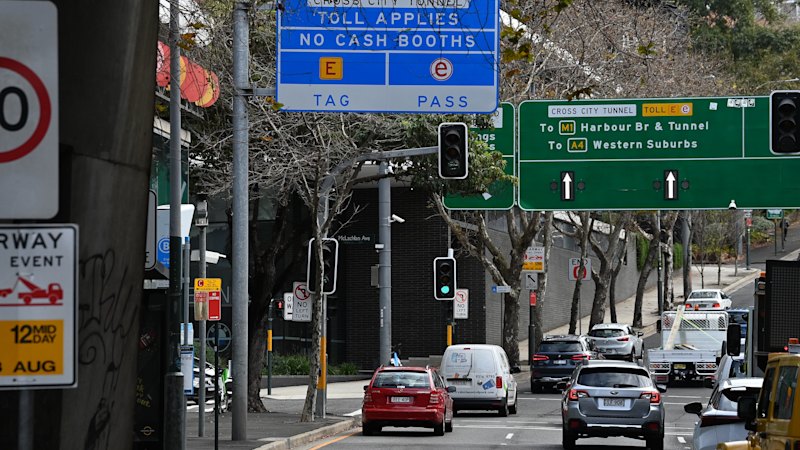
There is a similar pattern for Sydney road toll users; high-income households tend to drive more, and spend more on tolls, than those on lower incomes, so many well-off drivers qualify for a significant amount of toll relief.
The report found this pattern applies in Western Sydney which has the highest number of motorists who qualify for the state government’s toll rebate.
“The distribution of benefits to higher-income earners is most likely playing out in Western Sydney … with higher-income earners receiving more of the benefits,” it said.
Advertisement
The institute estimates that, of the $2.7 billion in supports delivered Australia-wide after the fuel crisis earlier this year, about $700 million was provided to the top 20 per cent of income earners.
The report found the NSW government spends $3.8 billion a year on concessions and cost-of-living support, or 7.3 per cent of all tax revenue raised by the NSW government.
Tarrant said that, as NSW residents prepared to head to polling booths next March, the government might feel the “temptation to spend more” on concessions and financial benefits.
“The better response would be to fix how the current support is delivered,” Tarrant said.
The report identified NSW’s active and creative kids vouchers, which targeted families receiving the family tax benefit. This reduced the number of eligible families from 1.35 million to 600,000, directing most benefits to the bottom 40 per cent of families with school-aged children by income.
Advertisement
The institute recommended NSW consolidate existing concessions into a cost-of-living allowance paid through Service NSW and targeted at lower-means households for living costs.
This could provide households with a pensioner concession card or health care card with about $2400 per year.
The report suggested NSW should tie support for older Australians to those with a pensioner concession card, and specifically those on a full age pension.
“The NSW Seniors Card, which is mostly held by wealthy retirees, should not be used to determine concession eligibility. These changes could save around $300 million a year.”
Start the day with a summary of the day’s most important stories. Sign up for our Morning Edition newsletter.
You have reached your maximum number of saved items.
Remove items from your saved list to add more.
More:
Jessica McSweeney is a reporter at The Sydney Morning Herald covering state politics and urban affairs.Connect via email.Matt Wade is a senior economics writer at The Sydney Morning Herald.Connect via X or email.AdvertisementAdvertisement