The Justice Secretary has maintained that prisons will “still function properly” amid concerns over ministerial plans to convert laundries into cells to cope with overcrowding.
Alex Norris stated that “hundreds of places” would be created by adapting current spaces within facilities into living quarters.
He refused to validate Conservative claims that the prison capacity is 700 places lower than last year, pointing out that the estate “fluctuates” due to occurrences such as fire damage.
Appearing on broadcast networks on Tuesday morning, Mr Norris prepared to announce a £110 million investment in Parliament to accelerate the creation of extra cells.
He is also expected to outline an early release scheme to MPs aimed at keeping prisons from reaching maximum capacity.
Using fast-tracked funding from current budgets, the Government intends to redevelop shared spaces and administrative offices to accommodate detainees.
Asked where clothes would be washed if laundry rooms were converted into cells, Mr Norris told BBC Breakfast: “Of course we’re going to make sure that the prisons can still function properly.
“This is a creative look, as I say, around our estate and being able to use some space that we can re-prioritise.”
He said wider plans – including building entire new prisons – would see 14,000 new places on top of the 3,200 prison places delivered in the last two years, “but that takes time”, while the conversion plans would add “in the hundreds of spaces”.
“In a system that’s running very hot, a few hundred places here and there makes a really big difference,” the Cabinet minister said.
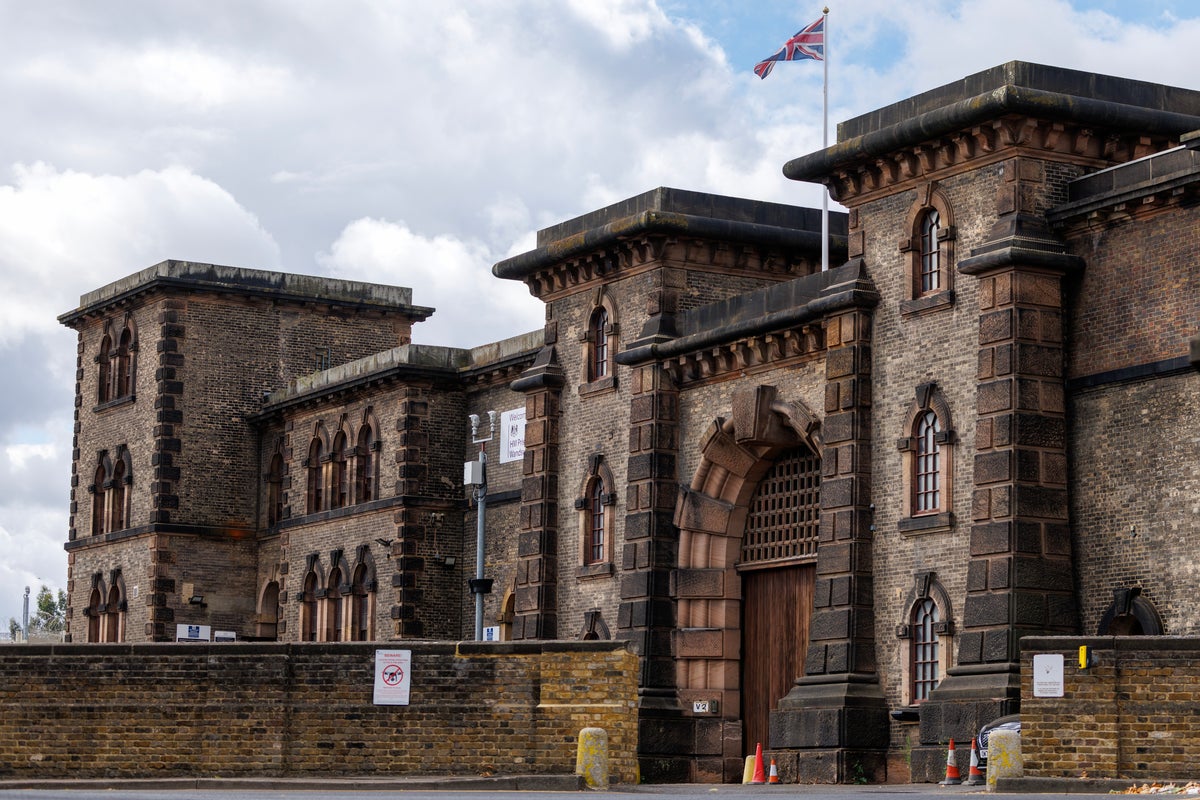
Pressed on the Conservatives’ claim that there are 700 fewer prison places than in 2025, Mr Norris said the estate “fluctuates” because of planned and unplanned events affecting the Victorian-era buildings.
He told Times Radio: “Those wouldn’t necessarily be the numbers I’d use, but it is possible that places come out of the estate. For example, you know, there can be damage, fire damage. We’ve got a very old estate.”
Elsewhere, ministers have signed off on a contract that will pave the way for a new 1,700-capacity prison in Lancashire.
Over the weekend, Prime Minister Andy Burnham announced that the killers of Thames Valley police officer Andrew Harper will be excluded from early release, following significant public backlash.
Mr Burnham initially resisted pressure to narrow the scheme further after it emerged that Albert Bowers and Jessie Cole, convicted of Pc Harper’s manslaughter in 2020, would be eligible next year.
Certain offenders serving indefinite prison sentences, which were abolished in 2012, will also be freed through legislation to be introduced before the end of this Parliament, the Prime Minister promised.
Around 5,000 prisoners were due to be released early from October under measures to ease overcrowding, down from 6,000 after ministers stepped in to exempt rapists and “serious” child sex offenders.
Further capacity will be created through the deportation of foreign offenders and the release of inmates serving indefinite sentences under imprisonment for public protection sentences (IPPs).
However, changes regarding IPPs could take years to implement and will not form part of the initial wave of measures.
Thames Valley’s chief constable Jason Hogg cautioned on Monday that monitoring and tagging individuals granted early release will prove “difficult” for forces across the country.
He said: “The police haven’t received any additional funding for this additional work, so I’m going to be having to move resources away from one area of business to another to seek out, arrest, and bring before the court individuals who don’t follow the restrictions that they will be set.
“For example, their tagging restrictions. We don’t quite know what the demand will be on that, but I think it’ll be reasonably high, so it’s definitely more work for us.”