
As assisted dying bill returns to Commons, families recall loved ones’ battle to ‘go out on own terms’
Elise Burns and Keith Williams appeared in campaign filmed by Rankin this year – both were denied their wishes, but their relatives are picking up the baton
The feeling, said Sarah Burns of her sister’s last days, is one of overwhelming guilt.
“You feel really guilty, and helpless,” she says. “Because we knew what she wanted. We really did know. But we couldn’t do anything.”
When time eventually ran out for Elise Burns, a 52-year-old woman who worked in publishing, the circumstances were “absolutely her worst nightmare”. Initially treated for breast cancer and subsequently diagnosed with terminal secondary cancer, which had spread to her liver, lungs and bones, Elise had campaigned passionately for the assisted dying bill, daring the peers who ensured it ran out of time to “look me in the eye”.
As part of the Dignity in Dying campaign, she was one of eight terminally ill people who appealed directly to MPs in powerful videos, filmed by the world renowned British photographer and director Rankin.
She died on 22 July – the second of the eight terminally ill people who featured in the Rankin videos, which were filmed in May, to go. The first, Keith Williams, a 77-year-old former welder who became a social worker, died of lung cancer on 16 June, having also been denied, according to his son, his desperate wish to “go out on my own terms”.
The controversial bill, reintroduced by Lauren Edwards, the Labour MP for Rochester and Strood, returns to the Commons for a second reading on 11 September. Andy Burnham has already said he will not vote to avoid influencing the emotional debate.
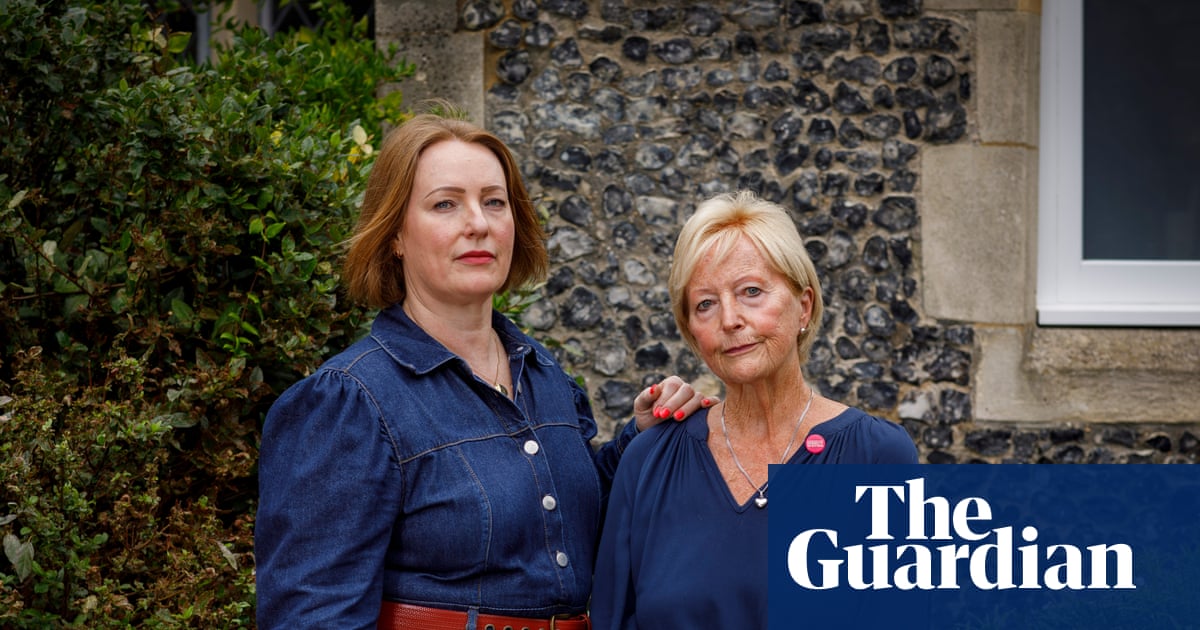
Burns will be at the Commons, carrying the baton for her sister, who was from Faversham, and was one of the last people Edwards heard from before reviving Kim Leadbeater’s private member’s bill, bringing it back to parliament after it foundered under the weight of hundreds of amendments by peers in the Lords.
“I would simply like the chance to put a human dying face to what this debate really means for terminally ill people like me,” Elise Burns wrote to Edwards. “For me this is not about politics or ideology, it’s about dignity, compassion and the possibility of having some choice at the end of life.”
After her secondary cancer diagnosis, Elise wanted to “live life to the full” but also started talking seriously about Dignitas, the Swiss assisted dying clinic. “She said all along ‘I do not want a painful death’. And literally every day was painful,” said her sister.
In the end, the speed of events deprived her of that choice. At the beginning of July, just two months after shooting her Rankin video, she developed an infection and was hospitalised. Sixteen days later, she was moved to a hospice, dying two days later.
“The hospice was incredible, trying to make her as comfortable as possible, all the time,” said Burns. “But legally there is only so much they can do. They all knew her wishes.”
The family were left feeling utterly helpless.
Why have efforts to bring in assisted dying law been thwarted?Read more
More than 100 cross-party peers have written to MPs urging them to send the bill back to the House of Lords so that it can complete its passage through parliament.
The signatories, including the former cabinet secretary Gus O’Donnell, the former Labour leader Neil Kinnock and the former Scottish Tory leader Ruth Davidson, said the upper house’s failure to pass the legislation in the previous session had let terminally ill people and their families down and blocked a measure which had public support.
They accused a minority of peers who had opposed the backbench bill of filibustering after hundreds of amendments tabled by just seven opponents meant it ran out of time.
They wrote: “As even opponents of the principle of assisted dying in the Lords have acknowledged, the elected chamber has every right to ask us to do this. The overwhelming majority of the public – who vote for you but do not vote for us – expect the same.
“And the many terminally ill people and their families who are depending on parliament to pass this long overdue change to the law should not be asked to wait any longer than absolutely necessary for us to come to a decision.”
Marc Williams, Keith Williams’ son, has written directly to Burnham, describing the circumstances surrounding the death of his father, who was a committed campaigner for the bill.
“Dad could have chosen to fly to Switzerland to end his life, but he would have needed to go in November to ensure that he was still fit enough to be able to travel and to endure the loneliest journey imaginable,” Williams, a civil servant, told the prime minister. For the “dignified death” he sought, his father “would have been forced to end his life prematurely”.
Keith Williams, who was a canoeing instructor from Tonyrefail, the Rhondda, was diagnosed in 2023 with prostate cancer and undergoing radiotherapy, which left him with distressing long-term side effects. Last October, he was diagnosed with lung cancer and pulmonary fibrosis. He died on 16 June.
“Dad had some red lines. He wanted to die at home. He was: ‘I want to go out on my own terms. I am desperate to go out on my own terms at home.’”
He shot the Rankin video in early May. Within days he was in hospital struggling to breathe. On returning home, his wife, who suffers from arthritis, was now physically unable to care for him, “much as she wanted to”, said Williams. He was moved to a hospice and died the following week.
“He wasn’t just in pain,” his son said. “He was suffocating to death. The pain, they could give him medication for, but no one could breathe for him.”
Four days from death, a physiotherapist gave him a pint of water and two straws, telling him to exercise his lungs by blowing through the straws, said Marc. “He was four days away from dying! It was ridiculous.”
“He didn’t want any of that. He was ready a long time before that to say goodbye and have his peace.” His children and grandchildren could do nothing but sit and watch him deteriorate because “there is nothing you can do”.
His father was “chuffed to bits” about the bill being back. “Because he wanted it for us,” said Williams. “Obviously it was too late for him, but that’s what he wanted all along, for other people.”
-
Additional reporting by Pippa Crerar
Explore more on these topics