
Advertisement
September 16, 2026 — 5:00am
You have reached your maximum number of saved items.
Remove items from your saved list to add more.
It’s tempting to wear a raincoat in Barcelona. The sun is shining, it’s another gorgeous Catalan day, but you’ve heard the stories. You know the reputation.
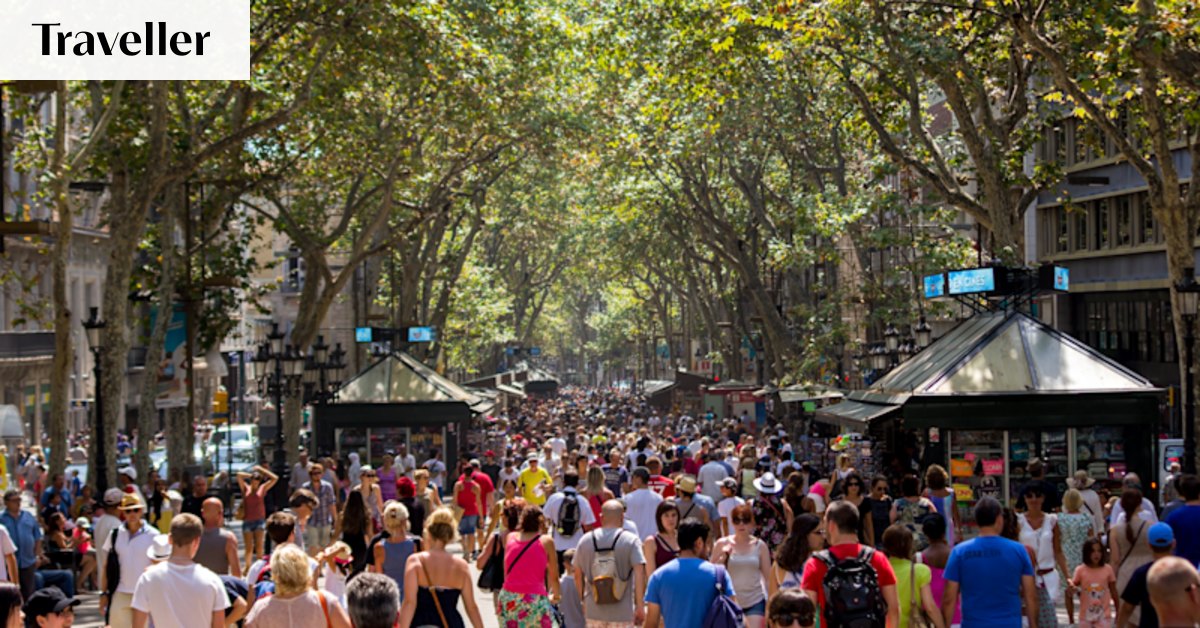
This is ground zero for overtourism, famously so. Tell ChatGPT to create an image of mass travel and the problems it can bring, and there’s a good chance the spires of La Sagrada Familia would be lurking in the background.
Barcelona authorities are taking action, too: they’re planning to revoke all licences for short-term housing rentals featured on the likes of Airbnb to deal with sky-rocketing prices and a lack of availability in the inner city; limits have been put in place to prevent too many new hotels being built in that same area.
There’s also a plan to reduce the number of cruise ship terminals, and thus the number of cruise ship passengers. Large tour groups have been banned from the city centre.
Advertisement
And there have been plenty of street protests, crowds of locals voicing displeasure not at the way Catalan authorities have dealt with tourists, but at the tourists themselves. The water pistol has become the weapon of choice for protesters, who have taken to squirting unsuspecting tourists sitting at bars and cafes enjoying a drink.
Sign up for the Traveller newsletter
The latest travel news, tips and inspiration delivered to your inbox. Sign up now.
So… do I need my raincoat?
I’m back in Barcelona, a city I know well. I’ve been visiting here since the late 1990s, and have watched as it has morphed over the years from a city once infamous for its pickpockets and petty crime to a booming tourist hub popular with travellers of every generation, and now the poster child for overtourism.
I’ve seen gritty areas such as El Born and El Raval clean up and change from no-go zones to must-visits. I’ve seen Eixample go from quiet neighbourhood to super-busy urban centre. I’ve watched as my favourite building in the world, La Sagrada Familia, has gradually taken shape and the crowds coming to gawk at it have swelled dramatically.
Advertisement
The issues are real in Barcelona, though I’m not always sure locals’ ire is directed to the right place. Tourist numbers have risen rapidly, but there’s also been a failure of local government to deal with that influx effectively, and a tendency to take the easy route of blaming the foreigners rather than doing anything about it.
Revoking all short-term housing licenses, for example, while also slowing hotel development doesn’t seem like a recipe for success to me.
But what’s it like on the ground in Barcelona? What’s the feeling here as a short-term visitor?
I’ve checked into a hotel just a few blocks north of one of my favourite parts of the city, Sant Antoni, a leafy neighbourhood that lacks any big-ticket tourist attractions, and yet is still only a few stops on the metro from the likes of the Gothic Quarter and Eixample.
Advertisement
I’m staying in a boutique hotel rather than an Airbnb because that seems like the responsible way to travel here. The cafe on the bottom floor of Magatzem 128 is filled with tourists, but the streets here are still lined with little grocers and daggy old bars, with kids playing in the parks and residents in leisurewear walking in and out of the fitness studios.
There’s a pretty basic restaurant just around the corner, Bar Iberics, that specialises in jamon, so I duck around there for an afternoon beer and a bocadillo, remembering to mumble a few phrases in Catalan (“gracies” instead of “gracias”) to show I’m aware of where I am, and that it’s not, in many locals’ eyes, Spain.
The guy running the bar is friendly and jolly, running out some fat, juicy green olives to go with the beer. I drink and eat at a table on the pavement and barely see anyone around at all, let alone someone who might want to shoot me with a water pistol.
I’ve got a few days here to explore. I’ll walk from Sant Antoni through El Raval – mental note, some streets probably still worth avoiding at night – quickly across Las Ramblas and into the Gothic Quarter, through El Born and up into Eixample and all the way to La Sagrada Familia. I’ll spend another day in Badalona, a beachside city that has spread to essentially become part of Barcelona, and where it feels like there are no international tourists at all.
Advertisement
This whole time I won’t feel unwelcome for a second. I won’t feel in danger, I won’t feel as if I’m doing the wrong thing. People in bars and restaurants are friendly. Locals on the streets just go about their business. The big crowds of tourists are easy to avoid if you want to. The tacky venues are simple to spot.
My takeaway from this short stay is that if you do Barcelona right, Barcelona will (mostly) do right by you – as so many famously over-touristed cities in the world will, from Amsterdam to Kyoto to Prague.
If you do a little research and think about the way you travel, you can still visit these places and be welcome. For that, you need to stay in accommodation that will have the least negative effect on locals. You need to behave in ways that are unobtrusive. You need to spend money and be polite and then go on your way without leaving a huge footprint.
Do all that and you won’t have to bother with the raincoat.
You have reached your maximum number of saved items.
Remove items from your saved list to add more.
More:
Ben Groundwater is a Sydney-based travel writer, columnist, broadcaster, author and occasional tour guide with more than 25 years’ experience in media, and a lifetime of experience traversing the globe. He specialises in food and wine – writing about it, as well as consuming it – and at any given moment in time Ben is probably thinking about either ramen in Tokyo, pintxos in San Sebastian, or carbonara in Rome. Follow him on Instagram @bengroundwaterConnect via email.AdvertisementAdvertisement