
Advertisement
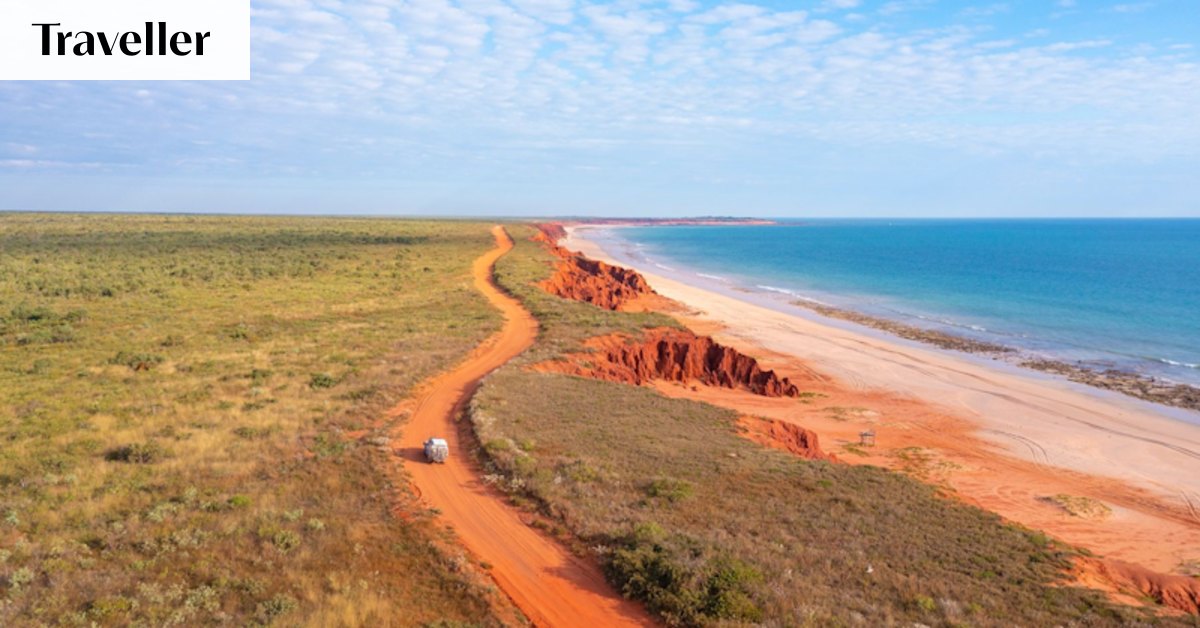
The first time I drove in the Kimberley, I had no idea what I was doing. I confidently assumed I could drive in this region the same way I would drive anywhere else: carefully, but with no need to make any significant changes to the way I approached the road.
My first clue that might not be the case was over dinner at Cygnet Bay Pearl Farm on the Dampier Peninsula, 200 kilometres north of Broome. I’d driven up earlier that day, but the next morning I needed to return for an early tour and would be leaving before dawn. My dining companions – three locals – expressed concern.
“You’ll need to watch out for donkeys,” one said. “They don’t look up, so you won’t see your car lights reflected in their eyes.”
“And there’s the cattle,” said another. “They’re roaming free and often wander onto the road. Drive slowly,” she warned.
Advertisement
When I left the farm early the next morning and turned onto the dirt road leading to the road south, my high beam lights barely pierced the darkness. It was unnerving. As a rim of pink eventually edged over the horizon to my left, a warm fog rolled over the landscape from the coast. When I pulled over and stepped out of the car, I could hear donkeys braying and birds screeching, but I couldn’t see a thing. Thoroughly spooked, I waited until the fog cleared a little, then started driving again at low speed, suddenly alert to the dangers on the road and my isolated location.
Sign up for the Traveller newsletter
The latest travel news, tips and inspiration delivered to your inbox. Sign up now.
While nothing bad happened to me, except the feeling I’d been very foolish, I wanted to know more about how to drive in this wild environment.
A few days later I’m chatting to experienced guide Luke Robertson at the remote Berkeley River Lodge in the East Kimberley. Part of his role is to take guests on off-road and beach drives, boat trips on the river and hikes into the bush. He’s worked all over the region and calculates he must have driven the popular Gibb River Road about 70 times. I ask him what people need to know before they head into remote territory.
“A second spare tyre is a must. If you have mechanical knowledge, then that’s a bonus, because you’ll want to have tools and spare parts. If you’re not that mechanically minded, then you must have a reliable vehicle and drive it to the conditions,” he says.
Advertisement
Those conditions can include deep corrugations in the road, navigating sand and mud, knowing how to respond to unexpected downpours, and keeping an eye out for animals.
“Most of the time you just want to use the brakes and slow right down, because you don’t know what the animal is going to do,” he says. “If you swerve, they might move in the same direction, so you can end up with the animal under the side of the vehicle, which can throw you over.”
Knowing how to do basic vehicle repairs is essential. Robert says 4WD courses are good for building confidence, but aren’t necessary unless you’re tackling a difficult route.
Adam Sands, managing director of RedSands Campers, which has depots in Perth, Broome, Darwin and Adelaide, has been helping people explore remote Australia in fully equipped 4WDs for a decade. He says well-briefed drivers can manage even challenging terrain.
Advertisement
All RedSands 4WD vehicles come with safety equipment including personal locator beacons for emergencies, first aid and snakebite kits, UHF radios and an optional satellite phone. He makes sure every guest knows what they’re doing before they hit the road.
It’s all about common sense. “Don’t drive too fast or too far in one day, and don’t follow people too closely, especially if it’s dusty. Always set up camp in the daylight and never drive at night,” says Sands. His warning makes me feel even worse.
But Robertson assures me one of the most important things to do is not to panic. If you have a mechanical breakdown or some other problem, you may have to wait a while, but Robertson says help will come along eventually.
Advertisement
“We’re in the bush. You don’t just leave someone … if there’s a vehicle broken down, a driver coming past will do a thumbs up. It’s like asking ‘Are you all good?’ Your answer lets them know whether to stop and lend a hand or keep driving.
“Generally speaking, it’s not like in the city,” he says. “It’s the same old story about living in the country. You know, the further your neighbours are away from you, the closer you are to them.”
The writer was a guest of Tourism Western Australia.
You have reached your maximum number of saved items.
Remove items from your saved list to add more.
More:
Justine Costigan is a Melbourne-based travel and food writer with a soft spot for food markets, mountain villages and the kind of small-town piazza where everyone seems to know everyone. She’s just as happy tracking down Marseille’s best street food as she is cycling through wine country or bathing under at the stars. Follow her on Instagram @justcostiganAdvertisementAdvertisement