
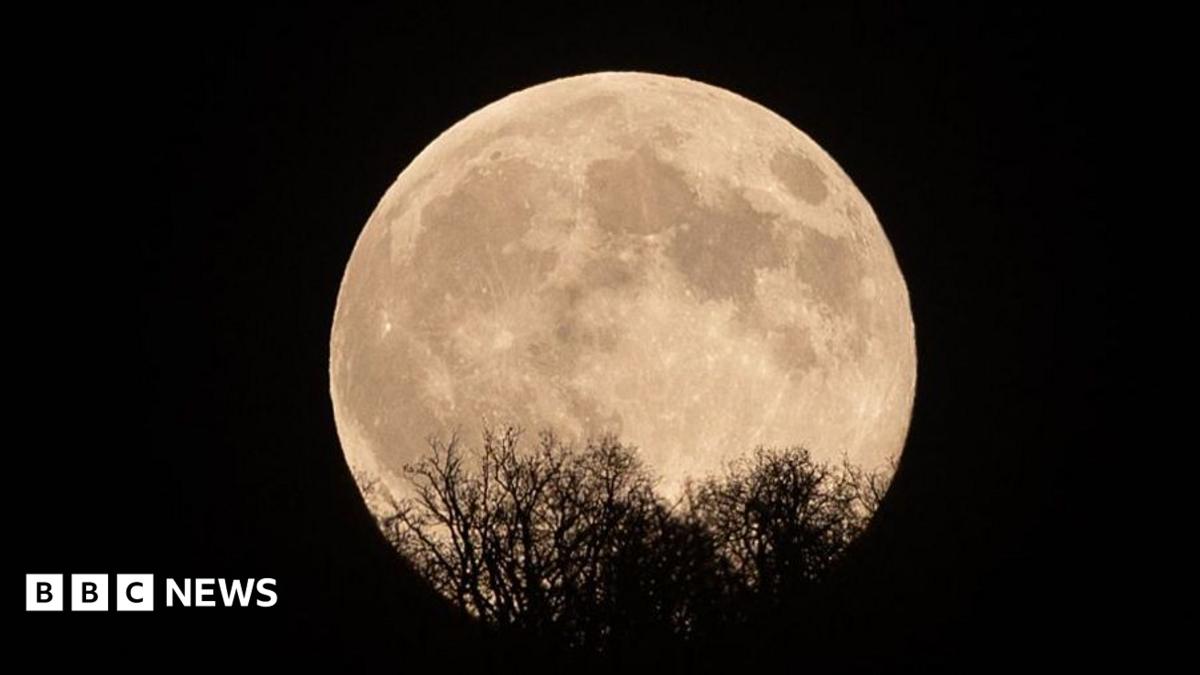
Image source, Getty Images
- Published24 minutes ago
Autumn brings longer nights to the northern hemisphere, offering more opportunities to get outside and look up at the night sky.
There is plenty to look out for over the coming months, from impressive meteor showers to dazzling star clusters.
The series of spectacles begins with the Pleiades as the autumn nights draw in.
It will be followed by the impressive Orionid meteor shower in late October, and a planetary parade, the Leonid meteor shower and a supermoon in November.
The Pleiades
Image source, Getty Images
As the nights lengthen through autumn, one of the most recognisable star clusters in the night sky becomes increasingly prominent.
The Pleiades, also known as the Seven Sisters, is a cluster of young stars around 440 light years from Earth.
Despite its name, most people can see around six stars with the naked eye, although many more become visible through binoculars or a telescope.
Look towards the east during autumn evenings, where the Pleiades can be found in the constellation Taurus.
Orionid meteor shower
Image source, Getty Images
The Orionid meteor shower is active from early October into November, reaching its peak around 21 October.
Twice each year, Earth passes through trails of dust and debris left behind by Halley’s comet. As these tiny particles enter Earth’s atmosphere at high speed, they heat up and produce the streaks of light we see as meteors.
The Orionids appear to radiate from the constellation Orion, which gives the shower its name.
For the best chance of seeing them, find somewhere dark and away from artificial lights and allow your eyes time to adjust.
November planetary parade
Image source, Getty Images
Early risers could be treated to a gathering of Mercury, Venus, Mars and Jupiter around 14 November.
All four planets will be above the horizon before sunrise, although some will be easier to spot than others.
Mercury will be particularly challenging because it remains low in the sky and close to the glare of the rising sun.
Venus and Jupiter, meanwhile, are among the brightest objects in our night sky and should be much easier to pick out.
Leonid meteor shower
Image source, Getty Images
Another meteor shower arrives later in November, with the Leonids expected to peak around 17 November.
The Leonids can travel at about 70km per second as they enter the Earth’s atmosphere, making them some of the fastest meteors visible from Earth.
Under ideal, dark sky conditions, around 10 to 15 Leonids an hour can be visible at the shower’s peak, although the actual number seen will depend on weather, light pollution and the brightness of the Moon.
They get their name from the constellation Leo, from which the meteors appear to radiate.
The best time to look is generally after midnight and before dawn, when Leo is higher in the sky.
The Beaver supermoon
Image source, Getty Images
November’s full moon is known as the Beaver Moon. The name is thought to come from the time of year when beavers were particularly active, preparing their lodges and storing food ahead of winter.
It will also be a supermoon, reaching full phase on 24 November.
A supermoon occurs when a full Moon is relatively close to Earth, making it appear slightly larger and brighter.
The November supermoon is also the first of a run of four full Moons which can be classed as supermoons, running through to February 2027.
Be sure to make the most of your autumn skywatching by checking the weather first on the BBC Weather app or online.