
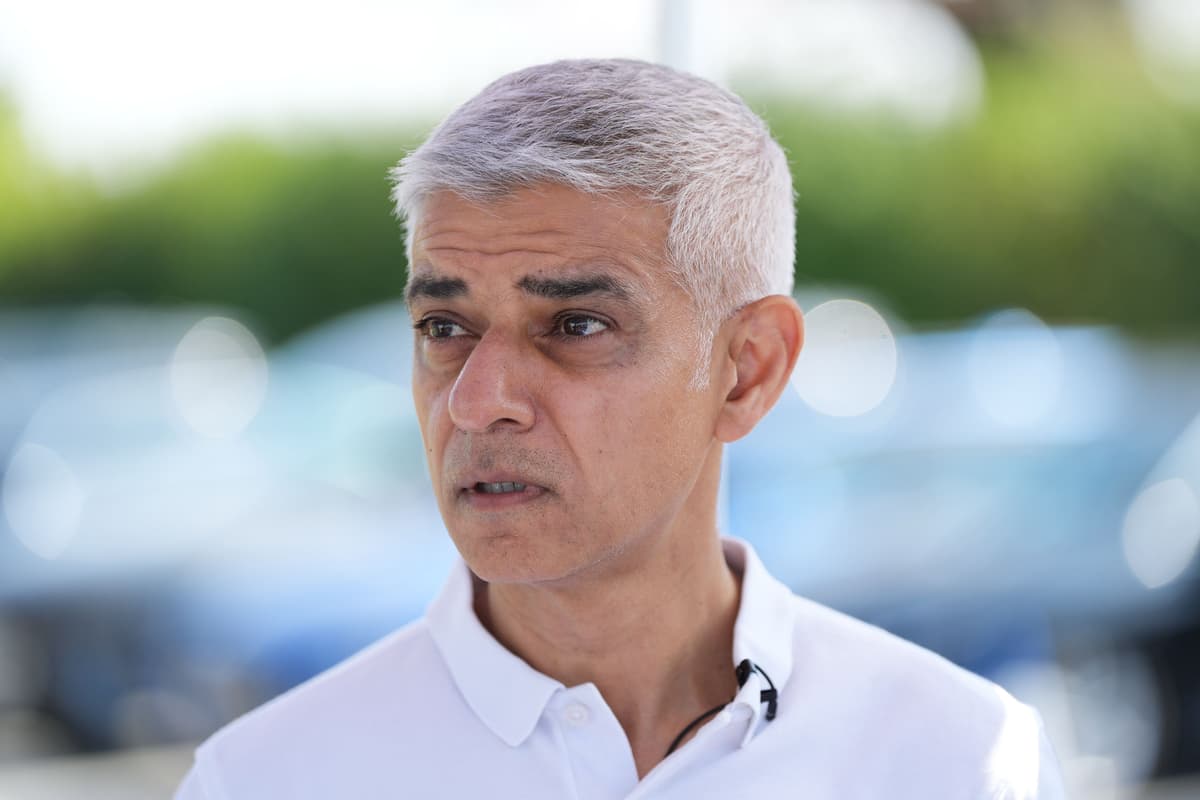
Mayor of London Sadiq Khan convicted of failing to tax car he ‘does not own’Lord Khan was issued with a fine at Herefordshire Magistrates’ Court after being prosecuted by the DVLA through the Single Justice Procedure.Mayor of London Lord Sadiq Khan was fined under the controversial system (Yui Mok/PA)PA WireTristan Kirk3 minutes ago
Mayor of London Lord Sadiq Khan has been convicted and fined in a controversial fast-track court system after being accused of not taxing a 24-year-old Nissan Micra.
The Labour politician, 55, was found guilty by a magistrate last month of keeping an unlicensed vehicle, in a criminal prosecution brought by the DVLA.
The magistrate, sitting in a private hearing of the Single Justice Procedure in Herefordshire, convicted Lord Khan in his absence and ordered that he pay a £220 fine, £85 in costs, and settle the £35.84 bill for unpaid tax on the Micra.
Lord Khan said he does not own the car in question (Stefan Rousseau/PA)PA Wire
However, City Hall officials say that the car does not belong to either the Mayor or Transport for London (TfL), raising the possibility that he has been wrongly convicted.
After Lord Khan expanded the Ultra Low Emission Zone (Ulez) to cover the whole of London he faced a wave of protests, including from motorists who said they planned to register their car in the Mayor’s name – supposedly to make him liable for the £12.50 daily charge.
Read More
Transfer news LIVE: Alvarez to Arsenal; Man Utd bid; Chelsea deal OFF
Horoscope today: Your daily guide for Wednesday, September 2, 2026
British volunteer aid worker says he was mistaken for floods survivor
Damian Lewis feels ‘moral responsibility’ playing real people on screen
After the Press Association flagged the criminal conviction to the DVLA on Tuesday, officials confirmed they are reviewing the case and investigating the circumstances of the prosecution.
In a further twist, court documents show that DVLA letters addressed to the Mayor about the unpaid tax bill were sent to Gordon Ramsay’s east London restaurant, instead of the nearby TfL offices.
The Mayor, who became Baron Khan of Tooting after he was appointed to the House of Lords in July, now faces the possibility of having to appear in court in person to try to overturn the conviction.
The Single Justice Procedure was invented in 2015 as a cheaper method of dealing with low-level criminal cases, allowing magistrates to sit alone and in private to hand out convictions rather than sitting in open court.
Lord Khan could appear in person if he appeals against the conviction (Ben Whitley/PA)PA Wire
Critics of the system have dubbed it “conveyor belt justice”, with magistrates deciding on hundreds of cases a day and sometimes spending less than a minute making each decision.
The system, which is currently under Government review, was rocked in 2024 when around 59,000 train fare evasion convictions had to be overturned for being unlawful and it emerged that children had been wrongly convicted in the secretive courts.
It has also been the focus of intensifying scrutiny thanks to regular incidents of sick and incapacitated pensioners being harshly convicted of not paying their household bills.
In Lord Khan’s case, court records seen by the Press Association show he was prosecuted by the DVLA after the annual tax on the blue Nissan Micra, which was first registered in 2002, ran out in September last year.
The DVLA accused Lord Khan of being the keeper of the vehicle when it was spotted as being untaxed on January 24, telling the court that his name and date of birth appear against the car on official records held by the Government.
The London mayor was convicted last month August (Yui Mok/PA)PA Wire
The agency said a letter asking for confirmation of the identity of the car owner went unanswered in January, leading to a criminal prosecution.
Lord Khan serves as the chair of TfL as part of his mayoral role, and the organisation has its offices on the 9th floor of 5 Endeavour Square in Stratford.
But court papers show the DVLA sent its letters to 9 Endeavour Square, a two-minute walk away from the TfL base, in a building where Gordon Ramsay’s Bread Street Kitchen, Bar & Rooftop occupies the top floor.
Magistrate Surinder Gidda, sitting at Herefordshire Magistrates’ Court, convicted Lord Khan on August 18 after no plea had been entered to the charge.
The court has also sent a record of conviction to the Gordon Ramsay restaurant, ordering Lord Khan to pay the £340.84 court bill within 28 days or face the prospect of increased fines, bailiffs, or even “a warrant for your arrest to bring you to court”.
Defendants who believe they have been wrongly convicted of a crime in their absence can apply for the case to be re-opened, typically by appearing in person in front of a judge to make a statutory declaration.
Lord Khan could argue that he did not know about the criminal case because the letters were addressed to the wrong building.
Once reopened, he could petition the DVLA to withdraw the prosecution if it can be shown that he has been wrongly accused, or enter a not guilty plea.
Alternatively, the DVLA could apply to the court itself for the case to be reopened.