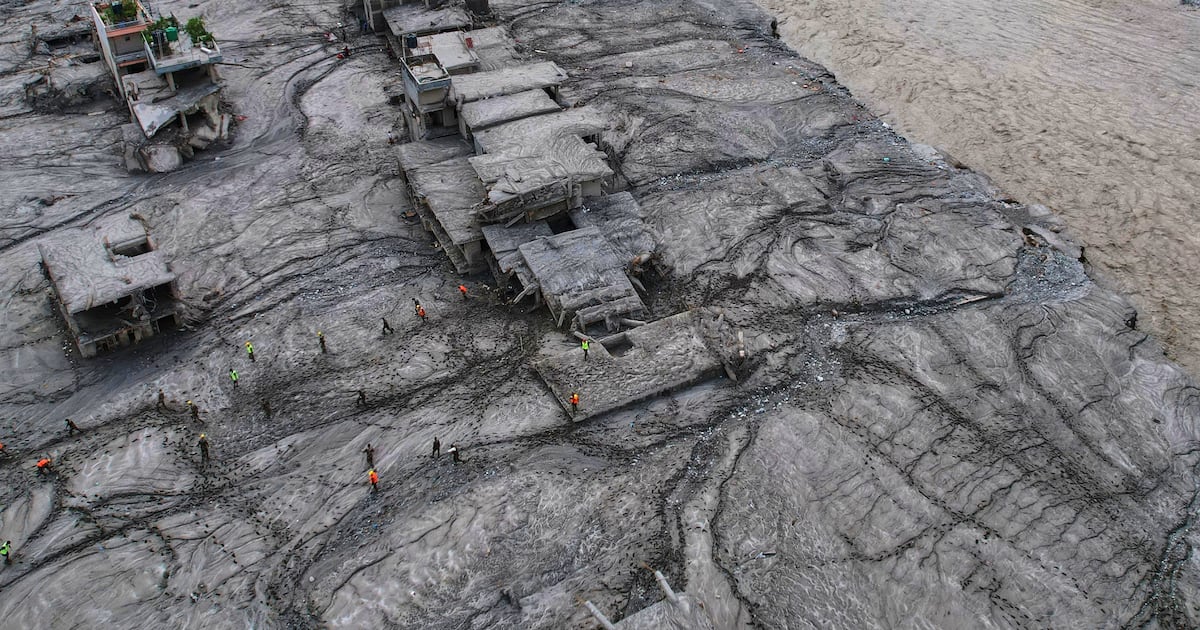
The death toll from catastrophic flooding in Nepal and China passed 1,000 on Tuesday, authorities said, as rescue teams worked to reach communities cut off by the disaster.
Nepal’s disaster agency said 987 deaths had been counted there, with 3,916 people missing, including 583 foreigners.
Chinese authorities reported 16 deaths in their most recent update on Sunday.
At least 11,814 people have been rescued so far, according to Nepalese authorities.
READ MORE
Welcome to the new Global Briefing newsletter
Violent scenes in Ceuta as Madrid struggles with migrant crisis
A wickedly inventive political ad is airing in Texas as midterm elections loom
António Guterres: ‘Superpowers need to understand things have changed’
Emergency crews have been using helicopters and other aircraft to reach stranded communities in areas where roads and bridges have been destroyed by the flooding and landslides.
Nepali rescuers also built temporary bridges to reach remote areas. They dug through the ruins of hydropower projects in the Himalayas to rescue close to 300 trapped workers, nearly a week after devastating floods left a trail of destruction across the country’s towns and valleys.
In a late social media post on Monday, Nepal’s prime minister Balendra Shah said 279 workers had been rescued from hydropower projects so far where authorities estimated that close to 1,000 people were trapped.
Pictures and videos shared by rescue teams showed earth-moving equipment digging and shovelling mud and rocks under lights in the dark of night as workers watched. Soldiers used torchlight in a big pit they had created to look for space to get into one tunnel.
There has been a boom in hydropower projects in Nepal since the turn of the century as the mountainous country sought to take advantage of its Himalayan water resources to address chronic domestic power shortages and exploit prospects for selling electricity to southern neighbour India.
Hydropower projects in Nepal’s mountains need tunnels to carry water through the steep terrain, allowing developers to exploit the sharp elevation drop between Himalayan rivers and powerhouses to generate electricity.
The August 26th disaster began with a chain of events high in the Himalayas.
A glacial collapse sent large amounts of rock, ice and meltwater into valleys below, triggering powerful floods downstream.
Scientists studying satellite imagery said the collapse appears to have involved the failure of bedrock beneath a glacier in the Himalayan region.
The rockfall was powerful enough to register as a magnitude 5.2 seismic event.
The resulting surge of water and debris entered rivers that flow through valleys in Tibet and Nepal, causing them to rise rapidly.
Floodwaters swept away homes, buildings, roads and bridges and carried mud and rocks downstream. – AP/Reuters