
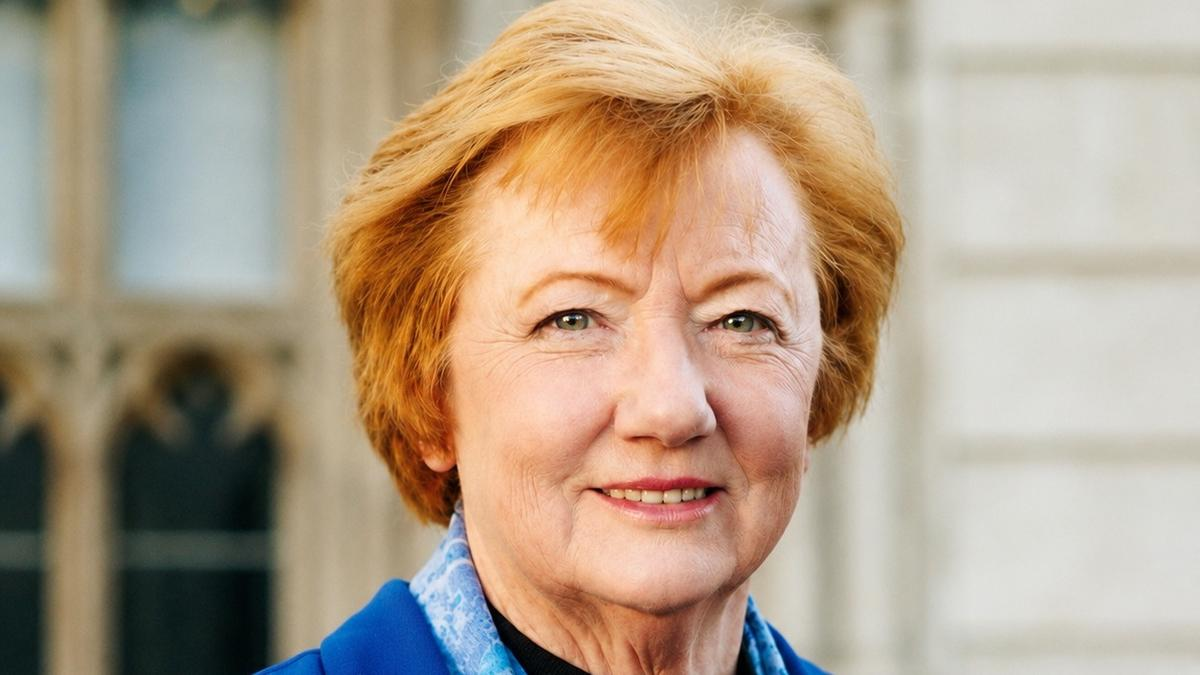
Over a career spanning more than five decades, Dr Margaret Smith transformed the lives of countless women, challenged long-held misconceptions surrounding menopause, mentored generations of doctors and demonstrated that the finest medicine embraces not only the body, but also the mind and spirit.
Her legacy extends far beyond the consulting room. Through her pioneering clinical work, her leadership in medical education and her unwavering compassion, she changed the way women’s health was understood and practised throughout Australia.
Margaret Brown was born in 1932 and was educated at the University of Adelaide, where she graduated in medicine in 1956 — one of only three women in her class. It was here she met her later husband Frank Smith. Following graduation she travelled to the United Kingdom, undertaking postgraduate training in obstetrics and gynaecology in Edinburgh and London. Her exceptional ability was recognised when she was awarded the gold medal in her membership exam for the Royal College of Obstetricians and Gynaecologists in 1963, and in 1971 she was made a fellow.
She then spent seven years serving in Papua New Guinea as the specialist obstetrician and gynaecologist for the Highlands region. Those years shaped her lifelong philosophy that medicine was fundamentally about service, compassion and respect for every individual, regardless of circumstance.
Arriving in Perth in the early 1970s, Margaret joined King Edward Memorial Hospital and the University of Western Australia as a senior lecturer in obstetrics and gynaecology. While she delivered thousands of babies and cared for women with complex gynaecological conditions, she recognised that one important area of women’s health had been neglected. Menopause was too often dismissed as an inevitable inconvenience rather than a significant medical and emotional transition deserving expert care.
Determined to change that perception, Margaret established Western Australia’s first dedicated menopause clinic at King Edward Memorial Hospital in 1978. What began as an innovative service grew into a centre of excellence, educating doctors and providing compassionate, evidence-based care for thousands of women.
Margaret became widely regarded as one of Australia’s pioneers in menopause medicine and one of the nation’s most respected advocates for women’s midlife health.
Margaret became widely regarded as one of Australia’s pioneers in menopause medicine and one of the nation’s most respected advocates for women’s midlife health.
As a foundation member of the Australasian Menopause Society, and its president from 1995 to 1997, she helped shape national understanding of menopause and championed research that improved care for women throughout Australasia.
During periods of uncertainty and controversy surrounding hormone therapy, she remained a thoughtful and measured voice, carefully balancing scientific evidence with the lived experiences of the women she treated.
Through her private practice, Caring for Women, Margaret became a trusted companion to thousands of patients. Women sought her not only because of her expertise but because she listened. She had the rare ability to reassure without dismissing concerns, to explain complex medical issues with clarity, and to restore confidence to women navigating some of the most challenging years of their lives.
Margaret’s commitment to education was equally enduring. She authored Midlife Assessment: A Handbook For Women, her memoir Now & Then: A Gynaecologist’s Journey, and, together with Patricia Michalka, Is It Me Or My Hormones? a compassionate and practical menopause guide that encapsulated the groundbreaking workshops the two women ran throughout WA.
Margaret’s vision of healing extended well beyond conventional medicine. She believed emotional wellbeing was inseparable from physical health, and in the late 1980s became one of the founders of Perth’s Centre for Attitudinal Healing. Serving as its president for more than a decade, she helped establish innovative programs supporting families, schools, hospitals and communities.
Under her leadership, the centre became recognised internationally for promoting resilience, forgiveness, compassion and personal responsibility as essential elements of healing.
Margaret demonstrated throughout her life that science and kindness were not opposing philosophies, but complementary foundations of exceptional medical care.
She was recognised with numerous honours. In 1994 she was named Western Australian Citizen of the Year in the professional category and in 1996 was appointed a member of the Order of Australia. In 2011 she was inducted into the WA Women’s Hall of Fame.
Yet those who knew Margaret remember not the honours but the woman herself. She possessed extraordinary warmth, humility and generosity. She mentored young doctors with patience and encouragement, believing that every patient deserved not only clinical excellence but genuine compassion. To colleagues she was wise and gracious; to students she was an inspiring teacher; to her patients she was often a trusted friend.
Margaret passed away on July 14, her 94th birthday. She is survived by her twin sister Joan in Brisbane.
For thousands of women across Western Australia and beyond, Margaret was the doctor who listened when others would not, who explained rather than dismissed, and who helped them navigate life’s transitions with dignity and confidence.
Dr Margaret Smith AM
Obstetrician and gynaecologist
Born: Adelaide, 1932
Died: Perth, aged 94
Get the latest news from thewest.com.au in your inbox.
Sign up for our emails