
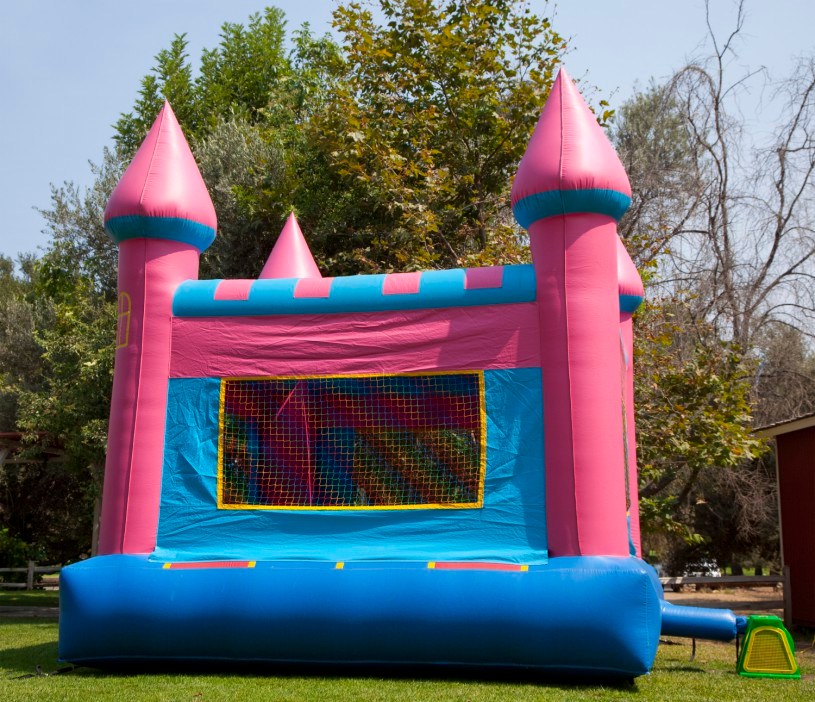
PLAYING on bouncy castles has been linked to a large outbreak of a common superbug, infecting over 40 kids.
Four children were also hospitalised after an outbreak of a rare and aggressive strain of methicillin-resistant Staphylococcus aureus – better known as MRSA.
3
3
Some 48 children and teens developed skin and soft tissue infections after a gathering in Ireland last year involving bouncy castles, a new medical report has revealed.
Doctors claim this is the first time a large outbreak of the antibiotic-resistant bacteria has been linked to playing on bouncy castles.
While outbreaks of community-acquired MRSA are associated with close physical contact and crowded settings, most outbreaks happen in sporting activities, prisons and childcare facilities.
But in this instance, scientists said the outbreak happened due to close contact among the kids on three bouncy castles in a suburb in the east of Ireland last autumn.
Read more on health
RASH HORROR
Shaving bikini line left me battling 3 deadly infections & a giant groin boil
PILL ALERT
The 7 NHS drugs that raise dementia risk as docs ‘prescribing meds to millions’
All but one of the 48 infected patients had attended the event, with many having spent a substantial amount of time on the bouncy castles.
At least 19 of the children were estimated to have spent at least four hours on the equipment.
Of the almost 50 who were infected, the medical report – published in Eurosurveillance journal – said that 15 sought treatment in hospital.
MRSA is a type of bacteria that usually lives harmlessly on the skin.
Most read in Health
‘CLIFF EDGE’
I lost 6st on fat jabs… now I’m facing terrifying weight gain ‘timebomb’
NORMAL CHAOS
Woke madness as NHS trust orders doctors & nurses to stop using word ‘normal’
NO SYMPTOMS
I blamed fatigue on being a working mum as ‘silent killer’ wrecked my organs
DOWN IN ONE
How 74p ‘Ozempic for booze’ pill stopped me binge-drinking & blacking out
If it gets inside the body, however, it can cause a serious infection that needs immediate treatment with antibiotics, the NHS says.
If you get an MRSA infection under your skin, you may have an area of skin that is painful and swollen, feels warm when you touch it, leaks pus or liquid and looks red.
If the infection then spreads to the blood, lungs, or other parts of your body, symptoms can include a high temperature, difficulty breathing, dizziness and confusion.
So how was this outbreak in Ireland identified?
The first reported case was of a 12-year old boy who was diagnosed with MRSA folliculitis and required hospitalisation.
This is an infection of hair follicles that causes small red pimples filled with pus.
He provided information that he had attended a social gathering nine days earlier.
Doctors then became aware of the outbreak after a cluster of 25 other children who attended the same event sought treatment for unusual skin infections.
3
What is MRSA?
MRSA is a type of staph bacteria that usually lives harmlessly on the skin.
But when it gets inside the body, it can cause a serious infection that needs immediate treatment.
It has become resistant to some commonly used antibiotics and can be difficult to clear, so it is sometimes referred to as a “superbug”.
In some cases, MRSA causes life-threatening complications, such as sepsis and pneumonia.
If you get an MRSA infection under your skin, you may notice that it:
- Is painful and swollen
- Feels warm
- Leaks pus or liquid
- Looks red
If it has spread to your blood, lungs or another part of your body, symptoms may include:
- High temperature
- Difficulty breathing
- Chills
- Dizziness
- Confusion
Treatment usually involves antibiotics for several weeks.
People staying in hospitals or care homes are at increased risk of MRSA.
Source: NHS
In total, there were 22 confirmed cases of MRSA and 26 possible cases involving kids aged between five and 16.
The majority of cases developed symptoms two days after the party, although one only developed them 17 days later.
According to doctors, the most common symptoms seen were spots and redness and blisters on children’s legs.
Twelve patients also reported suffering from either a fever, nausea or vomiting.
Once doctors noticed a pattern, an outbreak control team was urgently brought together and the organiser of the event – where the bouncy castles had been – helped doctors identify families who attended.
Each family was contacted and a public health risk assessment was conducted to see if they had also developed symptoms of a skin infection.
None of the four children who were admitted to hospital experienced severe outcomes or required intensive care, the report said.
They did, however, have to spend an average of four days in hospital while the infection was treated.
All of the infected children and teens were treated with antibiotics, body wash and a nasal ointment and were also advised to avoid schools and nurseries until their acute symptoms had resolved.
A local primary school where most of the infected children attended was also given advice on infection prevention and control measures.
One of the report’s main authors, Dr Domhnall McGlacken-Byrne, who is with the Health Service Executive’s Department of Public Health, said it was “an unusual and complex community outbreak” with bouncy castle play being “a novel mechanism for an outbreak of this size”.
He noted that the strain of MRSA in the outbreak had not previously been linked to an outbreak in either a healthcare setting or the community in Ireland.
Dr McGlacken-Byrne also said it was also notable for a high attack rate and relatively short period of incubation.
RECOMMENDED STORIES
He explained that no other exposure appeared as plausible to explain the outbreak as the close-contact play on the bouncy castles.
Although it was not possible to determine the exact source of the infection or how it was transmitted, he said it was likely that one or more children must have had a symptomatic infection which then resulted in onward transmission.