
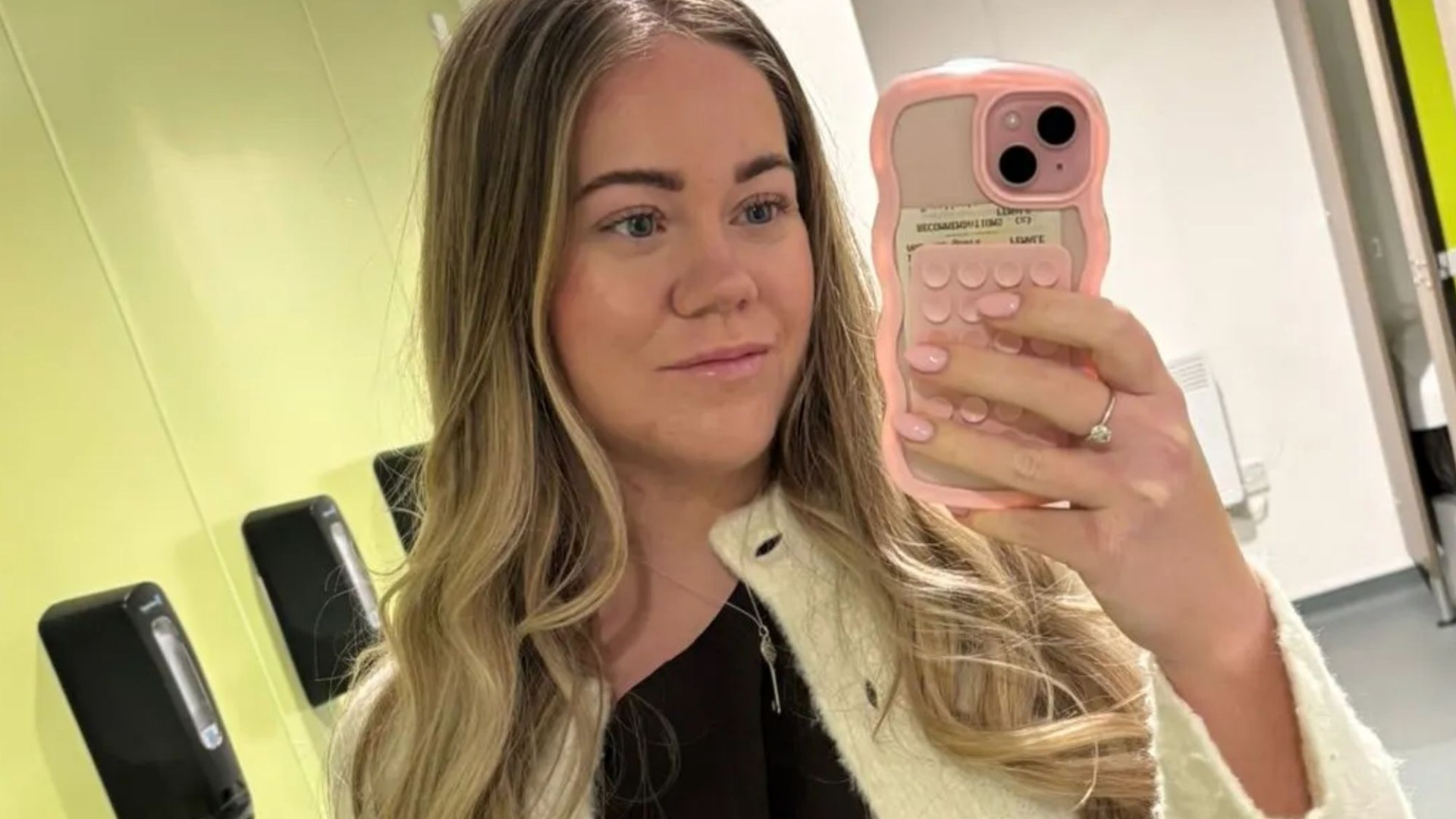
STEPPING onto the scales in early 2025, just weeks after starting weight loss jab Wegovy, Jess Martin could hardly believe her eyes.
After years of battling to shift the pounds, they were suddenly falling away – and fast.
7
7
The 33-year-old had shed more than a third of her body weight in 18 months, from 19st to 12st 5lbs.
The single mum’s confidence has skyrocketed and she’s looking forward to starting to date again – but there’s a catch.
Jess, who lives in Milton Keynes, was prescribed Wegovy on the NHS, which is strictly limited to just two years.
Her options, come January 2027, are limited – either pay privately, which for Jess’ dose would set her back £240 every month, or come off the drug completely.
The alternative is potentially piling the pounds back on.
“I’ve lost all this weight while being lucky to access the jabs for free,” Jess, who still wants to lose another stone, tells Sun Health.
“But paying for the jab privately long term just isn’t financially realistic for me, after paying for childcare and renting privately.
“Something would have to go, like trips out with my daughter.
“She is my priority.
“Before, I’d stay in and not do much, but now we’re always out doing things.
“I’ve got more confidence to just go out exploring.
“Last weekend we went to Birmingham for the day; I would have never got the train before.
“I really worry about putting all the weight back on.”
Jess is far from alone, and represents a growing pressure on an already stretched NHS.
Experts say the NHS faces a “ticking timebomb” of patients who risk regaining weight and with it, new health issues.
But long-term prescribing for hundreds of thousands of people will cost billions.
GPs splurged half a billion pounds on Mounjaro prescriptions last year, Sun analysis found, setting a new spending record.
Doctors are now informing the first wave of NHS patients that their taxpayer-subsidised two-year treatment window is ending.
Specialist weight loss services have been able to prescribe Wegovy since late 2023. Then came Mounjaro, which GPs have been able to prescribe since summer 2025.
Estimates suggest roughly 380,000 people in England access GLP-1s on the NHS.
7
7
Mounjaro doesn’t have the same two-year limit, but very few people can get a prescription.
For Jess, switching to Mounjaro is not possible because her BMI is now in the healthy range.
Dr Leyla Hannbeck, CEO of the Independent Pharmacies Association, tells Sun Health: “From a pharmacy perspective, one of the key issues we’re seeing with patients after the two-year Wegovy treatment period is up, is that some are putting the weight back on very rapidly.
“The two-year limit creates a cliff edge.
“We need to have a proper maintenance pathway for patients who are coming off these drugs.”
Professor Alex Miras, a clinical professor of medicine at Ulster University, says: “It’s a problem, a major problem.
“We know from trials that when the medication is stopped, weight regain is almost inevitable.”
A major University of Cambridge study published earlier this year found that patients regained an average of 60 per cent of their weight within a year of stopping jabs like Wegovy.
7
Everything you need to know about fat jabs
Weight loss jabs are all the rage as studies and patient stories reveal they help people shed flab at almost unbelievable rates, as well as appearing to reduce the risk of serious diseases.
Wegovy – a modified version of type 2 diabetes drug Ozempic – and Mounjaro are the leading weight loss injections used in the UK.
Wegovy, real name semaglutide, has been used on the NHS for years while Mounjaro (tirzepatide) is a newer and more powerful addition to the market.
Mounjaro accounts for most private prescriptions for weight loss.
How do they work?
The jabs work by suppressing your appetite, making you eat less so your body burns fat for energy instead and you lose weight.
They do this my mimicking a hormone called GLP-1, which signals to the brain when the stomach is full, so the drugs are officially called GLP-1 receptor agonists.
They slow down digestion and increase insulin production, lowering blood sugar, which is why they were first developed to treat type 2 diabetes in which patients’ sugar levels are too high.
Can I get them?
NHS prescriptions of Wegovy is controlled through specialist weight loss clinics, while Mounjaro is available from GPs but only for the highest risk patients.
For Wegovy, a patient will typically have to have a body mass index (BMI) of 30 or higher, classifying them as medically obese, and also have a weight-related health condition such as high blood pressure. They will be expected to have tried diet and exercise already.
Mounjaro is available from NHS GPs for weight loss but only to a tiny group of patients, with the rollout starting with those with a BMI higher than 40 and with four weight-related health conditions.
Private prescribers offer the jabs, most commonly Mounjaro, to anyone who is obese (BMI of 30+) or overweight (BMI 25-30) with a weight-related health risk.
Private pharmacies have been rapped for handing them out too easily and video calls or face-to-face appointments are now mandatory to check a patient is being truthful about their size and health.
Are there any risks?
Yes – side effects are common but most are relatively mild.
Around half of people taking the drug experience gut issues, including sickness, bloating, acid reflux, constipation and diarrhoea.
Dr Sarah Jarvis, GP and clinical consultant at patient.info, said: “One of the more uncommon side effects is severe acute pancreatitis, which is extremely painful and happens to one in 500 people.”
Other uncommon side effects include altered taste, kidney problems, allergic reactions, gallbladder problems and hypoglycemia.
Evidence has so far been inconclusive about whether the injections are damaging to patients’ mental health.
Beyond a year, the data is not yet clear. Drastic weight loss with rapid weight regain risks more health problems, experts warn.
Professor David Strain, an associate professor of cardiometabolic health at the University of Exeter, says: “Yo-yoing will lead to more muscle loss and eventually sarcopenia obesity – a high weight but relatively low muscle bulk and therefore a general weakness.
“Sarcopenic obesity is only going to become a bigger problem for the NHS in the future.”
People prescribed weight loss jabs should be told by their provider to make meaningful changes to their diet and exercise, so healthy habits stick post-prescription.
But Professor Miras says: “There is a lot of misinformation, even among healthcare professionals.
“It’s really a myth telling people that by doing exercise and by eating the same amount of food that they were on the jab, they will maintain their weight. It’s clinically impossible.”
Professor Miras says that our body weight is controlled by a part of the brain called the hypothalamus, which is influenced by genetics.
“In obesity, people’s genetics work against them, the hypothalamus makes them more hungry and less full than people without obesity,” he says.
“As a result they consume more calories and put on weight.”
Even after weight loss, he suggests, their instinctive hunger cues remain the same, due to genetics.
“If we stop this medication, people become hungry again and consume the same amount of calories they consumed before they started the medication,” he claims.
“That’s why any of these medications should be used lifelong.
“People cannot ‘think’ themselves less hungry and more full – they need biological treatment for a predominantly biological disease.
“There is no way someone can fight their own hunger.”
Jess was among the lucky few to get an NHS Wegovy prescription.
In late 2024, she was 19st with a BMI of 45 and had the health condition high blood pressure.
7
7
The birth of her daughter in May 2023 and subsequent divorce saw her health slip, and weight soar.
She says: “I comfort ate a lot because I was constantly upset, stressed and tired.
“I was eating half a loaf of bread a day – toast for breakfast and big sandwiches at lunch because it was easy to make quickly.”
After her appointment with the NHS weight management service, she was offered Wegovy and told that the minimum weight she needed to lose within six months to continue on the jabs was 13lbs – five per cent of her starting weight.
She doubled that, losing 2st 7lbs by her six-month check-in.
Jess did everything she was told; though the lack of appetite drove her weight loss, she ate healthier and ate off the same 16p IKEA plate her daughter ate from, to keep portions small.
She took up running and swimming.
Now, she hopes these habits will stick and fend off hunger but naturally, she’s worried.
While some clinicians argue NICE should lift the two-year limit, it largely comes down to an cost-benefit calculation.
“Personally, I think they will end up being lifelong treatments,” Professor Strain says.
“There is some evidence suggesting weight loss can be maintained on a much lower dose, so-called microdosing.”
But, he adds: “The difficulty NICE has is that it’s bound by a very strict code of using what evidence is available.
“Until there is data available on what happens when you stop the drug beyond two years, what the correct maintenance dose should be and what the cost effectiveness is, their hands are tied.”
There’s hope that the new weight loss pills, now available on private prescriptions for a minimum of £70 a month, will be easier to use on the NHS.
They don’t require refrigeration and are cheaper.
But it’s likely the pill won’t be available on the NHS until 2027 at the earliest, if recommended by Nice.
“Unfortunately, it again means self-paying,” Professor Miras says.
For now, all Jess can do is remain steadfast.
“I really am determined, I don’t want to look or feel the way I did before,” she says.
“If I’m extremely hungry, can’t control myself, and start eating much more, maybe I’ll try the tablets.
“But it all depends on how much it’ll cost.
“The goal is to just try and go it alone.”