
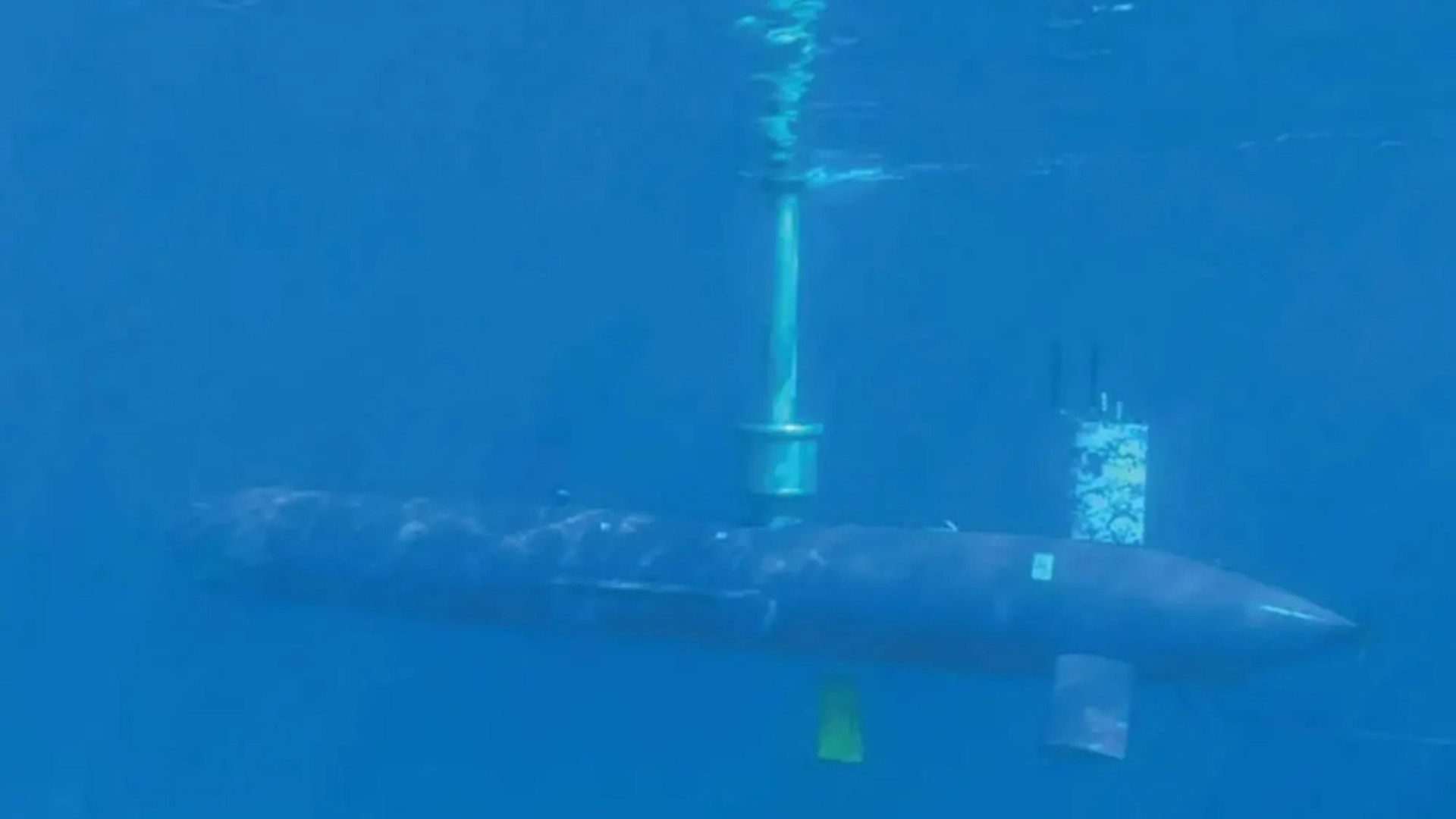
BRITISH forces foiled a Russian cable sabotage plot after catching submarines training deep in the Arctic, it is reported.
The clandestine Russian operation was carried out by Moscow’s GUGI undersea warfare directorate near the remote Svalbard archipelago.
6
6
Using deep-sea subs, Vladimir Putin‘s troops simulated the deployment of a weapon designed to disable critical undersea cables without leaving a trace.
But a joint operation between Britain, Norway and the US tracked and confronted the Russian vessels at sea, two Western officials told Reuters.
The deep-sea face off forced Russian vessels to end the chilling exercise and flee the area.
Britain and Norway disclosed in April that they had uncovered a covert Russian operation in Arctic waters.
Read More World News
DEADLY DRILL
Putin’s special forces troops ‘wiped out in avalanche during training exercise
PEACE HOPES
Russia warns West on brink of ‘real war’ as Trump’s envoys visit Kyiv
6
6
But the discovery of the new weapon, the location of the operation and the US involvement have not been previously reported.
“We have made it unequivocally clear to Russian authorities that any attempt to target our critical infrastructure will be detected and met with consequences,” Norway’s Defence Minister Tore Sandvik said in a statement.
“It is in no one’s interest to escalate tensions in the High North.”
It comes as Western intelligence officials fear the Kremlin is ramping up sabotage operations in Europe and preparing for a conflict with NATO.
Most read in The Sun
MEGA MONEY
US Powerball jackpot reaches £120million —I found a hack to play 10 lines for £1
ON THE BLITZ
Trump reveals when Iran war will end as Tehran fires electro-optical missile
UP IN THE AIR
Air traffic control boss faces calls to QUIT after presiding over 3 meltdowns
Moscow is accused of setting fires, attacking water facilities and power stations, and launching drones into European airspace.
Most recently, Germany blamed Russia for an attempted drone attack on its Leipzig Airport in August.
US intelligence analysts say Russia could test NATO‘s mutual defence pact, known as Article 5, as his front line in Ukraine grinds to a halt.
Last month CIA boss John Ratcliffe allegedly visited Moscow to warn Russia against an attack on an allied state.
6
6
If Russia decides to attack, destroying subsea cables could be a critical part of that effort, Western officials told Reuters.
Cables lying on the seabed or buried just below, are critical to global internet connectivity and financial transactions.
Their economic and strategic importance has made them targets in past conflicts, including in the First and Second World Wars.
Two 1,400 km subsea fiber-optic cables linking Svalbard to mainland Norway lie as deep as 2,700 metres below the sea’s surface.
They carry huge amounts of satellite data downloaded at the SvalSat satellite ground station, the world’s largest and part of NASA‘s Near Space Network.
British and Norwegian officials took their findings to Moscow to show they were aware of the new tech, hoping it might deter Russia from using it.
Russia didn’t damage any cables. The exercise focused on simulating the deployment of the technology in the event of a conflict with NATO, officials said.
NATO allies have focused on subsea infrastructure security since a series of attacks in 2022.
Fresh initiatives including NATO’s Baltic Sentry monitoring system and the UK-led Nordic Warden, have brought navies together for increased patrols of critical infrastructure.
RECOMMENDED STORIES
Russia’s Defence Ministry didn’t respond to a request for comment on the incident.
The Kremlin consistently denies conducting sabotage operations in NATO countries or plotting any confrontation.