
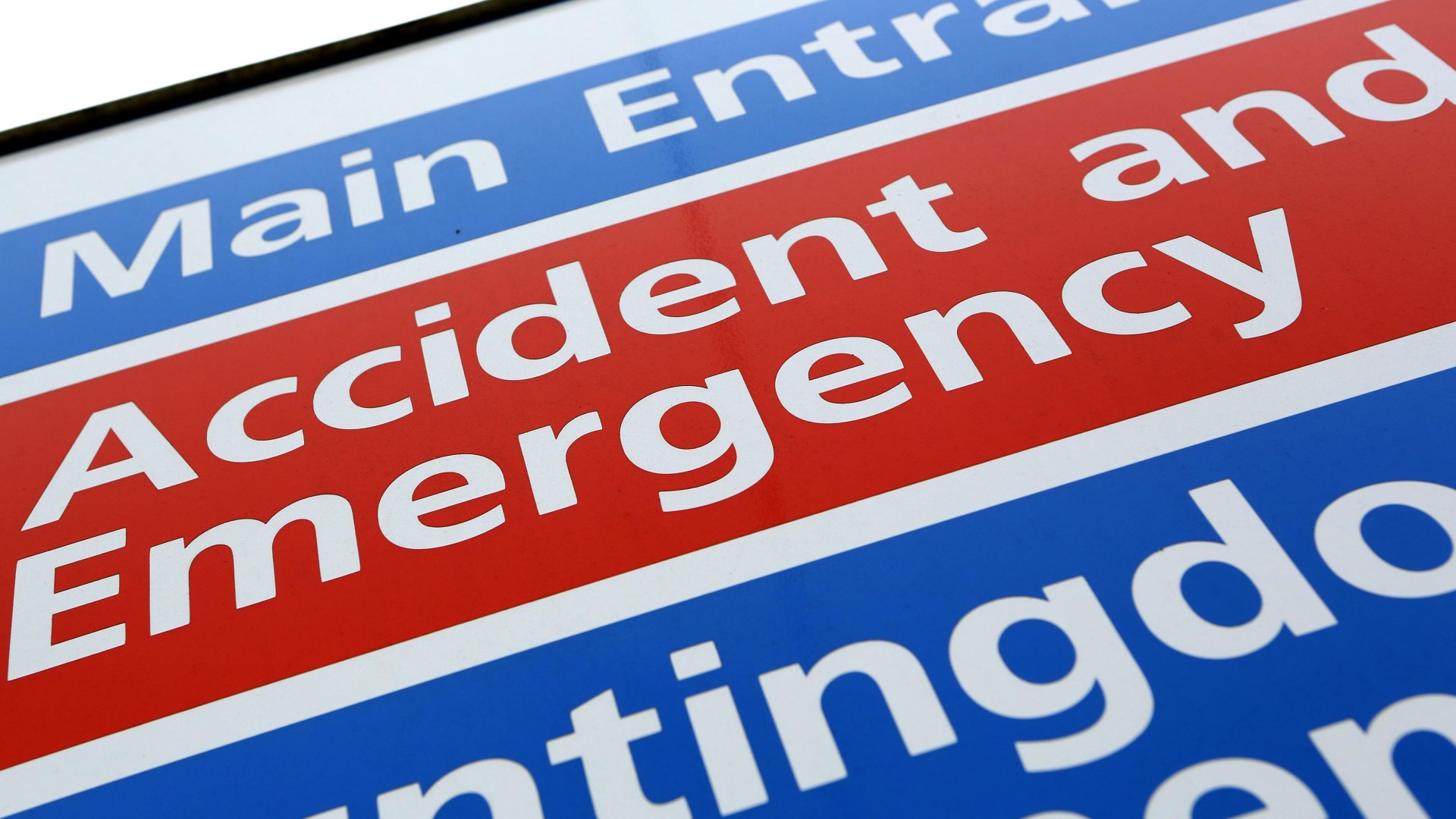
HOSPITAL emergency departments have barely improved for years despite extra NHS cash and promises, the National Audit Office says.
Ex-Labour leaders Sir Keir Starmer and Wes Streeting told the health service it must “reform or die” and tried to force bosses to cut waiting times and banish corridor care.
A&E services cost £6.6billion to run last year but an NAO report said improvements have been small and slow and fixes proposed in a 2023 plan have failed.
The total NHS budget has increased from £173billion before the Covid pandemic to £210bn this year.
The NAO said: “A&E resources have increased but this has not led to a proportionate improvement in waiting times.”
It revealed more than 1.7million people waited in casualty for more than 12 hours last year, including 500,000 who languished for a day or longer.
Read more on the NHS
‘SUPERHUMAN’
NHS trials AI to spot heart disease in just two seconds – as 400K on waitlist
SUPPLY SLOWS
Millions on top NHS drug forced to RATION meds for months amid shortage crisis
NHS figures show thousands are still looked after in hallways and side rooms every month.
The NAO pointed out that hospitals do not discharge recovered inpatients fast enough and delays block thousands of beds and cost billions of pounds.
Sir Geoffrey Clifton-Brown, chair of the House of Commons’ Committee of Public Accounts, said: “It is deeply concerning that that so many patients are still waiting far too long for emergency care, despite the NHS committing significant resources to address the problem.
“There are encouraging examples of improvement but simply not enough to make a meaningful change.”
Most read in Health
EYE SPY
Tiny mark under your eye ‘indicates your risk of stroke in the next 10 years’
TAKE NOTE
The 5 little-known signs of blood cancer as BBC star reveals incurable diagnosis
NHS TRAGEDY
Mum wins payout after sepsis death of son, 2, who was ‘told he was constipated’
SUPPLY SLOWS
Millions on top NHS drug forced to RATION meds for months amid shortage crisis
Hospitals are significantly busier than before the pandemic and A&E departments had their busiest summer on record this year.
The proportion of patients who wait 12 hours or longer to be seen has tripled since 2019, the NAO said.
Professor Nicola Ranger, of the Royal College of Nursing, said: “There has been precious little improvement to the serious pressures nursing staff have been facing for years.
“The real human cost of long waits and overcrowding is patients languishing in corridors, going into cardiac arrest, receiving intimate care, or being given end-of-life news in full view of others.
“Fixing social care is essential to addressing this crisis, with far too many patients stuck in hospital despite being ready to be discharged.”
A Department of Health spokesperson said: “We are deploying expert teams into the most challenged trusts, publishing corridor care data for the first time and investing £450million to improve urgent and emergency care.
“Alongside this we are expanding urgent care centres and mental health A&Es, shifting more care into the community.”
TIMELINE OF THE NHS WAITING LIST
THE NHS waiting list in England has become a political flashpoint as it has ballooned in recent years, more than doubling in a decade.
The statistics for England count the number of procedures, such as operations and non-surgical treatments, that are due to patients.
The procedures are known as elective treatment because they are planned and not emergencies. Many are routine ops such as for hip or knee replacements, cataracts or kidney stones, but the numbers also include some cancer treatments.
This is how the wait list has changed over time:
August 2007: 4.19million – The first entry in current records.
December 2009: 2.32million – The smallest waiting list on modern record.
April 2013: 2.75million – The Conservative and Liberal Democrat coalition restructures the NHS.
April 2016: 3.79million – Junior doctors go on strike for the first time in 40 years.
February 2020: 4.57million – The final month before the UK’s first Covid lockdown in March 2020.
July 2021: 5.61million – The end of all legal Covid restrictions in the UK.
January 2023: 7.21million – Prime Minister Rishi Sunak pledges to reduce waiting lists within a year, by April 2024.
September 2023: 7.77million – The highest figure on record, in a year with strikes by junior doctors, consultants, nurses and ambulance workers.
February 2024: 7.54million – Ministers admit Rishi Sunak’s pledge to cut the backlog has failed.
August 2024: 7.64million – List continuing to rise as Keir Starmer’s new Labour Government takes power.
May 2025: 7.36m – The lowest for two years, since 7.33m in March 2023.
October 2025: 7.4m – Increased in June, July, August and October.
November 2025: 7.31m – A decline of 86,000 compared to October.
March 2026: 7.11m – The lowest level since November 2022.
April 2026: 7.22m – The first rise in six months.
May 2026: 7.28m – Rises again to highest since December 2025.