
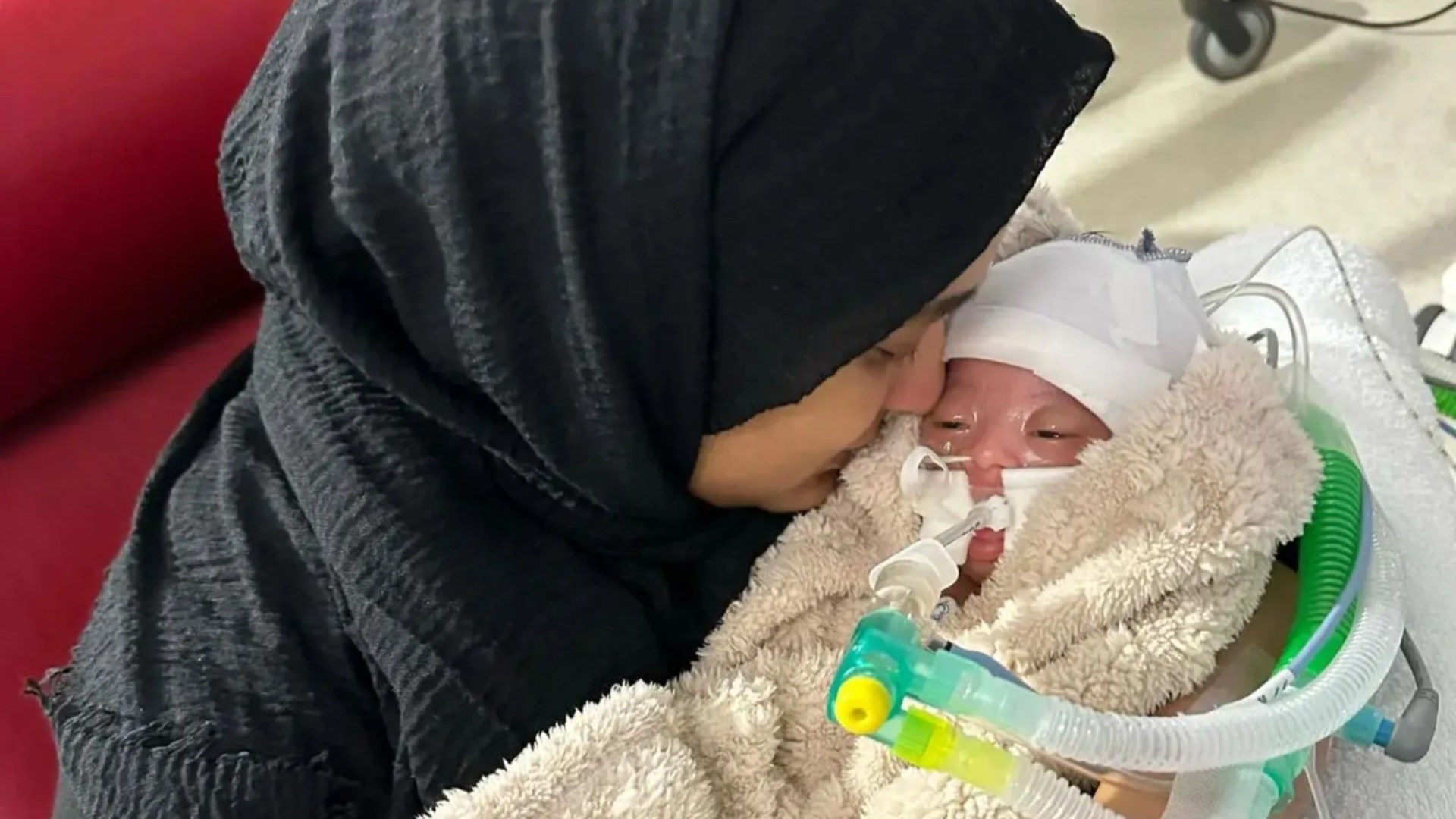
THE heartbroken mum of a six-month-old baby who died after his hospital monitor alarm volume was set too low has told how she fears it could happen to another baby.
Ismaeel Islam tragically died in the Royal London Hospital’s special care baby unit on March 7, 2025.
5
5
An inquest into his death last month, heard how Ismaeel suffered a brain injury months before, in November 2024, at just five weeks old, when his heart stopped and his brain was starved of oxygen.
Coroner Mary Hassell ruled that his collapse went unnoticed for “approximately half an hour” because his monitor alarm “had been turned down too low to be usefully audible”.
His cot was also not within the line of sight of the nurse caring for him who, at the time, was with another baby.
“If Ismaeel’s deterioration had been recognised immediately and treated appropriately, his life would have been saved,” Ms Hassell ruled.
Mum Sharmin Akther, 39, told Sun Health: “What happened cost Ismaeel his life but I want to prevent this from ever happening again.
“Not just with the Masimo monitor but also with staff, who were stretched.
“It’s not only a machine or monitor fault. It’s an NHS Trust issue, because someone at some point turned the volume down, and I don’t even know who did that.”
The tot was born with Down’s Syndrome and had a heart condition.
But before his collapse, “strong” Ismaeel had been transferred from the hospital’s neonatal intensive care unit to the special baby unit because of the progress he’d made.
Coroner Ms Hassell called for baby monitors to be locked at a maximum volume or set to maximum.
Alarm manufacturer Masimo UK has expressed its “deepest sympathies” and Barts Health NHS Trust, which runs the hospital, said it had since introduced measures to improve alarm audibility.
But, Sharmin says she fears the action taken “is not enough to prevent future deaths”.
She said that she and husband Azharul Islam, 41, had initially flagged their concerns to doctors when Ismaeel was moved to the special baby unit, given it was for babies that were “doing well and are stable”.
“Ismaeel’s health was not very stable, even though he was doing well,” she said.
“He had Down’s Syndrome and a heart condition which made him more vulnerable.”
5
5
While the hospital alarm monitor was a “huge factor” and “cannot be acceptable”, she believes other factors also contributed to his tragic death.
“My baby was kept in a four-bed area, while the nurse was on the other side [of the room],” Sharmin said.
“While she was doing medication, no one else was looking after the other babies.
“Leaving a baby alone for half an hour in a hospital, anything could happen. And it did to mine.
“Staff ratios and how to identify vulnerable babies when they’re moved to special care, all needs to be assessed to prevent future deaths.”
On the night of the incident, November 3, 2024, dad Azharul had left the hospital around 9:20pm and had heard the monitor working as normal that afternoon, Sharmin told Sun Health.
At 11:45pm, however, doctors called them to say Ismaeel had collapsed.
Sharmin and Azharul rushed to the hospital, in east London, and found doctors surrounding Ismaeel, who was having seizures.
“We discovered that he collapsed around 10:30pm but we were told at 11:45pm,” Sharmin said.
“It took them a very long time for us to know. I completely understand they were busy.
“But if they found him unresponsive and then had to resuscitate him, why did they wait until test results came back to let us know.
“It’s our right as parents, we left our child in their care.”
Sharmin and Azharul, who have three older children now aged 11, 14 and 18, spent as much time as they possibly could every day with Ismaeel.
“We couldn’t stay 24/7,” Sharmin, who is now also mum to a six-month-old, added.
“No one can stay with their babies 24/7, especially people who have other children at home.”
Prior to the incident, they had been able to give him cuddles and plans were in place for Ismaeel to eventually move from tube feeding to bottle feeding.
5
What is Down’s syndrome?
DOWN’S syndrome occurs when people are born with an extra chromosome.
People with Down’s syndrome will have some level of learning disability – but some will be more independent than others.
In almost all cases, Down’s syndrome does not run in families.
Your chance of having a baby with the condition increases as you get older, but anyone can have a baby with it.
Mosaicism or mosaic Down’s syndrome is diagnosed when there is a mixture of two types of cells.
Some have the usual 46 chromosomes and some have 47.
Those cells with 47 chromosomes have an extra chromosome 21.
Mosaicism is usually described as a percentage. Typically, 20 different cells are analysed in a chromosome study.
A baby would be said to have mosaic Down’s syndrome if:
- Five of the 20 cells have the typical number of 46 chromosomes
- The other 15 have a total of 47 chromosomes due to an extra chromosome 21
Since the percentage of cells with an extra chromosome is 15 out of 20, the baby would have a level of mosaicism at 75 per cent.
Babies born with mosaic Down’s syndrome can have the same features and health problems as babies born with trisomy 21 or translocation Down syndrome.
However, it is possible that babies may have fewer characteristics of the syndrome than those with other types.
Source: NHS and Stanford Medicine
Afterwards, however, Ismaeel was put on a ventilator at the hospital and was unable to breathe without medical help.
Sharmin and Azharul continued to spend every day with little Ismaeel before his heartbreaking death last March.
“Ismael was very strong. He had a very strong soul,” Sharmin told Sun Health.
“I know we did our best.
“Ismaeel lost his life and nothing is going to bring him back, but the sad part is that these errors will keep happening, and all errors need to be identified.”
At the inquest, Ms Hassell, senior coroner for Inner North London, said: “In my opinion there is a risk that future deaths could occur unless action is taken.
“I heard at inquest of several measures that have been implemented by the hospital trust to make this situation less likely to occur in the future, principally dealing with the audibility of alarms and nursing line of sight.
“However, the trust told me that an approach has been made to you as manufacturer of the monitor alarms in question, to ask that the volume on these alarms be either locked or at least set to maximum as a default, but that you have not yet made a decision about this request.
“I urge you to consider as soon as possible the issue of how you can maximise patient safety in this respect.”
A spokesperson for Masimo UK told Sun Health that patient safety was the company’s “highest priority” and that it took “all events involving patient harm very seriously”.
“Masimo was recently informed of this incident and, upon notification, immediately initiated an investigation in accordance with our established quality management procedures.
“While the investigation is ongoing, Masimo can confirm that all alarms on our monitoring devices meet UK regulatory standards.”
A spokesperson for Barts Health NHS Trust told Sun Health: “We offer our sincere apologies to Ismaeel’s family and accept that our standard of care fell below the high level we strive for.
“We took immediate steps to improve alarm audibility and lines of sight to patients and are now working with the family to reach a resolution.”