
JURORS wearing pink during Lindsay Clancy’s bombshell trial could impact the verdict, a leading expert has told The U.S. Sun.
The panel of nine women and three men has been deliberating since Thursday, as supporters of Clancy, who has not denied strangling her children on January 24, 2023, and has instead pursued an insanity defense, rally around her.
6
6
The trial has drawn stark comparisons with the infamous Massachusetts retrial of Karen Read in July 2025, which saw swathes of supporters flood outside the courthouse.
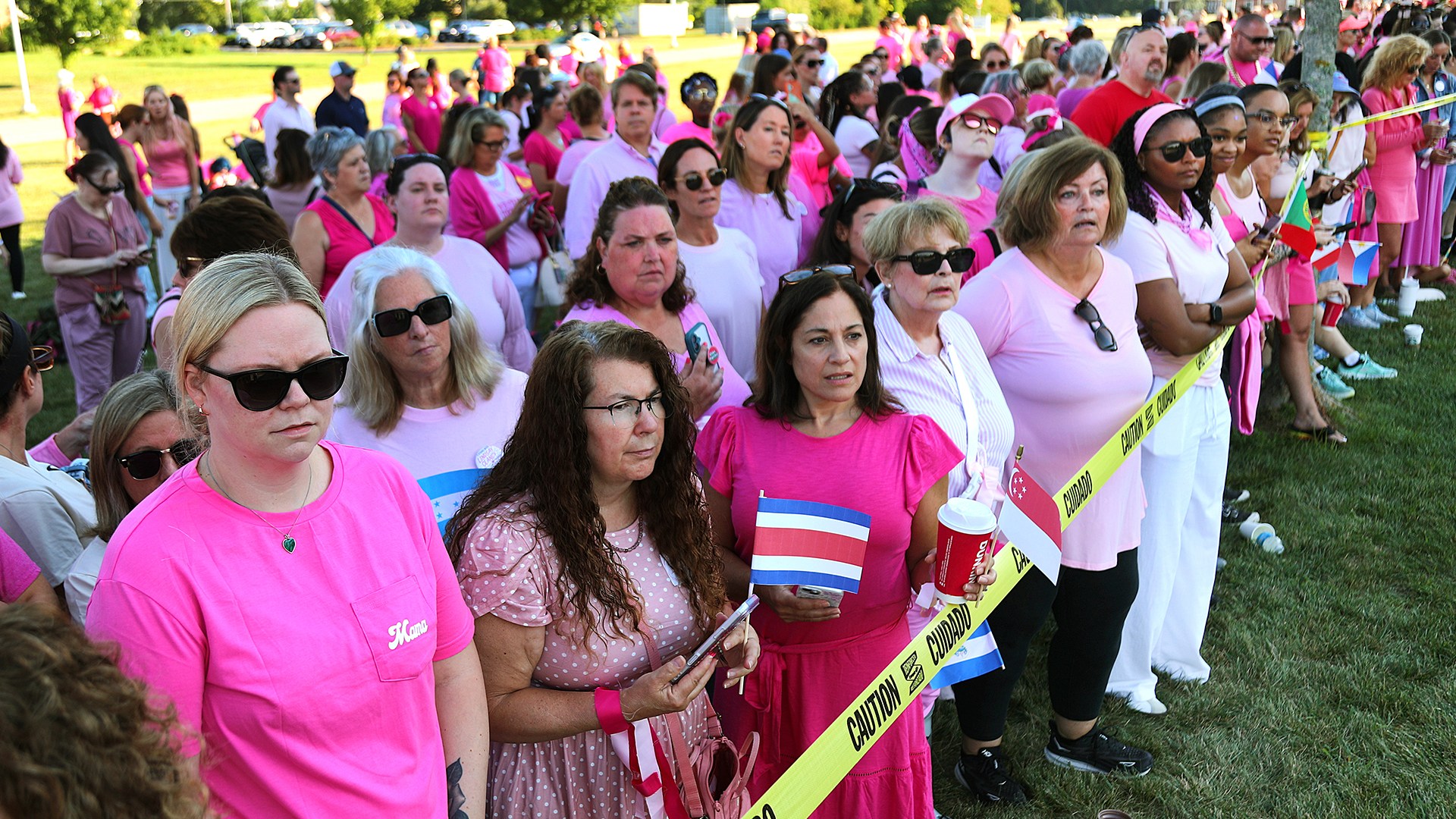
Supporters of Clancy, many dressed in pink, have followed suit to show how the case, according to defense attorney Kevin Reddington, has struck a “chord with women.”
He even revealed she has received enough fan mail to fill three mailboxes.
The U.S. Sun was in Plymouth Superior Court on Monday and saw two members of the jury wearing the exact color associated with the 36-year-old’s supporters and their calls for her innocence.
One woman with gray hair was seen wearing a pale pink shirt, while another was in a hot pink blazer.
Veteran Boston reporter Dave Wedge told The U.S. Sun at the weekend about his fears that courts could be influenced by a combination of social media and fervent followers publicly throwing their support behind defendants fighting charges.
Vastly experienced criminal defense attorney Tom Maronick said he has the utmost faith in whoever is chosen to deliver a verdict justly, no matter if there is a circus surrounding the courthouse.
But he was at pains to point out that impartiality is absolutely key.
Most read in The Sun
WILL DEATH
OAP, 83, GUILTY of knifing nephew to death & torching home over £20k inheritance
SMASH TRAGEDY
Driver reached speeds of 137mph before killing woman, 19, in horror crash
SICK CRUELTY
School worker arrested over ‘hamster massacres’ after killing 50 animals
Leaf it out
Will there be another UK heatwave in September? The latest Met Office forecast
“It’s nice to have friendly faces in the crowd,” he told The U.S. Sun.
“It’s nice to have people who are on your team, as it were. But at the end of the day, anybody in the gallery showing an emotion or cheering or anything like that, judges will typically have jurors removed if they violate rules, because we’re not there for cheering.
“We’re there to just have the judicial process very tightly control what happens in a gallery. It’s my experience with this.”
In his opening statement, Reddington told jurors that Lindsay is “living in her own hell” following the strangulation of her children.
“This is a woman who did not receive the medication or medical treatment she so desperately needed,” Reddington said. “She was suffering from psychosis at the time she went down into that basement.”
6
6
Maronick claims the impact of wading through the horrific details of the deaths of three young children would play on jurors’ minds more than people being influenced by what is happening outside the courthouse.
“It’s really hard to put the image of dead children aside,” Maronick continued.
“And Lindsay Clancy, whether due to mental health issues or not, was responsible for the death of those children.
“That’s something that is very [hard to] set aside. And a lot of times in cases like these where there’s a mental health factor, you’ll see some attorneys wanna go with a judge instead of a jury because the judge is gonna, if it’s a really good trial judge, make a decision based on the law. What’s the law say?
6
6
“The jury’s going to be listening to your arguments, and you need a jury that really believes in the science of it and really understands these issues.
“Because if you’re making a decision on emotion, it’s going to be a very clear-cut decision where you’ll find yourself at the end of the case. You’re definitely gonna say guilty if it’s because you’re looking at the children.”
For Canton resident Rita Lombardi, who was a prominent pro-Read supporter and was at every day of the first trial, the comparisons are stark.
Read was acquitted of killing her former boyfriend, Boston police officer John O’Keefe, whose body was discovered outside a party in Canton, near Boston, in January 2022.
The high-profile case deeply divided the town, with supporters of the Bentley University accounting professor taking to the streets dressed in pink, carrying pom-poms and signs, and even bringing deck chairs.
Meanwhile, members of O’Keefe’s family faced angry confrontations.
The scenes outside the court in Plymouth haven’t been as wild, yet the support for Clancy has been undeniable.
“I believe that we have a great jury system. Is it perfect? No, but it is a great jury system, and jurors know their job is to evaluate the evidence. I trust that the jury will do the job.
“I don’t believe anyone will be swayed by what people are wearing or doing outside the court. I believe this jury is a smart jury.”
Social media has been buzzing with theories about Clancy’s trial, just as it did for Read.
Wedge fears its intrusion into high-profile court cases is troubling and poses a serious problem for the American justice system.
Lombardi, 66, disagrees.
“Social media does have a place in all this. Before the Karen Read retrial, when we had the murders in Idaho, I heard all of the different things that were going on, and people were coming on social media and trying to solve the murders.
“I thought I was skeptical, but then when I saw it play out in the Karen Read murder trials, I saw the value in social media.
“You have people who have expertise in certain areas who are sharing their expertise, and a lot of these people are helping the defense solve the situation because they’re bringing forward information that the defense may or may not have had.”
For attorney Maronick, the nuances of a debate over mental health trump everything, and illustrate just why the jury has such an unenviable task.
“Obviously the jury will consider whether it was really her hearing voices or not. These are issues that nevertheless need to be explored,” he concluded.
RECOMMENDED STORIES
“Mental health is such an underappreciated problem in today’s society. So many people deal with mental health issues that are untreated, undiagnosed. And we see in so many cases these issues rear their ugly heads. And we have jails that don’t know how to account for people dealing with mental health issues.
“We have prosecutors who prosecute rather than try to find ways to address some of these things. If you’re looking at whether mental health was really the driver behind this, it’s a very different sort of analysis.”