
Subscribe to Independent Premium to bookmark this article
Want to bookmark your favourite articles and stories to read or reference later? Start your Independent Premium subscription today.
`;
document.body.appendChild(modal);
modal.addEventListener(‘click’, () => {
document.cookie = ‘mos-plan-select=; Max-Age=0; path=/; expires=Thu, 01 Jan 1970 00:00:00 UTC;’;
});
modal.querySelector(‘.subscribe-link’)?.addEventListener(‘click’, (e) => {
e.preventDefault();
document.cookie = ‘mos-plan-select=; Max-Age=0; path=/; expires=Thu, 01 Jan 1970 00:00:00 UTC;’;
setTimeout(() => {
window.location.href = ‘https://www.independent.co.uk/subscribe?regSourceMethod=Bookmarks’;
}, 500);
});
});
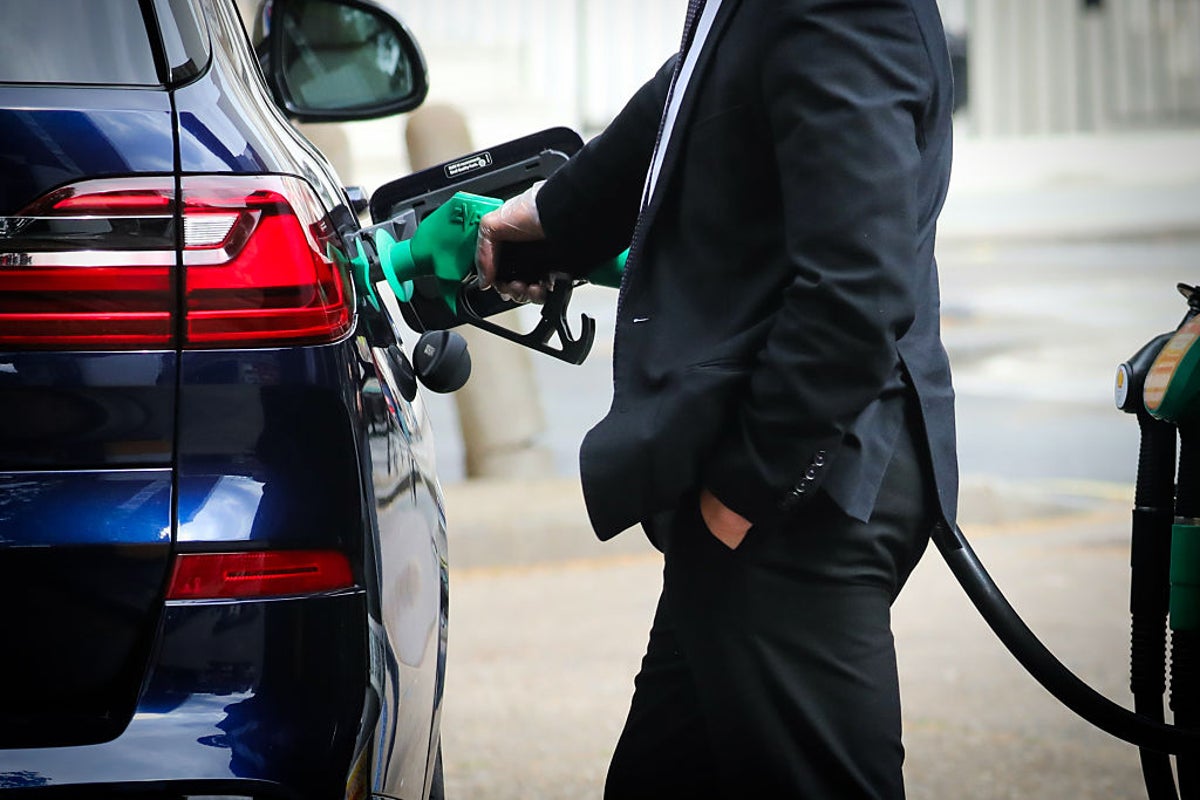
The cost of filling a family car with fuel has risen by almost £5 since the start of September, according to the RAC.
Average UK forecourt prices reached 170.54p a litre for petrol on Tuesday, while diesel climbed to 192.86p, the motoring services company said.
Diesel is now at its highest price since July 29 2022, with petrol reaching levels not seen since August 23 2022.
Fuel costs look set to increase further as oil consistently trades above 100 dollars a barrel, RAC head of policy Simon Williams said.
“Since the start of this month, the cost of filling a family car has already risen by almost £5, to £94 for petrol and £106 for diesel,” he said.
“So the pressure on the Chancellor to act to support households, so many of whom are dependent on the car, is building.
“Fuel duty is set to start rising from January, but as we’ve said previously, there is a strong argument for leaving it at its current level, at least until the end of the Parliament.”
The Treasury has been contacted for comment.
On Monday, Brent crude rose by almost 3 per cent after fresh strikes targeted Saudi Arabia and Gulf shipping, following a previous attack on a Saudi oil pipeline.
Meanwhile, last week, oil prices rose above 100 dollars a barrel for the first time since July after the latest round of strikes in the Iran war.
US officials said multiple Iranian oil tankers had been struck in response to more attempted missile attacks on a Navy warship.
The strikes in the Middle East show fighting between the US and Iran continues to escalate after more than six months of war, weighing on hopes among investors that a peace deal can be reached this year.
Richard Hunter, head of markets at Interactive Investor, said: “The outlook in the Middle East has recently worsened once more, with any signs of detente looking elusive.
“Fresh fighting in the region has seen Iran targeting a US base in Jordan as retaliation for US strikes on some of its oil tankers, while Iranian-backed Houthis struck several cities in Saudi Arabia.
“Such focus comes at a time when consumers could be affected by the lack of supply as the colder seasons approach.
“This adds another level to the inflationary concerns which have blighted investor thinking over recent weeks.”