
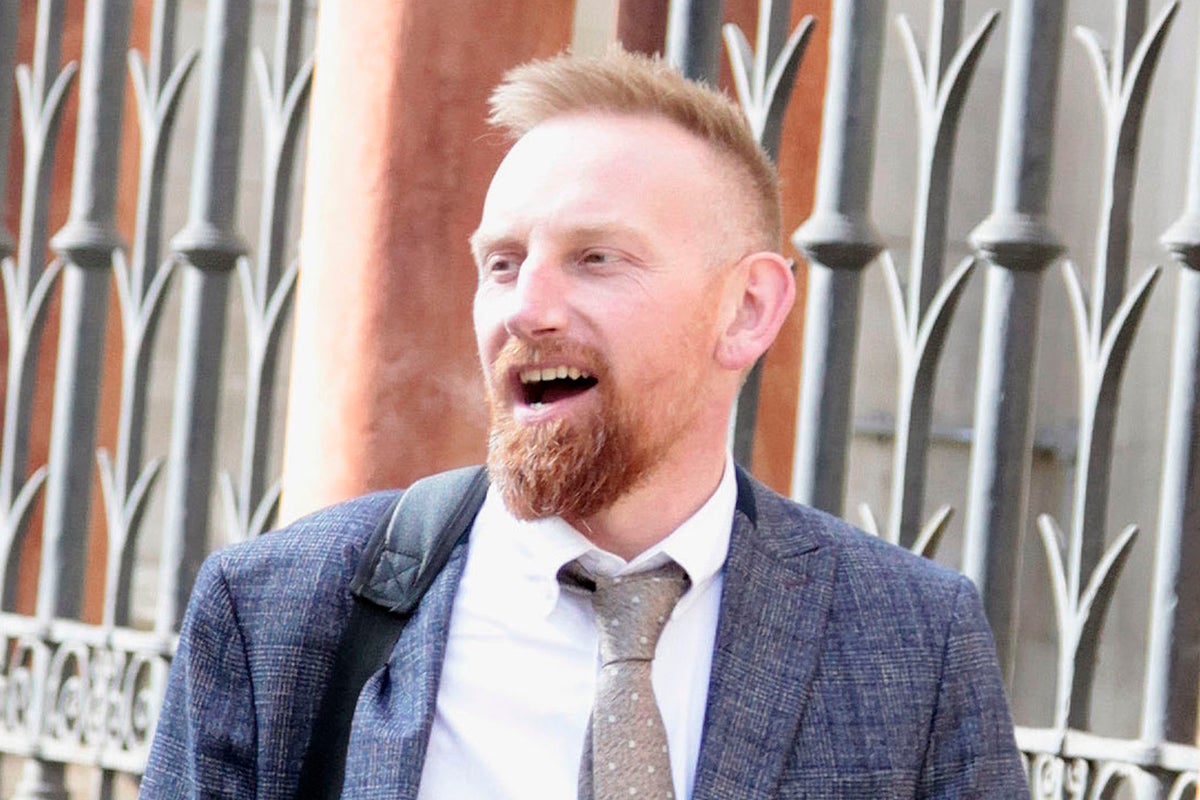
A celebrity dog whisperer who was forced to shut his exclusive kennels to clear the path for the HS2 rail project has been awarded a government compensation payout exceeding £5m.
WKD Trained Dogs Ltd, operated by canine specialist Matthew Wiggins, supplied highly trained dogs from abroad to high-net-worth clients and prominent celebrities, including Game of Thrones actor Indira Varma.
Mr Wiggins moved his operation to Brookhouse Farm near Stone, Staffordshire, in 2012, transforming the 3.4-acre site into a high-end training facility with up to 44 kennels in a bid to rear “perfect pets”.
However, the property was targeted for demolition by the Department for Transport in 2019 due to its location, which is close to the planned line of the £100bn railway route.
Seeking more than £8m, Mr Wiggins’ company brought the department before a tribunal over the “extinguishment” of the business, arguing that years of uncertainty preceding the 2023 compulsory purchase had severely impacted the firm.
Giving evidence, the businessman said that growing staff anxieties left them demoralised, damaging overall productivity and profits, while his search for replacement premises ultimately failed.
Following a hearing at the Upper Tribunal, a judge determined that the company was entitled to roughly £4.9m in compensation, with a signed court order now validating the settlement.
Tribunal deputy president Martin Rodger KC said that, had Mr Wiggins not been “distracted” by the impending HS2 threat during the Covid pandemic, he and his workforce would have adapted to the challenges and sustained the company’s output.
The pioneering trainer set up WKD in 2010 with a unique vision of finding and training the best quality dogs for onward sale, sourced from far-flung areas of eastern Europe.
The 41-year-old specialises in selling ready-trained dogs, having experienced a sudden “lightbulb” moment after picking up his pet-nurturing skills from listening to a mentor and friend who lived near him and “changed his approach almost overnight”.
Part of Mr Wiggins’ skill lies in his “entirely unique” ability to select dogs with the right temperament to be trained up and sold, while rooting out “failed” candidates which are not suitable for marketing, the tribunal heard.
Mr Wiggins’ barrister Isabella Tafur described his business as “niche, if not unique”.
“Trained dogs were not puppies and would generally be sourced and sold at an age of between 10 to 24 months,” she said.
“It supplied dogs to professionals, high-net-worth individuals, schools, organisations, and families with specific requirements,” said his barrister, with Mr Wiggins adding outside court that one of his celebrity clients was actor Indira Varma, who played Ellaria Sand in Game of Thrones.
Ms Tafur added: “Sales typically operated on a pre-order basis. Customers would pay a deposit with prices fixed at the time of the deposit. Demand typically outstripped supply, and there was a long waiting list of customers.
“Trained dogs were sold with a guarantee. If a customer experienced any problems with the dog, the claimant would carry out the remedial training required to resolve these problems. Customers were also entitled to a full refund if they wished to return their dog.
“Temperament testing refers to an approach whereby the company screened for dogs on the basis of certain traits which it identified as conducive to the ‘perfect pet’.
“The company developed an approach to this testing that was not based on breed, but rather on a list of traits derived from statistics gathered from its remedial training and refunds.”
However, Mr Wiggins and his company were thrown into upheaval when the DfT first floated the possibility of Brookhouse Farm being sacrificed for the HS2 line, with the High Speed Rail Bill later going through Parliament in 2017.
In 2023, the farm was subject to a compulsory purchase, which ended the business, since no suitable alternative premises could be found in the area where Mr Wiggins had built his company and where his staff lived.
The case reached the Upper Tribunal after a reference in order to determine the amount the DfT has to pay in compensation for the closure of the business and other losses.
Part of the dispute turned on the “shadow losses” the company suffered due to the “blight factor” which Mr Wiggins says overshadowed it and impacted trade and hit profits in the build up to its actual closure.
The “shadow losses” cover a period from 2019 until 2023, during which Mr Wiggins said the shadow of the looming acquisition “adversely affected staff morale, performance and retention”.
He said that the blight hanging over his business also impacted his “mindset and focus” and “meant he was unable to travel to his favoured supplier in eastern Europe for fear of missing out on potential relocation properties”.
Previously, dogs were assessed in a familiar environment to them in Hungary, but when he began importing Irish dogs, they were only checked over after a lengthy journey and in unfamiliar surroundings in the UK.
Mr Wiggins claimed that had resulted in a decline in the training success rate, with failed dogs sent back to Ireland, and consequently affected company profits.
The DfT’s barrister, Mark Westmoreland-Smith KC, accepted that “the rate of trained dogs to failed dogs” tailed off during the “shadow” period, but suggested that other factors, including the impact of Covid, were in play.
Giving judgment in the case, the judge said that the change in source of the dogs, due to Mr Wiggins needing to stay in the UK and hunt for a new base, was a “credible contributor” to the reduction in the training success rate.
In his evidence, Mr Wiggins had told the tribunal that the prospect of compulsory purchase had been at the top of his thoughts in late 2020 and that uncertainty distracted him from managing his business effectively.
His “lack of focus” led to “unrest” among staff, who feared redundancy and “lost the sense of long-term responsibility” for the dogs that they trained.
“Mr Wiggins’ recollection is corroborated by contemporaneous material,” said the judge.
“In communications with HS2 during 2022, Mr Wiggins noted that team members who had not yet been made redundant were ‘finding things difficult’ and ‘coming in to work on a daily basis and watching what was a thriving operation reducing to nothing’.
“Despite the absence of such evidence, and the lack of precision in much of Mr Wiggins’ own evidence on these points, we accept that the scheme had an adverse impact on staff morale and on Mr Wiggins’ own performance and that these are plausible explanations for the decline in the trained dog rate.”
He continued: “We are satisfied that the change in the source of the claimant’s dogs was attributable to the scheme and that it contributed directly to the decline in performance.
“Had Mr Wiggins not been distracted by the threat of acquisition we think he and his team would have found ways of adapting to the pandemic sufficiently to maintain their performance.
“We are satisfied that Mr Wiggins’ assessment is correct and that the main reasons for the downturn were the impact of the changes in sourcing and the decline in his own and his staff’s morale.”
He awarded about £1.3m for the “shadow losses” and another £2.7m for the “extinguishment” of the business, with further sums for other losses and costs related to the tribunal reference.
In a court order signed off at the end of August, the judge calculated the total due to be £4,907,348, but with about £3m already paid to be offset against that.
He said that the DfT would also have to pay the company’s costs of the case up to February 2025, when it made an offer to settle the dispute, but the company will pay most of the DfT’s costs after that.