
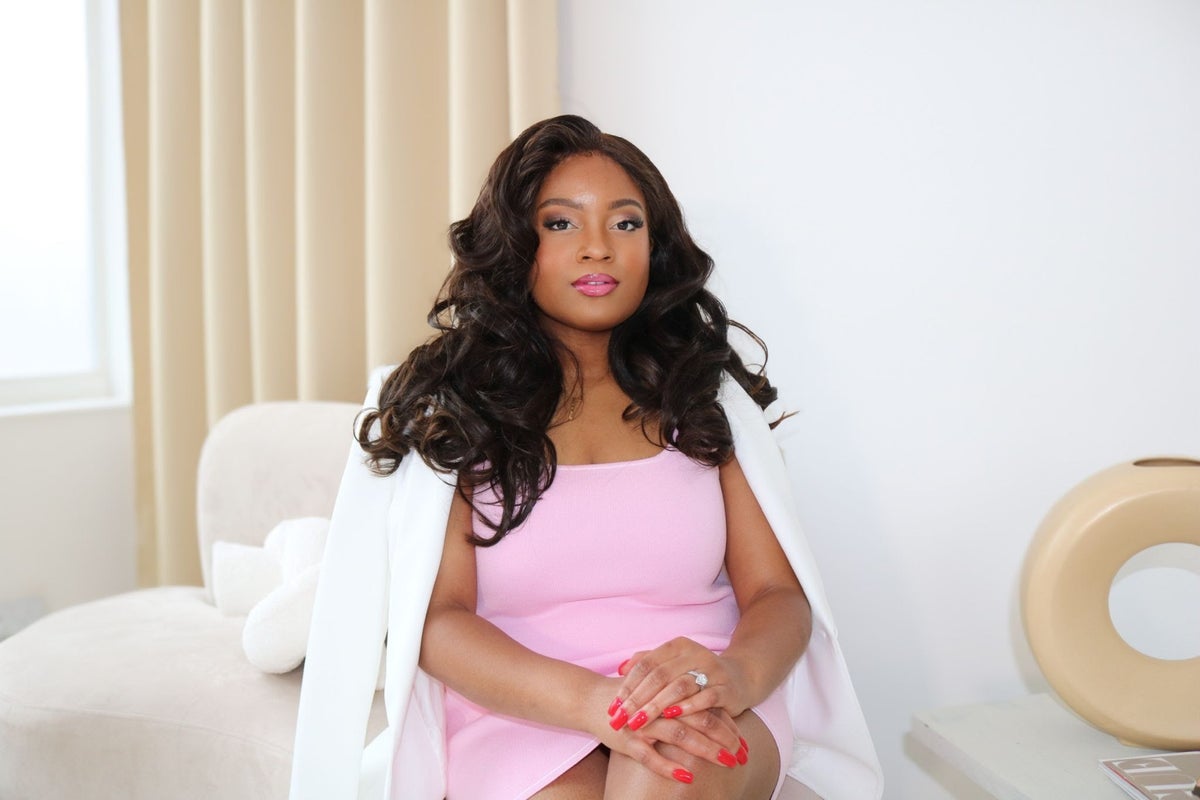
A woman with endometriosis has been left to feel like a “drug addict” as she says she needs strong painkillers to make it through the day.
Laura Jones, who currently lives in Manchester, was diagnosed with endometriosis in 2019, but her pains began when she started her period at 12 years old.
Now, Ms Jones struggles to get by without taking Co-codamol, a higher-strength painkiller, to manage her daily excruciating pain.
Ms Jones told The Independent: “I asked my husband, am I a drug addict?
“There are days where I will try to push through and not take any, but I am left in so much pain. It makes me so sad.”
Endometriosis is a long-term, chronic condition where tissue similar to the lining of the womb grows elsewhere in the body. It is common and affects one in 10 women.
Around 1.5 million women in the UK are currently living with endometriosis, according to the Endometriosis UK charity. Symptoms vary from person to person and can be severe.
Ms Jones experiences debilitating pain across her back, hips, abdomen and down her legs. She cannot stand or sit for too long as it leaves her in extreme pain.
Walking has become difficult for the 32-year-old, so she now has to use a walking stick, something she “never thought” she would have to do at this age.
She said: “I feel like a broken person. I can’t believe people walk around not in pain. It is wild to me.”
‘More than a decade of suffering before I was heard’
Ms Jones was travelling in Australia with her husband in 2019 when she found herself “doubled over in pain” and “unable to get out of bed”. After seeing a doctor there, she was offered laparoscopic surgery.
“That was the first time someone asked, ‘Could this be endometriosis?’” she said. “I was 24 years old, and it was the first time I was listened to. It took 12 years of suffering.”
When she was diagnosed with endometriosis, she was also told she would not be able to conceive a baby naturally. Since 2019, she has undergone three unsuccessful IVF cycles and a miscarriage.
She said the process of IVF triggered PMDD (premenstrual dysphoric disorder), a severe condition linked to the menstrual cycle, which leaves her feeling suicidal.
Despite sharing this with medical professionals, she claims she was not offered sufficient support or counselling besides being given the number for Samaritans.
Ms Jones advocated for herself to be given the Prostap injection every three months, which is used to treat severe PMDD. However, it places the body into a temporary chemical menopause, which makes fertility even more difficult. But Ms Jones said she would rather be in menopause at her age than “wanting to die all the time”.
She said: “Sometimes I wish I could have a different body, step out of my brain. But this is real. No one is coming to save me; I have to find my own way out.”
She had a second laparoscopic surgery in the UK three years later, in December 2022. The doctor then told her the shattering news that “nothing could be done” to help her while she was undergoing a fertility journey.
Although the option of a hysterectomy was put on the table, the major surgery would shatter her dream of carrying a child. As a result, she was only offered more nerve pain medication.
Last year reached a tipping point as Ms Jones was unable to get out of her bed for months due to the pain. Her parents then insisted she get a private MRI scan.
The £800 scan showed that she also has adenomyosis, a fibroid and a prolapse on her cervix – all of which were missed in previous investigations.
Now Ms Jones is seeking second opinions and treatment abroad in Zimbabwe and China.
“Talking about my story is a release; it’s a way to cope,” she said. “I am suicidal most of the time, and I find relief in sharing my story and hoping I can make a difference.”
Faye Farthing, head of campaigns at Endometriosis UK, said: “It is unacceptable that those living with endometriosis have to endure years of pain and uncertainty before receiving a diagnosis.
“Endometriosis care has been neglected for too long. The government must treat endometriosis as a common, chronic condition that requires systematic action, and we want an unequivocal commitment to reduce average diagnosis time to one year or less by 2030.”
An NHS spokesperson said: “The NHS is determined to do better on women’s health and ensure that women with conditions such as endometriosis and adenomyosis are given effective diagnosis, treatment and support.
“We are building more specialised services for women in the community which can offer timely support for these conditions, and so we would strongly encourage any woman experiencing similar symptoms to contact their GP for more support and advice on how they can manage and treat their pain.”
If you are experiencing feelings of distress, or are struggling to cope, you can speak to the Samaritans, in confidence, on 116 123 (UK and ROI) or visit the Samaritans website to find details of your nearest branch.
If you are based in the USA, and you or someone you know needs mental health assistance right now, call or text 988, or visit 988lifeline.org to access online chat from the 988 Suicide and Crisis Lifeline. This is a free, confidential crisis hotline that is available to everyone 24 hours a day, seven days a week. If you are in another country, you can go to www.befrienders.org to find a helpline near you