
AnalysisLindsay Clancy murder trial ends in dramatic deadlock – what comes next?Edward Helmore
District attorney must decide whether to retry case after jury’s failure to reach verdict despite hours of deliberation
Lindsay Clancy, prosecutors, defense lawyers, the judge and millions watching on are back where they started after her five-week trial over the murder of her three children ended in a mistrial.
America’s saddest case has ceased for the moment, but the legal wrangling is not over, and a second trial could now be on the horizon, prolonging and repeating an agonizing spectacle that has gripped America and the world.
The trial lurched to its conclusion on Friday as jurors in Massachusetts failed to come to a unanimous verdict. A lone male juror holdout appeared to be preventing a conclusion to the case.
That meant the trial ended as it had begun: with no legal certainty about what was in Clancy’s mind when on 24 January 2023 she killed five-year-old Cora, three-year-old Dawson, and eight-month-old Callan, and later cut her wrists and jumped from a bedroom window, sustaining injuries that paralyzed her.
Clancy, a 36-year-old former labor and delivery nurse, did not deny the killings but pleaded not guilty to the murders. Defense attorney Kevin Reddington blamed postpartum psychosis coupled with overmedication. Prosecutors said she knew what she was doing.
The jury deliberated for six days and over 30 hours, coming back three times in total in a deadlock. The jury foreperson said in a note to the judge on Thursday that a single juror had expressed reasonable doubt but would “not follow the law”.
The mistrial finally came after a nail-biting delay when the judge allowed Clancy’s defense to petition the Massachusetts supreme court to replace the outlying juror with an alternate. Massachusetts justice Dalila Argaez Wendlandt took the matter under advisement and soon after issued a decision not to intervene in the proceedings, forcing Judge William Sullivan to declare a mistrial.
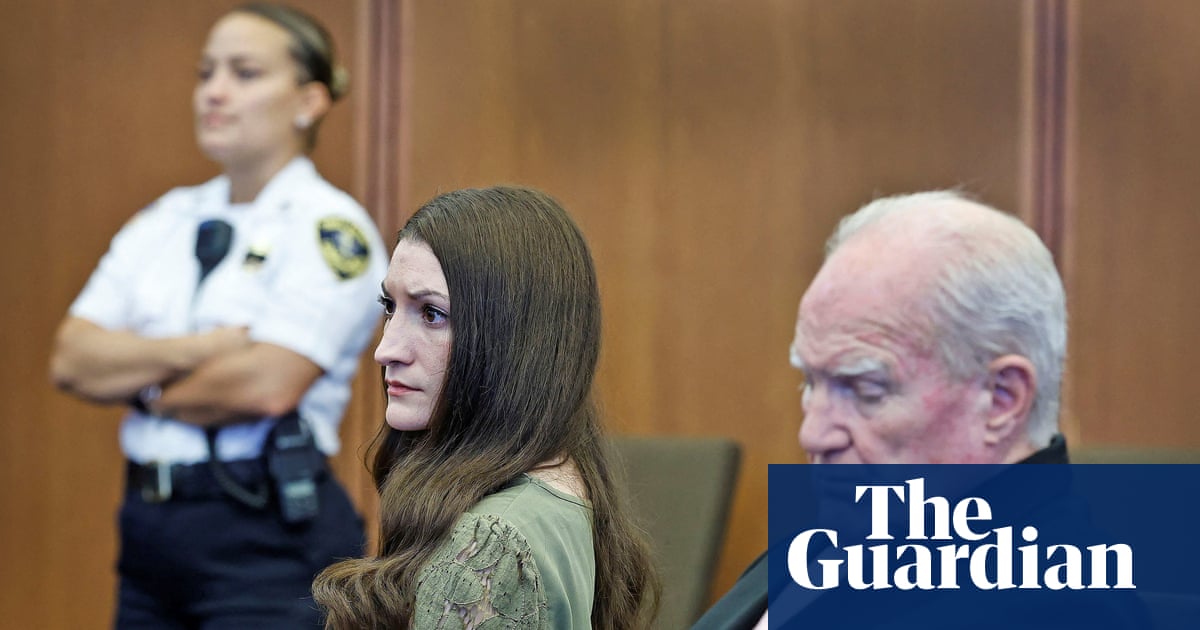
Reddington stared at the ground and let out a sigh as the judge made the ruling. At the back of the courtroom, largely occupied by supporters, people could be seen wiping away tears.
And now it starts again.
Reddington said he would file a motion for a directed finding of not guilty within days – a ruling that Sullivan could make on grounds that the prosecution failed to present enough evidence to prove the case. A status hearing is set for 29 September when a new trail date could be set.
“This whole case has been unbelievable,” said victims’ rights attorney and survivor advocate Shari Karney. “Eleven jurors believed that Lindsay Clancy did not have criminal intent to commit this crime, understood the consequences of her act, and could not conform her conduct to the law.”
The decision to try Clancy again rests with Plymouth county district attorney Tim Cruz, a prosecutor since 1985 who has served as district attorney for more than 20 years. Before Cruz’s most recent re-election, in 2022, he took aim at progressive district attorneys, saying they have been causing “anarchy and chaos” across the US. “I am against getting rid of life without parole for first-degree homicide people,” said in a debate. “I am against having a list of cases that will not be prosecuted because it does not work.”
Outside court on Thursday, Reddington said he was ready to retry the case. “Bring it on,” he told reporters. But he did not rule out the possibility of a plea deal. “We’ll see what Mr Cruz wants to do, and then we’ll talk about our options,” he said. For now, Clancy returns to Tewksbury hospital, where she has been held since the killings.
According to Karney, the complexity of the Massachusetts law on proving “criminal responsibility” – or what in other states would rest on the defense showing the defendant was insane – is a double standard. “It’s very complicated,” she says.
Part of the difficulty jurors may have had is that mental health issues are not as a transparent as physical issues, and under criminal law there is a bias against them, she says.
Karney said: “Clancy was basically having a mental health stroke, and mental health is the stepsister of the healthcare system. It’s not right. But because we cant see it, that doesn’t mean it doesn’t exist. And the medical healthcare system doesn’t want to recognize and pay for mental healthcare apart from giving out drugs to make them go away.”
During the trial, jurors heard from mental health experts who clashed over Clancy’s medical records. But it was her mother and step mother who may have provided the most powerful testimony when they testified about the steps Clancy had taken to seek help.
Paula Musgrove, Clancy’s mother, testified that she often stayed with her daughter in the months leading up to the killings because Clancy was afraid of sleeping alone, was increasingly paranoid and believed the medications she was taking “were destroying her mind”.
Susan Clancy, Lindsay Clancy’s former mother-in-law, said she was “begging for help” and “was struggling – we were all concerned”.
Forensic psychiatrist Phillip Resnick, for the defense, testified near the end of the trial testimony that that Clancy was “frankly psychotic” the day of the killings, and supported her claim that she heard a voice that ordered her to kill the children and herself.
Resnick said he believed Clancy had experienced “command hallucinations … almost like she was a puppet and someone else was pulling the strings”.
Avram Mack, a forensic psychiatrist, said he did not believe Clancy was showing signs of psychosis but suffered from a major depressive episode and retained the ability to know right from wrong. “There was the ability to act normally,” he testified.
In theory, prosecutors and defense attorneys could agree on voluntary manslaughter, a lesser charge. “The problem with a jail sentence for this woman is that she’s paraplegic,” said Karney. “How would you incarcerate a woman in a wheelchair with tremendous mental health problems in a woman’s prison, and ensure her safety?”
One takeaway from the Lindsay Clancy trial, says Karney, is the job of getting inside the head of a woman suffering postpartum psychosis is a tough task and that diagnosis and treatment is woefully insufficient.
“Telehealth is good for a sprained ankle or a cold, but not for postpartum depression or psychosis. And then you prescribe more psychotropic drugs via telehealth appointment? It’s crazy and it’s not responsible,” she said.
Explore more on these topics