
I own six guns. Here’s how to talk to conservatives about firearms
In rural America, guns are a fact of life. But even conservatives agree that properly locking them up is crucial in preventing deaths
I have six guns in my house.
The first was a vintage Winchester 12-gauge. It was the winter of 1990, and my husband and I had just moved from an urban block in north-west Philadelphia to 100-year-old farmhouse in Appalachian Virginia, where my family goes back seven generations.
That spring, we started sitting out back every night with the two outdoor dogs and 13 feral barn cats we had adopted since moving in. Invariably, our new neighbor Jimmy would drive by and stop for a beer.
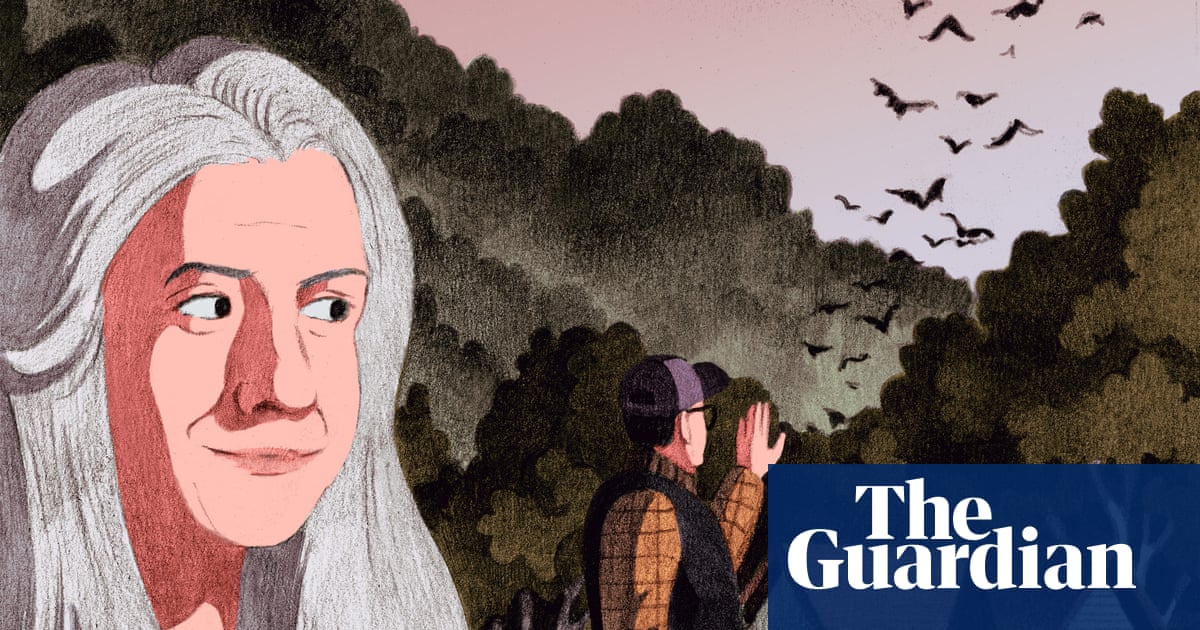
One evening in March, the three of us looked up to see a bat flying out of the old attic. Then another, and another. We stopped counting at 100. Since our only access to the attic was through a 2ft hole in the closet ceiling, we installed a door in the hallway with a drop-down ladder.
After clearing out countless piles of hidden guano, we began to worry about histoplasmosis – not to mention rabies – as the vexatious critters clawed at the edges of the new entrance, trying to squeeze their way into the house. By mid-summer, we still had not succeeded in humanely relocating what was clearly a firmly established colony.
In exasperation, we turned to our newfound repository of rural knowledge – Jimmy – who brought over his old shotgun and suggested we shoot in the air to scare them away. The bats made an immediate 180 and proceeded to chase after the shot, as if they were tracking down moths and mosquitoes.
We lost no bats, but we did gain a gun.
Our second came the next fall. As with many rural homesteads, when the Department of Transportation straightened out the road decades earlier, they located it 20ft from our front porch. My husband was out of town a good bit that summer, and someone set up a ratty old trailer at one end of our two-mile, gravel road. An abandoned farmhouse sat at the other end, and a group of single male squatters moved in.
Foot traffic grew between the two, and we suspected meth was changing hands. While I was alone one night, a particularly rough-looking fellow from the trailer stumbled up the front steps to “borrow the phone”. That weekend we took a trip to Walmart and added a 20-gauge Remington youth model to our collection.
When my mom died 10 years later, I inherited her old BB gun and Remington 22; my husband also inherited one of each. He says the two childhood BB guns don’t really count, but I think they do.
When I told a second amendment-supporting friend about our collection, she said: “You need to lock them up or get rid of them.”
I don’t disagree.
In rural America, guns are a fact of life. But the preventable deaths that come with unsecured firearms don’t have to be.
That is why, for the past two years, I’ve been working with liberal volunteers to find common ground with conservative gun owners, beginning with something remarkably simple: giving away gun locks.
As national director of Community Works, a program of the Rural Urban Bridge Initiative, I bring together volunteers across political differences to address practical needs in their home communities.
Progressives won’t gain traction in rural areas by showing up at election time and asking people to change their politics. We have to earn trust year-round by acting locally alongside our conservative neighbors to make things better for everyone: cleaning up rivers, repairing homes, distributing food – even saving lives.
When working shoulder-to-shoulder with fellow volunteers one day, it’s harder to turn around and demonize them the next. National depictions of Democrats as godless baby-killers or Republicans as gun-waving racists just don’t hold up when those same folks are standing next to you handing out diapers and school supplies, or packing food for students in the free-lunch program.
Promoting gun safety put that concept to an unusually difficult test. Guns, after all, are one of the subjects widely considered unbridgeable in rural politics.
I was aware of that when I asked volunteers to hand out free gun locks in some of Virginia’s most conservative counties. I also knew the stakes: firearms are the leading cause of death among American children and teenagers, killing 2,581 children under 18 in 2023 alone.
But decades of polarization have made it near impossible to agree on even the simplest measures. Liberals caricature gun owners as uneducated rednecks or reckless young men stockpiling AR-15s; gun owners see liberals as bleeding hearts determined to confiscate their weapons. But keeping guns away from children seemed like the one place where we might meet.
The Gun Aware Project (Gap) was founded by Karen and Nick Fischer after a local high school murder-suicide in 2023. Gap organizes free gun-lock distributions during fall back-to-school events in public schools, and volunteers from Community Works were eager to help.
One of the first distributions took place in Giles county, on the West Virginia border. There, a growing number of residents support seceding from Virginia and joining West Virginia, in part because they believe Virginia’s new gun laws threaten their second amendment rights.
It would be easy to dismiss such a group with the “ignorant hillbilly” stereotype, except for the fact that my physical therapist and her doctor husband were thinking about joining. Despite the gun lobby’s success in pitting gun owners against those who aren’t – always leading to bigger gun sales – the “sides” are often more fluid than we’ve been led to believe.
Maybe that’s why the Giles county sheriff’s office, a strong defender of second amendment rights, agreed to collaborate with the Gun Aware Project. Sheriff W Morgan Millirons issued a statement describing firearm safety as part of responsible gun ownership.
To date, Gap has given away more than 4,000 locks, 1,000 of those to local departments like Millirons’. Volunteers have spoken with more than 15,000 people in a four-county area. No proselytizing – just sharing storage safety information along with the locks.
The Fischers say they have been surprised by the number of people in NRA hats and camo who say: “I really like what you’re doing, we need to protect our kids.” The second most common response is more what they expected: “I have a right to have a weapon. Why are you people trying to take it away?”
Attuned to the rural gun culture in which they are operating, the Fischers acknowledge the second amendment, and then redirect the conversation back to safety.
Karen explains that removing the magazine from a semi-automatic firearm does not necessarily unload it: a live round may remain in the chamber, something most children – and even some gun owners – do not realize. After listening to Karen, and learning the locks were free, one woman asked for enough locks to secure 12 guns, saying it would be a Christmas gift to her husband.
“The issue is not about taking away the second amendment,” says Nick. “The issue is how we deal with living with the second amendment.”
In the same vein, the goal of Community Works is not to overcome, or try to change, rural culture. It’s about understanding, respecting and learning to live alongside our conservative rural neighbors.
Early research suggests the approach may be working. More than 4,400 surveys were conducted before and after the launch of Community Works in six pilot counties in Virginia and Georgia, along with nearby counties without the new program.
According to the study’s author, the Colby College social scientist Dr Nicholas Jacobs, residents in participating counties became less influenced by national partisan divisions and more likely to judge parties by how well they governed locally. They began to view local Democrats as distinct from national party stereotypes, instead judging people based on their contributions to the community.
What we did not foresee is that Community Works would also change the way rural Democrats viewed and interacted with their communities.
One Democratic volunteer who helped to hand out gun locks at a rural high school event reflected: “I was actually kind of scared to do this in gun country. I thought they’d call me ‘woke’ and walk right on by. But all the kids and parents were really nice, and they totally agreed with me about gun safety.”
Her apprehension was understandable. For generations, rural people – and particularly Appalachians with guns – have been portrayed as violent and backward. If you’ve seen the 1972 movie Deliverance or the more recent Netflix series Justified, you know what I’m talking about.
Historically, the Appalachian hillbilly stereotype was created in the late 1800s by “local color” travel writers to sell their stories to urban readers. Shotguns, moonshine, bad teeth and dirty overalls were all part of the image. The timber, coal and railroad industries soon adopted the negative caricature as justification for their abusive exploitation of Appalachian landowners.
It worked. By successfully casting their victims as ignorant, uncivilized and dangerous – as “other” – the corporate profiteers were given societal sanction to deceitfully extract natural resources that then reaped them huge returns in urban centers.
Since then, urban and suburban liberals have been told over and over again to be wary of folks born and raised “country”, especially those with guns.
Such was the case when White Rural Rage: The Threat to American Democracy, was released in 2024. With captions proclaiming “[w]hite rural voters are the most dangerous and anti-democratic group in the United States,” the authors promoted the more sensational aspects of their research on numerous morning talkshows.
In one 40-second soundbite, they accused white rural voters of being racist, xenophobic, anti-immigrant and anti-gay, leading to their conclusion that white rural rage was the greatest threat to American democracy. At the time, the city-based authors received a good deal of backlash from Appalachian and rural advocates for their use of tropes and stereotypes to sell their book.
I’m a liberal who loves hunting. Allow me to change your mindRead more
I often use my son’s friends as a barometer for gauging declarations I read about conservative rural white folks, especially young white males. Born and raised here, my son’s a country boy just like his friends, but unlike him, they were raised in families that have voted Republican for decades. Not even FDR or JFK were able to carry the vote in our county. Kids here wear camo and seed caps, drive pickup trucks, and skip school the first day of hunting season. They are also some of the nicest, most respectful, young people I know.
From where I stand, the idea of white rural rage as the driving force behind the downfall of democracy is just one more example of the perpetuation of stereotypes that divide the rural working class from our counterparts and natural allies in the cities.
Now, instead of the timber, coal and railroad barons benefiting, we have tech and software billionaires and corporate giants, including gun manufacturers, who wield massive control over information and commerce.
And just as in the late 19th century, it’s to the advantage of these new titans to keep the rest of us separated and blaming each other for school shootings and the price of gas and groceries, as in, “you got what you voted for.”
I’d like to think we’ve learned something in 150 years: that by working together across lines of geography, race, class, party and even guns, we might build a more equitable future.
For myself, after handing out scores of gun locks to my neighbors, I’ll be donating half our guns to a local effort called Groceries Not Guns, and safely storing the others using my brand new locks.
-
Meredith Dean is the national director of the Rural Urban Bridge Initiative’s Community Works program. Previously, she served as chair of her local Democratic party, field director for a congressional campaign, and was the founding director of a non-profit dedicated to empowering Appalachian women to actively engage in democracy