
Advertisement
Up to 97 metres beneath southern Sydney, an eeriness pervades twin tunnels dug for a multibillion-dollar motorway project which has been in limbo.
Accessed via a winding temporary passage from the surface at Arncliffe, these quiet, wide tunnels rank as the deepest roadways in the southern hemisphere, surpassing the NorthConnex tunnels, which extend 90 metres below Pennant Hills Road in Sydney’s north.
Almost complete, the tunnels have largely sat idle since a 10-metre-wide sinkhole opened up near the southern end of the 4.5-kilometre M6 motorway project at Rockdale more than two years ago.
Advertisement
It makes the M6 a project of contrasts: as deep as 97 metres towards the northern end and largely finished, while as shallow as 15 metres at the southern end and with much work to do.
After a ceasefire was struck in a long-running dispute between the NSW government and contractors in June, work to complete the $3.1 billion project is stepping up a gear. A primary focus now is stabilising ground at the M6’s southern end, where the first of two sinkholes appeared in early 2024, halting tunnelling on the final 250-metre section.
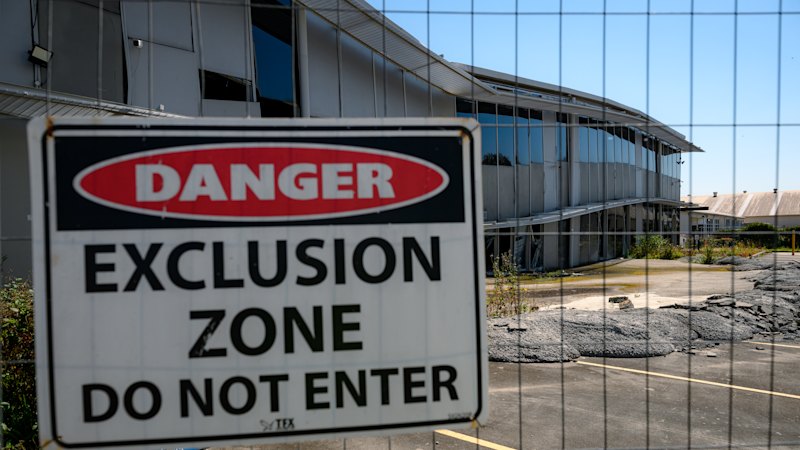
In one of the first visible signs to the public of progress, demolition of a sprawling two-storey warehouse above where the largest sinkhole appeared will start within the next two weeks. Part of the warehouse buckled significantly when concrete was poured to plug the major sinkhole two years ago.
Advertisement
With extensive experience carving out tunnels beneath Sydney for metro rail lines and motorways, M6 executive project director Terry Sleiman has had the unenviable task of dealing with sinkholes before.
In November 2005, he received a phone call at 2am to tell him that a large sinkhole had opened up above the then under-construction Lane Cove Tunnel, leaving an apartment block teetering on its edge.
“To this day, sinkholes give me nightmares,” he said.
Sleiman, who was then construction director of the Lane Cove Tunnel, said the important lesson from the 2005 and 2024 sinkholes was for staff to ensure that any changes in ground conditions were reported immediately.
Advertisement
“That’ll be the thing that stops an incident … becoming something very bad. You’ve got to make sure that first and foremost, both underground and aboveground people are safe,” he said.
Contractors from the CPB-led consortium building the M6 motorway are using an engineering technique known as jet-grouting to stabilise the 250-metre stretch of soft ground at Rockdale where tunnelling needs to be completed.
Jet-grouting is aimed at binding the ground together and is the key stabilisation work before tunnelling can resume.
Advertisement
“It’s about doing the work before we start tunnelling so that by the time we’re down there excavating, we can be confident that all that material in front of us is a strong, solid mass that’s going to hold its shape,” M6 project director Will Freelander said.
“What you want in tunnelling is consistency. We want to know exactly what ground is in front of us.”
Freelander said the focus was on both the 250 metres of soft ground, and a 300-metre section where a geotechnical fault was discovered in a cavern.
Advertisement
“We hit a geotechnical fault, and we’re just making sure that by the time we press go [on tunnelling] … we are confident we know exactly what’s happening with the ground and there is not going to be any untoward movements that cause us to stop again,” he said.
A geotechnical fault refers to some movement that has caused a vertical or sub-horizontal split in layers of rock.
Freelander said design work for the unfinished part of the project was scheduled to be completed early next year, which would be followed by tunnelling once approved.
Advertisement
A SafeWork prohibition on tunnelling in the soft-ground section has been in place since the sinkholes emerged in 2024. The watchdog will have to be satisfied with the new designs before the prohibition is lifted.
The NSW government has declined to give a new completion date for the M6, despite the end of 2028 being the transport agency’s most recent target. That is more than four years later than originally planned.
NSW Motorways chief executive Camilla Drover said the detailed design work and approvals would be needed before a time-frame for the project’s completion could be provided.
Advertisement
“We’re going to wait for them to do the design work, and then they’re going to tell us the program,” she said of the consortium building the M6. “They are incentivised to optimise it and finish as quickly as possible. Time is money.”
Connecting to WestConnex at Arncliffe, the M6 link to Rockdale will be two lanes in either direction, although the tunnels have been built wide enough for a third lane to be added in each if a second stage further south is one day constructed.
Once the M6 and a $7.4 billion motorway under Sydney Harbour are finished, motorists will be able to drive nearly 20 kilometres entirely underground via those motorways and WestConnex from Cammeray on the north shore to Rockdale in less than 15 minutes, albeit with a toll.
Start the day with a summary of the day’s most important and interesting stories, analysis and insights. Sign up for our Morning Edition newsletter.
You have reached your maximum number of saved items.
Remove items from your saved list to add more.
More:
Matt O’Sullivan is transport and infrastructure editor at The Sydney Morning Herald.Connect via X or email.AdvertisementAdvertisement