
Advertisement
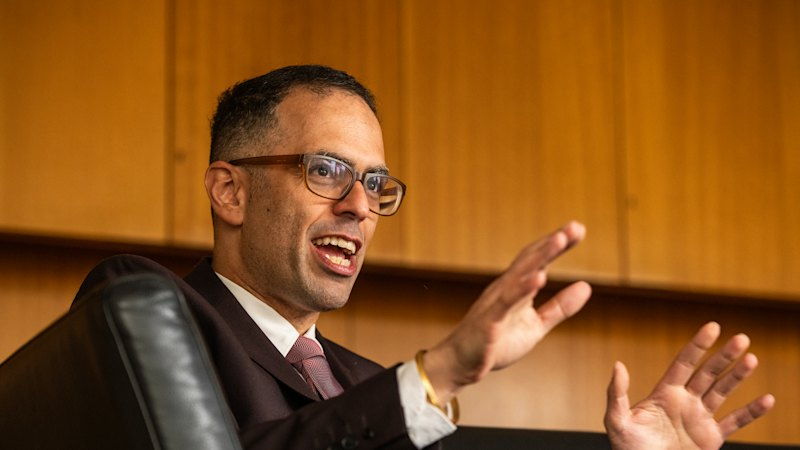
Economic management looms as a key battleground at the NSW election after Treasurer Daniel Mookhey revealed a pro-growth agenda will be a key plank of Labor’s pitch to voters.
NSW has been hit by higher interest rates, elevated petrol prices and falling house prices this year and the government has forecast the state economy will grow by just 1 per cent this financial year.
But Mookhey says NSW has a “good story to tell” on the economy.
“We will be seeking a mandate to grow the NSW economy at the next election,” he told the Herald before the Sydney Investment Summit on Thursday, hosted by the government in partnership with Macquarie Group.
Advertisement
“We are a practical, pragmatic, predictable government and that is leading to more jobs, higher wages and higher levels of private investment.”
The investment summit – which brings together global institutional investors, superannuation funds, senior figures in politics and business – aims to promote Sydney as an Asia-Pacific financial hub and unlock capital for critical sectors across the state.
“We will be showcasing the flywheel between Australian science, Australian capital markets and Australian tech that is creating an investment pipeline that is getting noticed more and more across the world,” Mookhey said.
“One of Sydney’s unheralded stories is that we produce far more start-ups, scale-ups and unicorns [a high-value start-up] per capita than most places in the world, and we think a huge reason why is because we’ve got so many world-leading universities within close proximity to the CBD.”
Advertisement
Mookhey’s federal government counterparts are under pressure to reduce overseas arrivals in response to hardline immigration policies promoted by the politically resurgent One Nation party. That has cast a shadow over university sector revenue, which is heavily reliant on full fee-paying foreign students.
Mookhey said migration policy “should always be debated” in Australia, but emphasised the importance of the university sector to future prosperity.
“When it comes to our universities, we should recognise that they are NSW’s second-biggest export earner, the biggest source of income in our service-based economy,” he said.
“They also are a huge reason why we can connect to the world and to the world markets … they build a huge amount of goodwill for Australia.”
Advertisement
NSW is the nation’s most popular education destination, attracting 39 per cent of overseas students coming to Australia. The export revenue earnt by the NSW international education sector totals around $20 billion a year.
The government also estimates about one in seven start-ups employ current or former international students.
Mookhey said Labor will seek voter support for its “common sense” economic strategy at the election next March.
“We are the only state that is growing as a result of the private sector, not the public sector – we’ve been able to do that at a time of high interest rates,” he said.
“We’ve been able to do that while we’ve been repairing the budget, we’ve been able to do that while we’ve been cutting the levels of public debt. We’ve done that by creating a climate of predictability, of practicality, of pragmatism that is certainly noticed by Australian corporates and is getting noticed more and more by world investors.”
Advertisement
Private investment in NSW has been boosted by activity in renewable energy and AI-related infrastructure, especially data centres.
“We don’t think it’s an accident that private investment is going up in NSW,” Mookhey said. “We think it’s a large vote of confidence in the fact that we have stability here.”
State Final Demand, a key measure of economic activity, rose by a solid 3.5 per cent in NSW over the year to June. The NSW unemployment rate has also been relatively low.
However, three interest rate increases this year along with a recent downturn in the property market threaten to drag on economic activity in coming months.
Advertisement
The state budget in June forecast the NSW economy would expand by just 1 per cent in both this financial year and next – well below the long-run growth average.
Mookhey said Sydney’s status as an international financial hub was on the rise, fuelled by Australia’s giant pool of superannuation savings, trustworthy legal institutions and a highly skilled, linguistically diverse workforce.
“These are big sources of strength that are the platforms for future prosperity, and we shouldn’t weaken them,” he said.
Thursday’s event, at the Art Gallery of NSW, will be the second annual Sydney Investment Summit.
Start the day with a summary of the day’s most important and interesting stories, analysis and insights. Sign up for our Morning Edition newsletter.
You have reached your maximum number of saved items.
Remove items from your saved list to add more.
More:
Matt Wade is a senior economics writer at The Sydney Morning Herald.Connect via X or email.AdvertisementAdvertisement