
Advertisement
The Albanese government’s push to allow Australians to opt out of social media algorithms will hamper One Nation and right-wing politicians from reaching audiences, experts have warned, as Labor insists the policy will not curb free speech.
Liberal frontbencher Jacinta Nampijinpa Price and One Nation MP Barnaby Joyce have accused the government of politically motivated censorship, while Prime Minister Anthony Albanese argues the changes are designed to give social media users more choice.
“Slowly but surely, [Labor] are wanting to control social media. They are wanting to control the media to benefit them, not the Australian people,” Price told journalists at Parliament House in Canberra.
“The prime minister is not very popular at the moment, and neither are his ministers … this [change] is absolutely because this government feels like these algorithms aren’t working in their favour. So, in order to change that, maybe they should change their policies [to ones] that support the Australian people because we’re not seeing that at the moment.”
Advertisement
Labor released the first draft of its Digital Duty of Care laws on Tuesday, announcing that under the reforms, adult users would be able to choose between an algorithm-fuelled social media feed or to just see the accounts they’ve opted to follow.
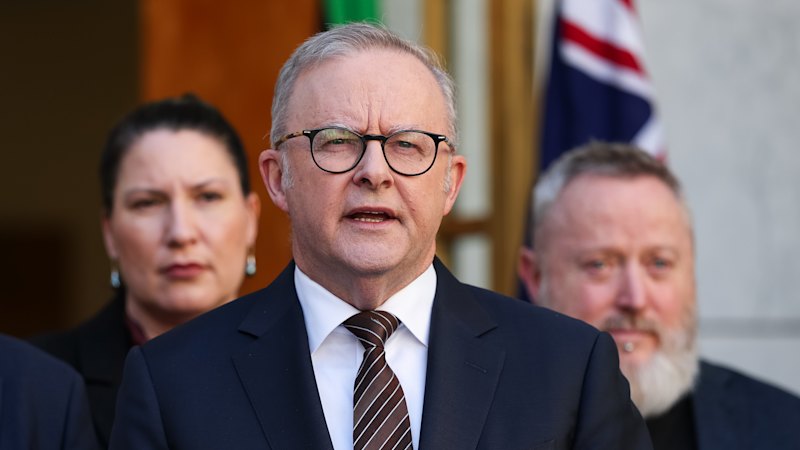
At a press conference in Canberra announcing the policy, Albanese said: “Let’s be very clear about what this is about. It’s not about censorship. It’s about giving people control themselves over what they see.”
“This is sensible, pragmatic, practical reform. It gives users choice and it will hold the big tech companies responsible for inaction. If they don’t follow our laws, they will face significant penalties of more than $100 million.
“We have an opportunity to shape technology for the better rather than let it shape us. And that is what our reforms are all about,” Albanese said.
Advertisement
The government is seeking to pass the legislation by the end of the year, probably with the support of the Greens, but is expected to face a protracted fight over claims the policy limits free speech.
“There is a political motivation in there. Having been in politics for 21 years, I think that what people say at the podium is different to what they say when the door is locked,” Joyce said.
“So many people have become engaged with politics, with One Nation, through their capacity to engage online and with each other. Labor see this as a threat. If the Labor Party are to beat us, and the Coalition are to compete with us, they need to be a better party than us.”
A study published in scientific journal Nature found that social media platform X’s algorithm “promotes conservative content and demotes posts by traditional media”.
Advertisement
Associate professor Timothy Graham from the Queensland University of Technology, who specialises in online influence and algorithms, said the reforms would have a seismic effect on Australian politics.
“If it goes ahead as how it’s been drafted, it would have a negative impact on the amount of attention and engagement right-wing politicians receive simply because people are not going to have their content injected into their feeds as much as they would have otherwise,” Graham said.
“I think that it will have a pretty seismic impact on political strategy, on political communication strategy.”
Political strategist Ed Coper, who has worked on campaigns for federal Labor, said he expected the move to hurt One Nation’s reach, but did not agree with Joyce and Price that the government had acted out of convenience.
Advertisement
“I think there’s a strong correlation between One Nation’s algorithmic success and their support in the polls, that’s one of the biggest variables that has changed in Pauline Hanson’s career. She’s been saying the same thing for 30 years, but now with the algorithm on her side, she’s more popular,” Coper said.
Coper, whose book Angertainment focuses on social media outrage, said the much clearer political motivation for Labor was the public push to alter algorithms and curb online harm.
Independent senator David Pocock, a progressive who has had broad success on social media, said the current algorithims “reward outrage”, which he sees as a danger to democracy.
“It will be important to see how they actually legislate and enforce this. We’ve seen in Europe social media companies disable other features when people opt out of the algorithm, reducing the user experience,” Pocock saidd.
Cut through the noise of federal politics with news, views and expert analysis. Subscribers can sign up to our weekly Inside Politics newsletter.
You have reached your maximum number of saved items.
Remove items from your saved list to add more.
More:
- Social media
- For subscribers
- Anthony Albanese
- Barnaby Joyce
- ALP
- Liberal Party
- One Nation
- Political leadership
- Anika Wells
- Jacinta Price
Nick Newling is a federal politics reporter for The Sydney Morning Herald and The Age.Connect via X or email.AdvertisementAdvertisement