
Advertisement
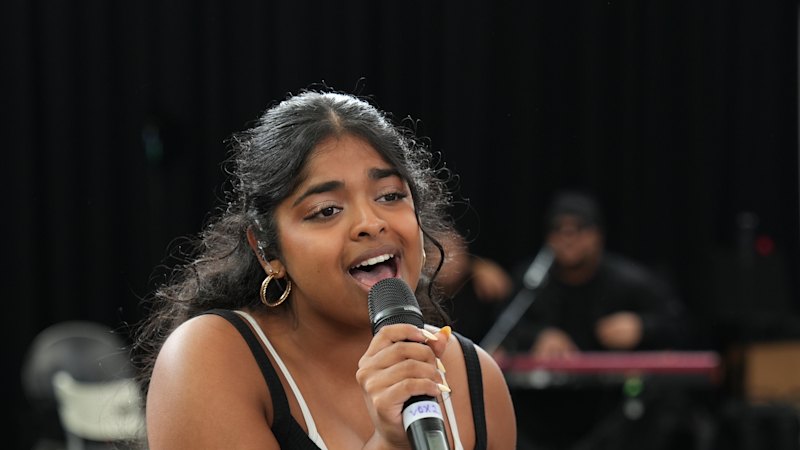
Ananya Hariharan’s first singing lesson as a six-year-old was sparked by being told off in class.
The little girl with a big voice would belt out her favourite song from Disney’s Frozen as she did her times tables and learned to write.
“My teachers would get really annoyed at me, so they asked my mum to put me into singing lessons,” recalls Hariharan, now 18. “They thought that I could be really good.”
They weren’t wrong.
Advertisement
Fast-forward 12 years and Hariharan has graced stages from Hamer Hall to John Cain Arena, landed lead vocalist roles in multiple Victorian State School Spectaculars, and added a Premier’s VCE Study Award for Music Performance (VCE VET) to her impressive CV.
She even made the final audition rounds for a popular TV talent show during her final year of school.
The classically trained singer was the first in her family to pursue music, and last year studied both VCE and VET music in year 12 at Mount Waverley Secondary College.
“The two music subjects were incredibly different,” Hariharan says.
“VET music taught me how to play in a band, work with other people and more industry-based skills, whereas VCE music taught me more of the technical side, such as theory and learning how to perform in a more professional environment.”
Advertisement
She admits that the music exams were her most nerve-filled performances to date.
“I think it’s even more daunting than auditioning for TV, just because you know someone’s examining you, marking you,” Hariharan says. “With a TV show, they’re just watching you to see if you’re fit for a show. The exams were terrifying, but also a lot of fun actually. I just let myself feel the music.” The VCE Music Repertoire Performance exam required a 20-minute set of songs from multiple genres, while for the VET subject, she performed a 35-minute set with a band.
Her advice on song choice is to be guided by personal preference. “You need to pick pieces that you actually like because you’re going to have to sing them or play them for a very long time,” Hariharan says.
“When you get in the exam room, you want music that makes you feel comfortable, not stressed.”
Advertisement
She adds that it’s important to focus on “making yourself proud”, rather than doing “what you think the examiners want to hear”.
Hariharan’s advice comes from experience, having changed her VCE set list just one month before the exams as they weren’t the right fit.
She also credits a support system of teachers, family and friends for her success in the VCE.
She was accepted into a bachelor of music at Monash University, specialising in popular music, and is performing R&B, soul and jazz songs around Melbourne.
“I want to put my music out there and make people happy through my music, but I think my biggest goal is to open a singing school,” she says. “I’ve been put through some really rough coaching experiences in the past. I want to nurture younger kids in a way where they can embrace their uniqueness.”
Advertisement
The 2026 VCE music examinations start on Monday, October 5.
VCAA tips for performers
- Bring ID with clear photo and your name
- Don’t wear a school uniform
- Rehearse regularly in a range of environments and to different audiences to help boost confidence
- Seek regular feedback from teachers, and balance study time between all exams.
Continue this series
VCE Guide 2026Up next
Flexible futures shift focus off ATAR
Interest in vocational and applied learning is growing alongside traditional studies.
Goals and determination driving Steph to succeed
Moving from a bricks-and-mortar school to Virtual Schools Victoria was a game-changer for Steph Woods.
The simple question that set Isabella on a new path
Three years’ ago, Isabella Mavrogiannis didn’t know a thing about carpentry.
You have reached your maximum number of saved items.
Remove items from your saved list to add more.
More:
AdvertisementAdvertisement