
Advertisement
The escalation of the US-Iran war, now in its seventh month, is expected to put more upward pressure on airfares, petrol and diesel as the higher cost of fuel filters through the economy.
Fears of further oil supply disruptions have deepened after Yemen-based Houthi militants launched a new wave of attacks and seized an island in the Red Sea, the body of water Saudi Arabia has been using as an alternative oil-export route to bypass the Strait of Hormuz.
The cost of crude oil rose past $US100 a barrel ($139), almost reaching $US110 last week, while the more expensive and volatile jet fuel refining margins climbed to $US163 a barrel. Before the conflict expanded in February, the price was around $US89 a barrel.
Since then, airlines globally have raised ticket prices, trimmed routes and diverted more funds to operate their fleets. For airlines, fuel is the largest operating expense.
Advertisement
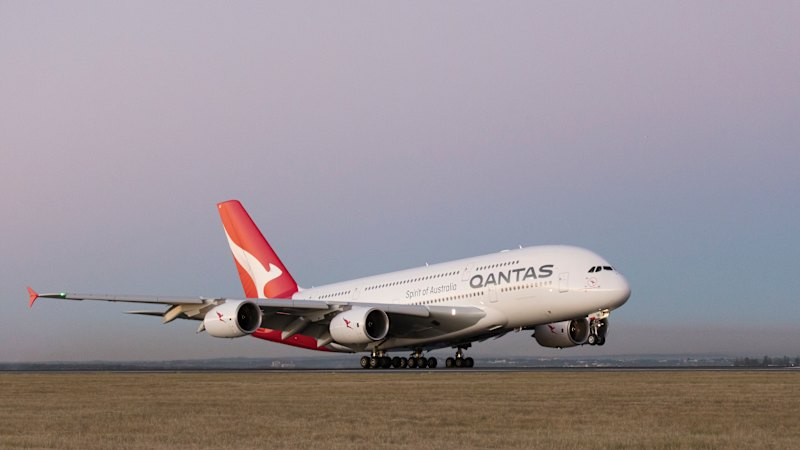
Qantas chief financial officer Rob Marcolina said the airline will review how many seats it can profitably offer on various routes, ticket pricing, and operating costs.
“We’ve obviously seen a higher fuel cost for the last five or six months, and so the levers that we have been focused on are ones that we’re going back to.”
“There’s just a doubling down on the costs and where we can maximise profitability,” he said.
Already, Qantas’ fuel bill has jumped by $610 million in the year to June 2026 after a $400 million benefit from fuel hedging. In its outlook statement for 1H27, Qantas forecast global jet fuel prices will remain elevated for the rest of calendar year 2026, “with an assumption being that there would be a continuation of the hostilities”, Marcolina said.
Advertisement
Virgin, which shielded its profits from the oil price shock last financial year by extensive fuel hedging will face a much steeper bill ahead. Airlines use hedging contracts to lock in shipments of fuel at pre-agreed prices and help stabilise their operating costs.
In August, the company released guidance showing that while it remains 96 per cent hedged in Brent in the first half of fiscal year 2027, its proportion of hedging of the more volatile and expensive jet fuel refining margins fell from around 80 per cent to only 20 per cent.
“Therefore, yes, we are more exposed,” Virgin CFO Race Strauss said at the end of August.
While fuel costs were flat for Virgin in FY 2026, they could swell by as much as $700 million in the first half of fiscal year 2027.
Advertisement
“The issue that you have is the availability of refining margin to make it economical. Because when you take out any hedge, you need someone on the other side to counter that hedge.”
In the current market, no one is betting on lower prices in the short term.
Because oil is the main ingredient in petrol, diesel and jet fuel, increases in prices are driving up costs for motorists and airlines in Australia and around the world.
The national average price of regular unleaded at petrol stations across the nation had risen to $2.13 a litre by the end of last week, up 37 per cent since July, according to figures from the National Roads and Motorists Association.
Advertisement
Average diesel prices have risen even more sharply, up 45 per cent to $2.61 a litre.
NRMA spokesman Peter Khoury said there was no good news coming for Australian motorists out of the Middle East. “If anything, it has gotten worse this week,” he said.
The deteriorating situation has pushed Australia’s regional oil benchmark Tapis crude up by 37 per cent since July, Khoury said.
“The world needs an immediate de-escalation of violence and freedom of shipping to return so that these prices can fall and the world can return to some degree of normality,” he said.
Advertisement
The Australian Institute of Petroleum’s Malcolm Roberts said: “The first question is whether it’s going to stay there at $US100 a barrel or whether it’s going to move up or down and stay at a new price point.
“Right now, the market’s obviously less optimistic about an early resolution [of the conflict] so the prices have gone up.”
The Business Briefing newsletter delivers major stories, exclusive coverage and expert opinion. Sign up to get it every weekday morning.
You have reached your maximum number of saved items.
Remove items from your saved list to add more.
More:
Chris Zappone is a senior reporter covering aviation and business. He is former digital foreign editor.Connect via X, Facebook or email.Nick Toscano is a business reporter for The Age and Sydney Morning Herald.Connect via X or email.AdvertisementAdvertisement