
Advertisement
September 8, 2026 — 8:00pm
You have reached your maximum number of saved items.
Remove items from your saved list to add more.
Fashion museums around the world include a feast of designers from Chanel through to Jean Paul Gaultier. While there are a few Australian designers in the mix, it’s still fairly early days when it comes to collecting the more recent talent from Down Under.
The National Gallery of Victoria (NGV) was recently donated a substantial collection by Australian designer Martin Grant, now based in Paris, along with others, such as Akira Isogawa and Toni Maticevski. Several more are being closely watched.
Shapiro Auctioneers is regularly finding Australian designers appearing at auction, including Collette Dinnigan, who first presented her collection in Paris in 1995. It’s surprising then, given her presence on the fashion scene well into the ’90s, that her clothing, such as a laced embossed camisole, can be purchased on the secondary auction market for only $40.
Buy what you love rather than banking on a financial return.Ida Combley, co-ordinator of design at Shapiro Auctioneers
Advertisement
Others, such as Zimmermann, who also cut through to a European audience and still does, fares considerably better at Shapiros. “Zimmerman’s ‘Amalfi Coast’ collection with its lace and floral prints, is still popular, as well its evening dresses, reaching several hundred dollars,” says Ida Combley, co-ordinator of design at Shapiro Auctioneers in Sydney.
It takes a few more decades back into this fashion industry before the big bucks ‘kick in’. Comley refers to a late 1980s dress designed by Linda Jackson in collaboration with Jenny Kee and sold through their store, Flamingo Park in Sydney’s Strand Arcade, as getting more traction, selling at Shapiros for $480 plus buyer’s premium.
Featuring the image of Lunar Park on the back and the words ‘Just for Fun’ across the front, the design evoked the heady days of that period.
Designers from the more recent past, such as Bianca Spender, are also attracting an audience on the secondary market – with one of her dresses selling for $945 plus buyer’s premium. Some Australian designers attracting attention are less well known to the broader Australian audience, with Combley noting the recent collections of Nicol & Ford, recognised for their silhouettes and garment construction.
Advertisement
“They’re continually experimenting with fabrics,” she adds. Other designers such as Song for the Mute are drawing attention, not only for their designs but the use of poetry on many of the garments.
“Most of the people collecting Song for the Mute are in their mid-20s and it’s often difficult to predict if the prices on the secondary market will head north,” says Combley, who certainly sees a designer’s representation on the catwalks of Paris as being one factor to increase the value of a designer’s work long term.
“Sometimes, you need a 20-year gap between when something’s first released and how valuable it is now. There’s a considerably longer time period when you’re valuing European fashion,” adds Combley, who suggests “buy what you love rather than banking on a financial return”.
Patty Huntington, Features & Fashion News Director at Harper’s BAZAAR Australia, has been following the rise of Australian fashion designers since the mid-1980s.
Advertisement
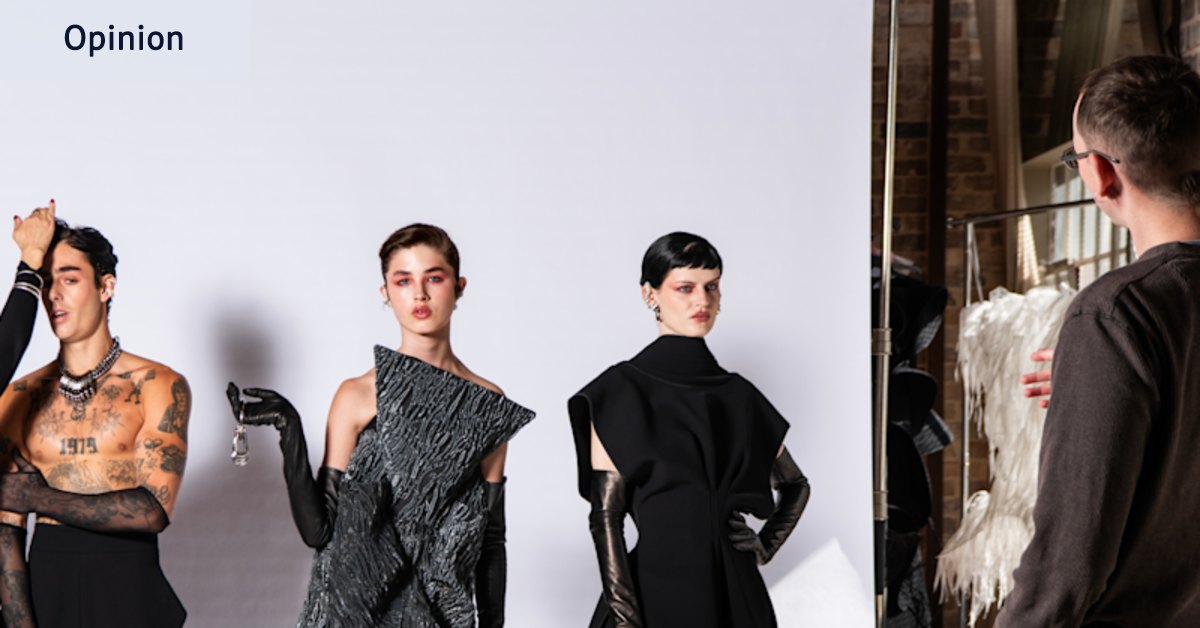
She singles out designers such as Toni Maticevski, who certainly made an impact with his recent collection at Australian Fashion Week, held in May. His two brides, one wearing black lace, the other white, were donned with headdresses akin to bird cages.
“Designers like Toni, who have an artisanal approach will certainly be highly collectable in the future, together with others such as Romance was Born,” says Huntington, who also points out the designs of Grace Lillian Lee, a First Nations fashion designer, who has also collaborated with the likes of Jean Paul Gaultier.
“I would say that the value is in the craftsmanship, with some of Lee’s designs conceived like sculpture.”
While museums and galleries such as the NGV and Sydney’s Powerhouse Museum have been collecting contemporary Australia fashion for many years, there are also smaller institutions, such as The Australian Museum of Clothing and Textiles in Maitland in the Hunter Valley, that include fashion designers from the more recent past.
Here, one can find a blouse from the 1980s, designed by Prue Acton along with a pewter coloured shirt-style dress from the late 1970s, designed by Anthea Crawford.
Advertisement
“We have over 10,000 items up to the year 2000, from ball gowns to clothes people wore every day. But there are certain items that always remain important,” says Lynette Huckstadt, Collections Manager. “Just look at this one, this red Carla Zampatti jumpsuit from the 1970s. It’s an important part of Australia’s fashion history, as was the designer.”
Expert tips on how to save, invest and make the most of your money delivered to your inbox every Sunday. Sign up for our Real Money newsletter.
You have reached your maximum number of saved items.
Remove items from your saved list to add more.
More:
Stephen Crafti is a specialist in contemporary design, including architecture, furniture, fashion and decorative arts.AdvertisementAdvertisement