
Advertisement
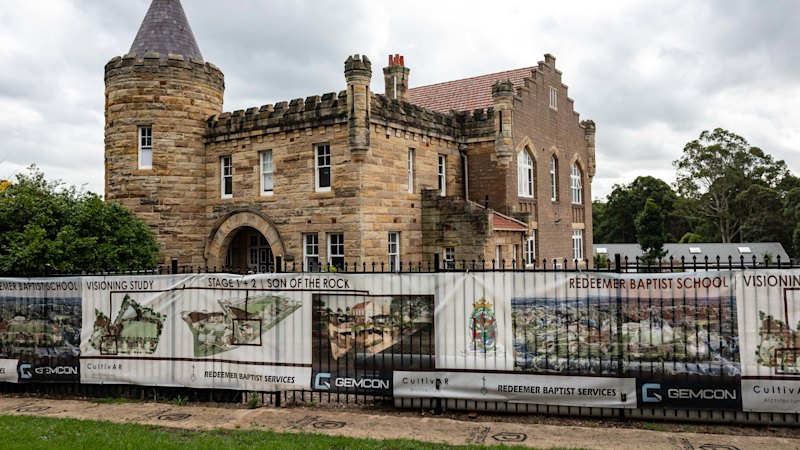
A controversial Sydney private school faces the prospect of having to repay thousands in wages to staff who claim to have been exploited.
The Independent Education Union has filed an application with the Federal Court to recover wages for two people who were staff at Redeemer Baptist School but who were treated as volunteers.
“The union believes Redeemer Baptist has broken the law by not paying staff,” said Independent Education Union of Australia NSW/ACT branch secretary Carol Matthews. If the claims are successful, it could open the floodgates for similar claims.
“We anticipate we’ll be adding more people to the application.”
Advertisement
A parliamentary inquiry into the North Parramatta private school was launched following a joint Sydney Morning Herald and 60 Minutes investigation. The reports exposed allegations that the acclaimed school denies teachers wages and enforces extreme control over members, dictating underwear choices and forcing students to live with staff, including the school principal.
In his submission and evidence to the inquiry, NSW Anti-Slavery Commission chief James Cockayne called for law enforcement to investigate possible criminal offences, including forced labour and servitude.
“Freedom of religion is a fundamental human right, but so too is freedom from slavery,” Cockayne said. “There’s nothing in our law that says under the colour of religion you are exempted from the application of workplace laws, of child protection laws.”
School headmaster and bursar Russell Bailey said he categorically rejected that volunteer work could be equated to modern slavery practices.
Advertisement
Submissions to the parliamentary inquiry detail allegations of severe sexual, physical, emotional and spiritual abuse. Ex-students and former members have decribed the school and the church as a “cult” operating as an “invisible prison”.
Bailey said any form of abuse or coercive control was abhorrent to the school.
A submission from a former personal assistant to church leader Jonathan Cannon alleged she was required to run his household, type his university assignments, which were drafted by his wife, and that she had to ask permission to attend personal events.
She felt she could not say no to Cannon: “I was afraid to do so,” she wrote.
Advertisement
When her brother committed suicide, she said she was forbidden from speaking to her peers and that she had been restricted to a single 10-minute monitored phone call with her boyfriend.
“Looking back, I recognise there was a significant difference between believing I was willing and actually being free to refuse,” she wrote.
“Only after leaving Redeemer Baptist did I realise that ordinary volunteers are free to decline work, change employment, seek independent advice and make personal decisions without fear of damaging their family, relationships, or standing within the community.”
In a previous statement, Redeemer headmaster and school spokesperson Russell Bailey said the church respects the decisions of those who decide to leave and wishes them the best in the future.
In a submission to the inquiry, Bailey said that in its 45-year history, the school “has never been in breach of its legal obligations”.
Advertisement
However, inquiry chair and Greens MLC Abigail Boyd questioned that defence. “Whenever any institution says that, one of two things is true. Either they are absolutely above reproach and squeaky clean or they’ve just not been caught,” she said.
“And so, if all of the evidence that we have in front of us with all of the potential breaches of various bits of regulation and laws, if they have not been discovered before now, then that is a real failure on our authorities to actually make sure that rules are being complied with.”
Cockayne said he examined Redeemer alongside indicators that suggest the potential presence of a “range of criminal offences”.
“What’s common to those criminal offences is that one person or organisation has treated another as if they have ownership over them,” Cockayne said. If members’ ability to leave was constrained, “you’re in the area of forced labour or even what we call servitude, and that’s a real red flag”.
Advertisement
He said the commission was concerned that group-based coercive control was potentially occurring in the school and the church.
The parliamentary inquiry, initially set for a one-day hearing, has been extended, and church leader Cannon may be summoned to provide evidence. Approached in person, Cannon declined a doorstop interview but he said he had “nothing to hide”.
The parliamentary inquiry resumes on October 12.
With Natalie Clancy and Amelia Adams
Continue this investigation
Redeemer Baptist School investigationUp next
- Exclusive
After Elizabeth, Redeemer Baptist Church was banned from taking in children of the state. Instead, it opened a school
The gravel may still be embedded in Elizabeth Bradbury’s knee, but she refuses to carry Redeemer’s secrets any longer.
- Exclusive
‘Serious allegations and concerns’: Sydney private school to face parliamentary inquiry
Six members of the Redeemer Baptist school and church community bravely told us their stories. Now parliament will hold the school to account.
- Updated
‘Fire and brimstone on acid’: Inside a Sydney private school’s control tactics
Survivors of Redeemer Baptist School have appeared at a parliamentary inquiry alleging extreme control was exercised over their lives.
You have reached your maximum number of saved items.
Remove items from your saved list to add more.
More:
Emily Kowal is a Walkley award-winning education reporter for The Sydney Morning Herald.Connect via email.AdvertisementAdvertisement