
Advertisement
You have reached your maximum number of saved items.
Remove items from your saved list to add more.
In the early hours of September 22, 1882, a catastrophic inferno consumed the Garden Palace in Sydney’s Royal Botanic Garden. Within 40 minutes, its vast timber frame had been reduced to ash. Among the treasures lost were an embryonic collection of Indigenous artefacts, the colony’s 1881 census and vital records documenting early land grants and railway surveys.
From those ashes emerged the institution that would eventually become the Powerhouse Museum. As chief executive, Lisa Havilah often cited that foundational conflagration as she prepared to reinvent the museum on the banks of the Parramatta River – the most consequential and expensive attempt yet to redefine what the institution stood for, little knowing she herself might be scorched in the undertaking.
The allegations that surround Havilah’s departure relate to non-compliance with procurement legislation, regulations, and conflict-of-interest disclosures. While these remain untested, and Havilah may well be exonerated, they raise broader questions around governance and oversight, as well as the level of support Havilah received or the types of guard-rails imposed over her procurement delegations.
As the investigation process takes its course, the task of opening the museum itself now falls to NSW Government Architect Abbie Galvin and former Sydney Opera House chief executive Louise Herron, who must establish a sustainable operational model while also rallying staff to the finish line.
Both women met the museum’s executive on their first day and received a three-hour tour of the Powerhouse Parramatta, coming away hugely impressed with the innovation, creativity and diversity of the exhibitions and the opening festival program, which they say is undoubtedly world-class.
“There’s a mood of incredibly high energy; people are excited by what’s ahead,” Galvin told the Herald on her third day on the job. “It’s not possible to say there wasn’t trepidation about what the team was going to encounter with Louise and myself, but very quickly we were able to settle the troops and let them know we are absolutely here to support them. From what we’ve seen, it is a most incredible team which has achieved and done so much. The mood is a very optimistic one.”
Advertisement
Without Havilah or with her, the challenges that lie ahead are formidable: to launch western Sydney’s first state-significant cultural institution, redraw Sydney’s cultural geography and fundamentally change how audiences encounter design and the applied arts.
The cost of architectural ambition
Ambition is no sin. But it’s one thing to build a museum. The hardest bit is operating it. Unlike American cultural institutions that rely heavily on private philanthropy, NSW taxpayers will cover the vast majority of the museum’s operational costs. Treasury has set aside a record $145 million this financial year for running costs alone out of a total $256 million budget – far exceeding the operational allocations of the Art Gallery of NSW ($68 million) and the Australian Museum ($69 million) combined. This has not been settled, with the museum board identifying a $50 million funding gap.
Equipped with three gift shops, the Powerhouse has itself been asked to raise $50 million towards the running costs within its first seven months of operations. Even with commercial agility embedded into its design, this remains a steep target for a region lacking a deep tradition of corporate arts philanthropy. The museum does not have a mega-donor such as Lindsay Fox, who donated $100 million to the National Gallery of Victoria’s new wing.
Many looming financial pressures are self-inflicted. Spending choices – including generous associate artist grants, bespoke residential apartments for visiting scholars, expansive marketing campaigns and a $2 million documentary – have drawn fierce scrutiny during a cost-of-living crisis when smaller arts organisations are struggling to stay afloat.
Substantial costs are embedded in the museum’s operational model and its architectural design. Eyes wide open, both the Perrottet and Minns governments signed off on a tri-campus model that splits the Powerhouse into three separate addresses and effectively establishes three museums instead of one.
Advertisement
Greens senator David Shoebridge, who chaired parliamentary inquiries into the project, believes the model risks fracturing the museum’s identity. “I hope it succeeds,” Shoebridge noted. “If it succeeds, it will be in spite of the bad planning.”
The architectural design of the Powerhouse Parramatta, too, embeds significant annual running costs. The design brief delivered to Paris-based architecture firm Moreau Kusunoki and Australian firm Genton focused heavily on flexibility and commercial agility, drawing inspiration from donor-backed multi-arts venues such as The Shed in New York.
To this end, Parramatta has been built to monumental size, with enormous exhibition halls that mix cultural and commercial uses and activate Parramatta by day and night. While the Powerhouse needs a certain scale and gravity to stand its ground on the riverbank against a skyline in perpetual change, translating convention centre-style halls into functional galleries is extraordinarily expensive, as architect Andrew Andersons warned five years ago. Presentation Space 1 (PS1) features an 18-metre-high, 2200-square-metre, column-free hall – the largest in Australia. Mounting intimate, floor-level exhibitions within PS1 requires temporary structural frameworks, suspended ceilings, floating floors and specialised display cases for every rotation. It doesn’t help that the architectural design came well before an operational plan, meaning that the exhibitions were reverse-engineered into the presentation spaces.
“The initial shows will likely be well funded, and the building will open with a bang,” notes one museum adviser. “But it takes continuous money to keep volumes like this alive. Without sustained funding, the displays risk becoming stale, which affects commercial revenue and repeat visitation.”
Like Sydney Modern’s new contemporary art wing, the building’s glass facade significantly increases energy demand. A 60-metre-long operable glass wall has been installed to open onto public terraces to allow for outdoor concerts and events. Opening these bespoke doors costs thousands of dollars per instance and compromises strict indoor microclimates. In practice, the wall must remain sealed during major exhibitions to protect sensitive artefacts, locking away a multimillion-dollar feature engineered for openness for up to three years at a time.
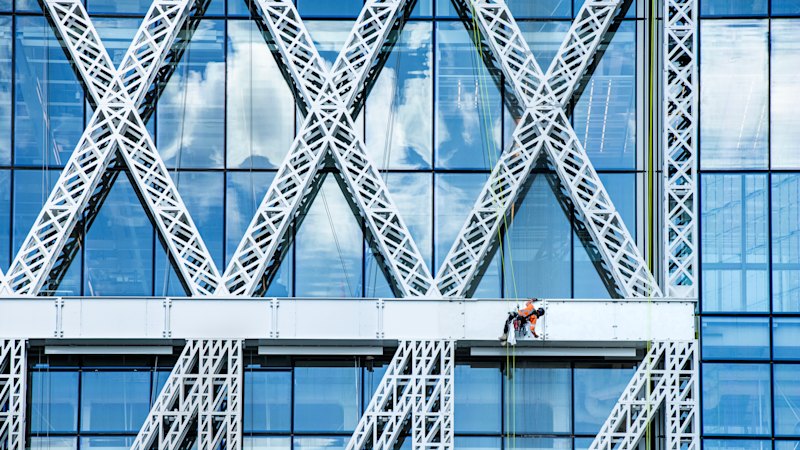
Just like the Opera House sails, the building’s handsome steel exoskeleton will itself cost money to keep pristine. Over time, the structure will bleed rust and require repainting. These are normal considerations, but will take significant financial commitment to upkeep.
Advertisement
In addition, the museum will open 30 short- to medium-stay residential apartments, fitted to hotel standards, require an on-site caretaker, duty manager, housekeeping, hospitality, waste management and 24/7 security. Visiting international museum directors have expressed envy at the overnight student facilities for 56 students and their teachers. All up, 90 to 95 people will be sleeping at the museum on any given night, which brings with it its own opportunities and security headaches.
Deakin University’s Andrea Witcomb, a former assistant curator of social history at the Powerhouse, attributed the decline of the 1988 Ultimo site to a slow strangulation of resources – a pattern that could easily repeat itself in Parramatta.
“Museums might be monuments for the politicians who fund them – but a museum that is only a monument is not a good museum unless its role is simply to showcase a collection as a tourist icon, like the Louvre. In Australia, their role is far more complex … That requires ongoing investment in staff, new exhibitions, research and industry collaboration. One cheque is not going to cover this.”
The experience of the Art Gallery of NSW is itself a lesson in Treasury impatience. Despite tight oversight from David Gonski and his project control group during the delivery of the $344 million, 17,000-square-metre Sydney Modern extension, a 2024 Treasury audit forced 44 full-time staff redundancies. Powerhouse Parramatta – spanning 18,000 square metres for more than double the cost – is an infinitely more complex institution to run, and future job cuts cannot be ruled out. But as former Powerhouse trustee Kylie Winkworth points out, it’s not as if Treasury did not know the budget crunch was coming.
Operational turbulence and strategic risks
Advertisement
Nine weeks out from the opening of this $915 million-plus project, the NSW government has yet to set a date for the start of ticket sales and has not announced opening hours, which are now subject to the Treasury review. The Powerhouse has yet to permanently bed down two critical contracts, for security and catering, which are now subject to a procurement process with tight probity around it. Approaching opening, this raises potential planning risks for precious loaned artefacts already installed on site.
Ultimo and Parramatta’s operating budget will not be finalised until the Expenditure Review Committee meets in November – one month before the government reports its financial position ahead of the pre-election caretaker period.
Everything remains on the table.
However, if the government retreats on its vision, or starves the museum of operational funding, it risks turning western Sydney’s flagship cultural investment into a white elephant.
Should the institution fail to deliver for a region flirting with One Nation, the Minns government risks severe political fallout.
Legitimacy and the shadow of heritage
Advertisement
There is genuine excitement in western Sydney for the opening of the Powerhouse, its first state-significant cultural institution. Cultural funding inequity has been a sore point for a decade or more, and it was a Deloitte report pointing to the vast amount spent in Sydney that first sparked the decision to relocate the Powerhouse. Long-time arts administrator John Kirkman believes the Powerhouse’s arrival has been a long time coming and will be readily embraced by a proud western Sydney.
Chau Chak Wing Museum director Michael Dagostino detects an element of snobbery in those who deride the journey to Parramatta. Forty per cent of visitation to Campbelltown Arts Centre when he led it came from other parts of Sydney. “There is this disdain for western Sydney. It’s something western Sydney has always faced. If the exhibitions and programs are right, people will make the 25-minute journey down the road to this new institution.”
But not everyone is happy. The ghost of its former inhabitant, Annie Gallagher, was said to haunt Willow Grove, the historic Italianate villa demolished to make way for Powerhouse Parramatta. For lead campaigner Suzette Meade, Willow Grove was never just an old building; it represented the city’s history and a community that fought to protect its heritage.
While the new museum is framed as a symbol of western Sydney’s cultural maturity, Meade stands among a band of heritage stalwarts who have vowed never to step inside. Her resistance and Dagostino’s anticipation underscores the opportunity and challenges facing an implanted institution that aims to capture the heart of the community it represents.
Start the day with a summary of the day’s most important and interesting stories, analysis and insights. Sign up for our Morning Edition newsletter.