
Advertisement
You have reached your maximum number of saved items.
Remove items from your saved list to add more.
In our age of overtourism, travelling in low season should be a no-brainer. Prices can be lower, accommodation easier to find, crowds thinner. You might bag a bargain safari in Africa, snag last-minute tickets for Machu Picchu, or discover new facets of familiar destinations – ski resorts in summer, say, or popular European cities in winter.
Of course, there’s no point getting drenched or freezing if it’s going to be miserable. But it can pay to think outside the season, even by just a little. Optimal moments often come in shoulder months, those windows before or after the peak.
The trick is knowing how to find each destination’s decisive moment. So how do you get the timing just right? Never fear – here are 10 recommendations we’ve extracted from Lonely Planet’s new book Offseason, to help plan your next off-peak adventure.
Lyon, France
The lowdown As the birthplace of nouvelle cuisine, Lyon – sitting pretty at the meeting of the Rhone and Saone rivers – knows how to warm up travellers in the winter off-season. The city’s traditional dishes are hearty: moreish grattons (a kind of Frenchified pork crackling), battered tripe, doughnut-like bugnes and abundant andouillette (offal sausages, much less awful than they sound). Across the cobblestone alleys of Vieux-Lyon, Croix-Rousse and the river-hemmed Presqu’ile district lie hundreds of traboules. These snaking covered passageways, originally built for silk weavers, offer perfect shelter for grazing at cosy cafes and boutique-hopping away from the elements. And when you’re warm inside with a pile of pike dumplings or a big glass of Beaujolais, the cold’s no issue.
Sign up for the Traveller Deals newsletter
Get exclusive travel deals delivered straight to your inbox. Sign up now.
Advertisement
Don’t miss Pink praline is a Lyonnaise speciality. Scoff it in the form of praline pastries or blush-coloured tarte aux pralines. Bouchons, traditional Lyon bistros, are the places for proper Lyonnaise cuisine. On the central “island” of Presqu’ile, the Musee des Confluences has permanent exhibitions covering life, death and everything in between.
The essentials Time your winter visit for December and you’ll find bigger crowds but greater sparkle. Lyon’s lively Christmas markets run from late November to Christmas Eve. See en.visiterlyon.com
Istanbul & Cappadocia, Turkey
The lowdown In the depths of winter in Turkey (December to January), tourists are relatively rare and the modern world ebbs away – so put yourself in the historical picture at the subterranean Basilica Cistern, Hagia Sophia (Aya Sofya), Topkapi Palace and azure-tiled Blue Mosque, plus the labyrinthine Grand and Spice Bazaars and steaming hammams. As monuments and hotels empty, prices fall: win-win. Far to the east, yet a short flight away, Cappadocia’s fairy chimneys scrape the crisp winter sky: needle-sharp outcrops of volcanic tuff (a type of rock made of volcanic ash) pocked with carved churches and citadels. Enchanting at any time, the region goes full Game of Thrones-epic under snow.
Don’t miss Roam Istanbul’s ancient sites, from Roman cisterns to Byzantine churches and Ottoman mosques and palaces. Browse the aromatic stalls of the Spice Bazaar. Soar through clear winter skies above Cappadocia’s fairy chimneys in a hot-air balloon. Or explore its subterranean cities, Derinkuyu and Kaymakli.
The essentials To explore Istanbul on foot, base yourself in Sultanahmet, close to the bazaars, Hagia Sophia, Blue Mosque and other historic gems. See goturkiye.com
Advertisement
Patagonia, Argentina and Chile
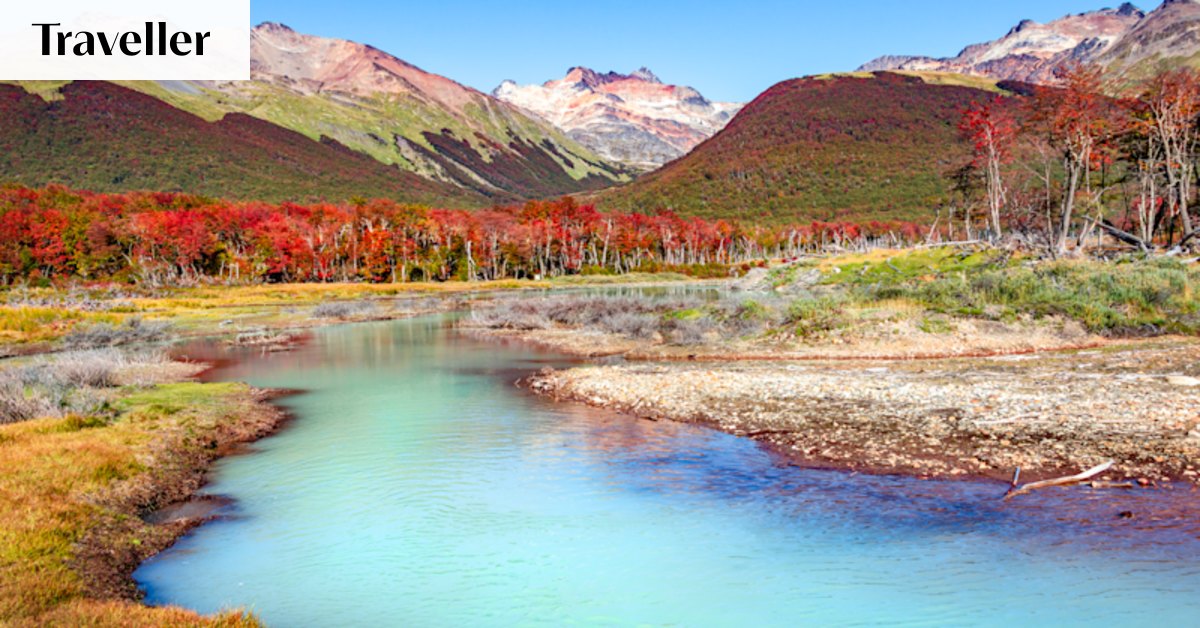
The lowdown The sense of scale and mind-bending emptiness is one of Patagonia’s biggest draws. But most travellers come in high summer, December to February, when the weather is at its best (though still fickle) and prices ramped up accordingly. But wait until autumn and you’re in for a cheaper treat. March and April often bring clear skies and a drop in those ferocious Patagonian winds. The popular trails are much quieter, refugios (hiking lodges) easier to book and landscapes spectacular: forests blaze red-gold against snowcapped mountains and reflect in pristine lakes. Maybe drive from Puerto Montt in southern Chile to Villa O’Higgins past lakes and alerce forests. Or take the fjord-weaving Navimag ferry to Puerto Natales, trek into Torres del Paine, then hop over to Argentina’s Parque Nacional Los Glaciares.
Don’t miss Do the “W”: Torres del Paine’s classic four-day trek links headline sites like Glacier Grey and French Valley. Gawp at glaciers: the pick is Perito Moreno, Argentina’s 30-kilometre-long ice colossus. Head to El Chalten, a hiking hub with a trekking festival every March. Or play out those gaucho fantasies at an estancia (ranch).
The essentials Direct flights link Santiago with Chilean Patagonia, and Buenos Aires with Argentine Patagonia. See argentina.travel ; chile.travel
Ecuador and the Galapagos
Advertisement
The lowdown South America’s pocket-rocket packs a powerful punch of colour. There’s the zingy emerald green of the Amazon Rainforest. The greens and reds of marine iguanas, scarlet-balloon-throated frigate birds, poppy-and-cornflower Sally Lightfoot crabs, pink flamingos and dancing blue-footed boobies in the Galapagos. Emeralds, lilacs and yellows of tanagers, toucans and hummingbirds in the cloud forest. The northern hemisphere summer and Christmas holidays bring an influx of tourists. But, get this – the wetter, quieter months win out in most regions. Take the Galapagos: April and May bring warm, clear, calm days and seas, perfect for snorkelling with young sea lions, turtles and penguins. Breeding birds and marine iguanas don courtship colours. The rainforest is, of course, wet – so exploring by boat is easiest, getting you close to monkeys and birds amid the flowering canopy. Highlands, too, can be soggy, but lace up boots to hike beneath the symmetrical cone of Volcan Cotopaxi.
Don’t miss Fin Galapagos waters on the lookout for marine life. Delve into the bazaars at Otavalo or Saquisili. Join an expert-led Amazon tour.
The essentials Though April and May are typically the rainy low season across Ecuador, big festivals – especially Semana Santa (Holy Week) – see crowds and prices soar. See ecuador.travel ; galapagos.org
Hawaii, US
The lowdown Hawaii has year-round balminess: the mercury doesn’t go much below 25 degrees or above 30. What does change is the crowds. Peak times are December to February (northern winter escapees) and June to August (classic US summer-holiday time). April to May though is especially dreamy: it’s the start of the dry season, so you get great weather but fewer fellow tourists and – as long as you avoid the Easter spike – way better prices. Buzzy, family-friendly Oahu gets the most visitors. For a quieter mood, consider untamed Kauai – top spot for hot hikes and waterfall chasing. Or Big Island, which is what it says on the tin: its supersized serving of rainforests, beaches and belching volcanoes means it’s easy to lose the other people.
Don’t miss Big Island’s Hawaii Volcanoes National Park is home to Kilauea and Mauna Loa, two of the archipelago’s most active peaks. Spring (March to May) is a good time for beginners to try surfing. Stellar shores include Oahu’s Kailua Bay, Kauai’s Hanalei Bay and Papakolea on Big Island, where you can loll on green sand.
Advertisement
The essentials There are no ferries between the four main islands – hopping must be done by plane. You’ll need at least five days per island, so if time is limited, stay on one. See gohawaii.com
The Maldives
The lowdown It’s never really chilly in the Maldives. But most visitors come in the drier months (December to April), seeking clearer skies and cooling breezes – and finding higher prices. May to August is a much cheaper time. You’ll get a little more rain but still plenty of sunshine (downpours tend to be short). The stormier season does riffle the seas, but that means it’s a great time for surfing – waves are biggest June to July. And while the plankton bloom means diving visibility is slightly reduced, it brings more big creatures to feast: July and August are great times for finning with manta rays and whale sharks in the South Ari and Baa Atolls.
Don’t miss If it’s raining, join an art class, take a Maldivian drum lesson or learn some words of local dialect, Dhivehi bas. Several resorts partner with conservation organisations; you can record data on boat trips and dives that help research. There’s good snorkelling nationwide, but Baa Atoll’s Hanifaru Lagoon is an idyllic soup of sea creatures.
The essentials From the Maldives’ main airport, Velana International, domestic scheduled flights connect to islands with airports, with onward transfers usually made by speedboat. See visitmaldives.com
Bali, Lombok and Java, Indonesia
Advertisement
The lowdown Indonesia’s popular beaches get slammed in July, August and Christmas holiday times. And tropics mean monsoons – November to March is the soggy season. But sneak in between the midyear peak and later downpours, and you’ll find lower rates, emptier attractions and mostly sunny days to explore temples. Bali overshadows its neighbouring islands, but Java and Lombok are awesome, too. Head west to be wowed by two mighty monuments near Yogyakarta: the Hindu complex of Prambanan and Borobudur – the world’s largest Buddhist temple – stopping off to climb to the rim of Gunung Bromo’s smouldering crater. To the east, don mask and snorkel in Lombok’s Gili Islands, swim off seductive Pantai Mawun beach, or conquer 3726-metre Gunung Rinjani, the country’s second-highest volcano.
Don’t miss Drink in the arts and ambience of Ubud’s galleries, museums and Hindu temples. In September and October, west-coast surf breaks around Uluwatu, Padang Padang and Suluban offer options for all levels. Gunung Bromo is an easy-ish ascent with spectacular crater-rim views; Rinjani is more challenging but rewarding.
The essentials Flights link Denpasar on Bali with Yogyakarta and Surabaya on Java, and with Lombok; for Gili Trawangan, catching a ferry might be more convenient and pleasant. See indonesia.travel
Vietnam
The lowdown Vietnam’s weather is all over the place – literally. When the sun smiles on central beaches around Nha Trang and Hoi An, rain lashes Hanoi and the north. And when skies clear over Hue, downpours drench Phu Quoc and the Con Dao islands. Sure, you’re pretty safe everywhere in February or March – so long as you don’t mind crowds. That’s peak season. Visitor numbers are also high December to April, and July to August. There’s a precious window in autumn (September to November), though, when tourist numbers and prices slump as the weather picks up in the north and south. Paths dry out for treks around Sapa. The karst outcrops of Ha Long Bay gleam beneath clearer skies, and Hanoi’s Hoan Kiem Lake glistens in the sunshine. Bunny-hop over the central region, sodden by storms, to cruise the Mekong Delta and feel the hype of Ho Chi Minh City – and if the heavens open, head into the warren-like Cu Chi Tunnels.
Don’t miss Discover Hmong culture around Sapa, or conquer 3143-metre Fansipan. Explore Hanoi’s enchanting Old Quarter, visiting temples and museums, and slurping pho on street corners. Board a junk to sail between the otherworldly limestone pinnacles of Ha Long Bay. Base yourself in Ho Chi Minh City to roam the Mekong’s floating markets.
The essentials While northern and southern Vietnam are heading into dry seasons (December to April), storms still lash the central region. See vietnam.travel
Tuscany, Italy
The lowdown November is one of Tuscany’s quietest months. And the weather isn’t so bad – you may get rain, but daytime highs of about 16 degrees are still lovely for strolling alongside the Arno in Florence, or sipping espresso at pavement cafes in insanely beautiful Arezzo, San Gimignano and Siena. November has other advantages, too – not least the produce. Chestnuts are in abundance, and the scent of them roasting wafts through the streets. White truffles reappear, and San Miniato holds a festival to the precious fungi over the last three weekends of the month. Wild boar dishes such as pappardelle al cinghiale (pasta with wild boar sauce) pop up on menus. The olive harvest also begins – a fascinating time to visit villages, catch old presses in action and taste the olio nuovo (new oil).
Don’t miss Queues for Florence’s museums and galleries are shorter – ideal for grey days. Farm stays offer a chance to get hands-on with olive harvests and truffle hunts. Vineyards are tinged with autumn colour, and cellars are open for tastings. Dodge iffy weather with a cooking class, making Tuscan specialities like castagnaccio (chestnut cake) or ribollita (bean and bread soup).
The essentials While Tuscany’s larger towns remain open in low season, coastal resorts and some smaller hilltop villages turn very quiet. See visittuscany.com
DECEMBER
Cote d’Azur, France
The lowdown Back in the 19th century, winter was the peak season along this dazzling Mediterranean shore. Resorts were lauded for their, comparatively for the northern hemisphere, mild climates – December temperatures hover at 10 to 14 degrees – and luminous light, which attracted painters including Chagall, Picasso and Matisse. These days it’s summer that draws the crowds. So if you come in the cooler months, the scenic coast roads will be far quieter, the hotels much cheaper. Lively, likeable Nice hosts a Christmas Village and Monaco a festive market, but there’s still space to inhale that revivifying sea breeze. The cool weather is perfect for walking, too. Stroll the sentiers du littoral (paths linking coastal villages), or tackle the stiff climb to hilltop Eze via the Chemin de Nietzsche.
Don’t miss Museums dedicated to Picasso in Antibes, Matisse in Nice and Jean Cocteau in Menton are good options for cooler days. Ferries run from Cannes to the Iles de Lerins: Ste-Marguerite offers Man in the Iron Mask intrigue; Ile St-Honorat is a working monastery. Or join or watch the mid-December Nice Christmas swim.
The essentials January and February are the coldest months on the French Riviera, but still enticing. Mimosa (wattle) trees burst into golden bloom January to March. In February, Nice hosts a humongous Carnival. See cotedazurfrance.com
This is an edited extract of the new book, Offseason, by Lonely Planet, (Lonely Planet, $29.99). See shop.lonelyplanet.com
… Meanwhile, let the best times roll Down Under
South Queensland It’s hot. It’s wet. It’s sticky. But with schools back after January, booking accommodation and activities between February and March is a breeze, and likely cheaper, too. Depending on your jam, hit the nightlife and waves of the Gold Coast or the mellower Sunshine Coast. See queensland.com
Fiordland National Park, New Zealand/Aotearoa Hiking’s the nailed-on number one – but in March-April, fewer people tackle the multi-day Great Walks. The Milford and Routeburn tracks top many wish lists. Pack waterproofs and warm layers; with forests aflame with autumn foliage, it’s a spectacular season to tackle these routes. See newzealand.com
Kangaroo Island, South Australia The island is a dream to explore at any time, but winter guarantees a great experience. June to August sees far fewer visitors, but plenty of animal action: joeys emerge from their mothers’ pouches, winter lambs gambol in fields, seals and sea lions haul out in search of sunshine, and southern right whales swim by. See southaustralia.com
South Island, New Zealand/Aotearoa The beautiful south hits differently in winter (June to August). Craigieburn, Mount Olympus, Treble Cone and Cardrona attract varying levels of skiers. Non-skiers can toboggan, mush a dogsled team or try snowshoe expeditions – even overnight adventures under the dark skies of the Southern Alps. Away from the slopes, visitor numbers plummet and there are great midwinter deals. See newzealand.com
Sydney and the South Coast, NSW Maximums of about 16 degrees, and higher, in June and July are no reason to bypass always-spirited Sydney – its hotels are much cheaper – then head south on a road trip. The Grand Pacific Drive, hugging the coast to the Shoalhaven region and Jervis Bay is a beaut. Going small and slow suits a season when locals have more time to chat. See visitnsw.com