
Advertisement
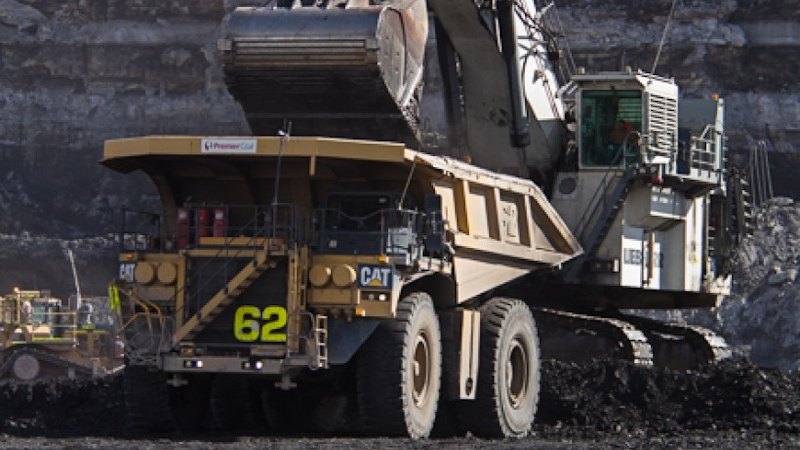
Collie’s two coal miners, Premier and Griffin, need to merge or face a turbulent few years until mining ceases, a new government report has found.
Premier Roger Cook visited Collie on Wednesday morning to unveil the Collie Basin Consolidation Taskforce report, which advocated for a merger following an eight-month assessment of Collie’s future beyond the state government self-imposed coal-fired power station closure in 2029.
However, the taskforce found major financial obstacles stood in the way of a merger, including obligations fund rehabilitation and redundancies.
Premier Coal’s operations are stable, but Griffin is currently in administration and has required $240 million in government subsidies to date to provide coal to Synergy’s nearby power stations.
Advertisement
Cook said he accepted the taskforce findings and that consolidation of the two mining operations was the best path forward.
He said there was a range of merger proposals in front of the government, and he expected discussions to be completed within the next year.
“We have a number of proposals in front of us, live proposals, around one operator working with the other operator, third-party operators as well, and we’re examining all those to make sure that it minimises any impact on West Australian taxpayers,” he said.
“We think this is something which will happen sooner rather than later.
“With the retirement of our coal-fired power stations, you’re going to see a reduction in demand, which will lead to a reduction in supply. So, having a consolidated operator in the Collie Basin does a couple of things: one, gives you economies of scale and, two, it allows you to blend your workforce.”
Advertisement
The taskforce warned that a merger was unlikely to mean profitability.
“A single entity may improve commercial viability, but this is unlikely to translate into profitability,” it said.
“As with all structures considered, single entity integration in the Basin still requires the injection of significant new capital into loss-making assets labouring under already onerous capital structures.“
Opposition energy spokesman Steve Thomas seized on that line and said the report contained nothing new.
“The report of the taskforce has made not one single recommendation to the Government, but has simply compiled an outline of the history of the coalfields and the problems that they are in,” he said.
Advertisement
“We have been talking about the advantages of fully integrating the coal companies at Collie for
more than fifteen years, and this report gets us no further.
“I could have written that report for them at a fraction of the cost.”
Despite criticism from the opposition that WA would not be ready to switch off its remaining coal power stations by 2029, Cook remained adamant it would happen.
However, he did reveal that some of Synergy’s power stations would remain idle “in case of unforseen circumstances”.
“You could sort of see around about 2030, 2031, the mine operations will close. We’ll probably have stockpiles at that point for any sort of need in relation to unforeseen need,” he said.
Advertisement
Collie is a historic coal mining and power station town and is an important electorate for Labor to retain which is why the government has spent more than $700 million on initiatives to transition the more than 1000 workers from those industries to new sectors.
The government’s response to the taskforce report includes $58.7 million dollars in new initiatives including $16.8 million dollars in “workforce transition initiatives” like voluntary redundancies.
To date, incentives and grants programs have helped attract new industries to the region like marijuana operators and graphite processor, International Graphite.
Cook said the government would go further by spending $39 million on infrastructure to accelerate the development of the Coolangatta industrial estate.
Collie will also be declared a state development area to speed up approvals processes for businesses looking to establish in the area.
Advertisement
“By declaring Collie as the next state development area, we are putting a stamp on its future and really endorsing it as a key area for manufacturing here in Western Australia,” he said.
About $2.8 million will be spent to develop a basin-wide rehabilitation and master plan to assess its post-coal future.
Cook said the cost of rehabilitating the mining areas – which span more than 20 kilometres top to bottom – will be “eye-watering”.
“The rehabilitation program will be extensive, long-term, and obviously, there’s some risks associated with that, financially as well,” he said.
“But there’s huge opportunities because it means we can reimagine the whole Collie Basin, in terms of manufacturing, in terms of parkland, in terms of greening, in terms of community amenity.
Advertisement
“It’s actually a pretty exciting part of the program.”
Energy Minister Amber-Jade Sanderson said the state was seriously considering Collie as one of the locations or the location for the Western Defence Forge manufacturing hub.
You have reached your maximum number of saved items.
Remove items from your saved list to add more.
More:
Hamish Hastie is WAtoday’s state political reporter and the winner of five WA Media Awards, including the 2023 Beck Prize for best political journalism.Connect via X or email.AdvertisementAdvertisement