
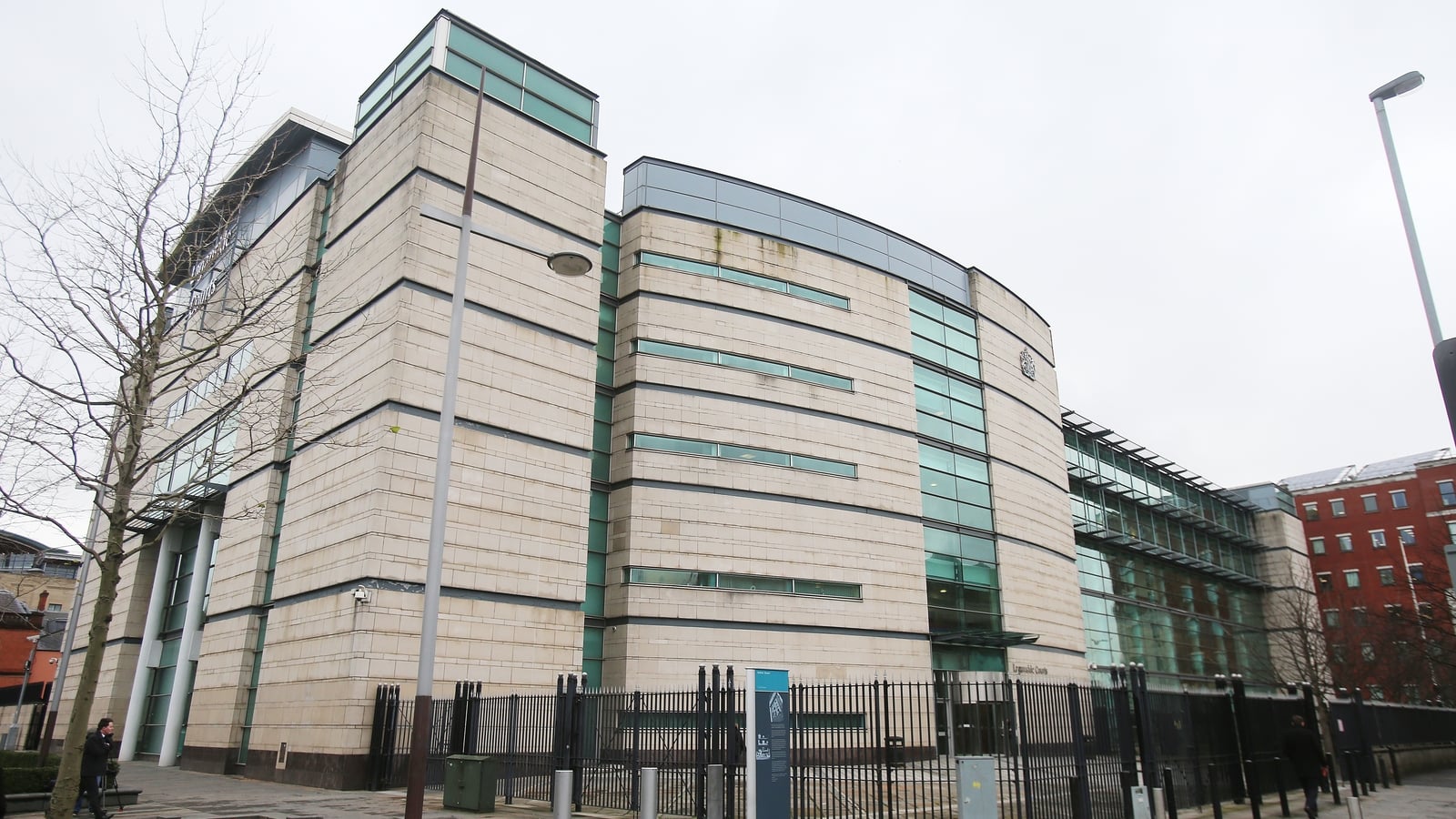
Few deaths have generated such public interest – or controversy – as the tragic death of Noah Donohoe.
It brought out the best of people – as hundreds of volunteers from across Belfast’s religious divide joined the emergency services for days to help search for the schoolboy after he was reported missing on the evening of 21 June 2020.
But it also brought out the worst – as others quickly decided there was a conspiracy to cover up what had happened and set about weaponising his death for their own ends.
Even before the schoolboy’s body was found in a storm drain six days after he disappeared, there were claims of abduction and murder.
When his body was found, those rumours and allegations spiralled.
Noah’s mother Fiona mounted a relentless and successful campaign for an inquest to establish the truth about what happened to her son who she described as “a constant source of wonder”.
The inquest was unprecedented in scale for such a death.
It heard evidence from 76 witnesses who appeared in court in person and statements were read from 42 others during 62 days of hearings that spanned almost six months.
The jury was tasked with determining what happened between when the 14-year-old left his home in south Belfast on the afternoon of Sunday 21 June 2020 and when his body was found in a drain several miles away in north Belfast six days later.
This afternoon, the jury at the inquest returned a narrative verdict, while criticising Stormont’s Department of Infrastructure over maintenance of the storm drain where the Belfast schoolboy’s body was found.
The also jury found that the PSNI had not made errors that contributed to Noah’s death but found that subsequent investigative errors by officers impacted on the jury’s ability to reach conclusions on aspects of the inquest.
There have been a number of theories over the years.
Some suggested it was a tragic accident or a case of misadventure; a young boy who had set off on an adventure to meet two friends, but had somehow become anxious and disorientated, perhaps because of a head injury caused by a fall from his bicycle, and entered the storm drain.
There was also speculation that he may have died by suicide.
There were several red flags about his mental health, including concerns raised by his mother when she phoned police to report his disappearance.
But there were other more sinister rumblings that spread across social media platforms.
A target for conspiracy
The death happened at a time when Northern Ireland remained in the grip of the Covid pandemic and there had been an explosion of social media activity as people, particularly the young, strived to build and retain social contacts.
There was also a proliferation of anonymous accounts aggressively opposing government policy on vaccination and engaging in conspiracy theories about a wide range of issues.
Noah Donohoe’s death became a target for many of those conspiracy theorists.
Some of it was sectarian and political in nature.
It was an easy narrative to weave: a young Catholic boy of mixed race had vanished in an area of Belfast that was staunchly Protestant and unionist and with loyalist paramilitary elements.
That did not reflect what reporters had seen on the ground in the days after Noah disappeared, as people from both sides of the community, including local residents, volunteered to help members of the emergency services in the search.
Fiona Donohoe praised the efforts of those who did so.
But the inquest heard evidence from a senior police officer about how open hostility from some elements in the crowds had hindered the ability of officers to perform their jobs properly.
Some who were involved in the search and witnessed the conspiracy theorists gaining a foothold were shocked at how quickly the mood changed.
Several online pages were set up to raise funds for banners, posters and leaflets.
Some simply demanded truth for Noah’s death, others suggested potential foul play and a cover-up by the state.
A campaign group called Noah’s Army emerged shortly after his death to support the campaign for an inquest.
Many, perhaps the majority of those involved, were well intentioned; mothers, fathers, concerned citizens anxious to help a grieving mother get justice and the truth about the tragic death of her son.
But there were other elements involved: individuals and groups online who were anti-vaccine, anti-police, anti-state and in some cases, it appeared simply anti-Protestant.
There were claims that Noah had been kidnapped and murdered because he was a Catholic, with some claiming the killers were loyalist paramilitaries.
Others suggested it was a known sex offender living in the area. They also alleged that the police knew what had happened but were protecting the killer or killers because they were informers.
“Initially, there was no suggestion that he had been murdered, but some of those who began campaigning on the issue told Fiona that he must have been murdered, that that was the only explanation,” said someone familiar with the early days of the campaign.
“There was no evidence to back up the claims they were making, but anyone who questioned the conspiracy theorists was told they were the problem and they were trying to cover it up.
“They quickly gained a foothold and pounced on anyone who questioned their version of events.”
Another put it: “If you didn’t accept their narrative then you were viewed as the enemy. Those people decided, without any evidence at all, that Noah was the victim of foul play and rubbished anyone who said that was not the case.
“There were many, many people who genuinely wanted to help Fiona but there were others who hijacked that boy’s death for their own agendas.”
Deteriorating relationships
Several journalists who worked on the story and did not jump on the conspiracy bandwagon – because they had seen no evidence to support the claims – were lambasted on social media, accused of facilitating the alleged cover up.
The relationship between Fiona Donohoe and other family members with the police deteriorated rapidly in the months after his body was found, with his mother alleging that the PSNI had failed her and Noah.
The inquest heard how she believed the police may have put too much emphasis on a theory that Noah had suffered a serious head injury when he fell off his bike on the afternoon of his disappearance.
Two witnesses who told police about witnessing his fall later said they had not stated that they believed he had suffered a serious head injury.
Ms Donohoe’s legal team put it to the jury that that working hypothesis had deflected detectives away from considering the possibility of foul play.
The police conceded during the inquest that mistakes were made but repeatedly pointed to the fact that there was no evidence of any foul play.
Evidence from pathologists
The 26th day of the inquest heard evidence from three pathologists, including one who carried out the post-mortem examination on Noah’s body on the afternoon after he was found and Professor Jack Crane, the former Northern Ireland state pathologist.
The teenager’s body was found lying face down in water about 950 metres along a dark storm drain tunnel.
The pathologists said the cause of death had been recorded as drowning and that the condition of his lungs was consistent with that.
There were dozens of bruises, cuts and scratches across his body, which they said was in keeping with him stumbling or falling while in the storm drain.
There was also a sizeable, blunt force injury to his forehead which had left a very large bruise.
The three experts said this most likely happened while he was alive in the drain rather than during the earlier fall off his bicycle.
They said the injury was not consistent with a weapon being used and that there was no evidence of any injury that would suggest the involvement of another individual and nothing to indicate that Noah had been the victim of an assault with a blunt instrument or had been strangled.
The pathologists told the court that the teenager could have died within hours of entering the storm drain, possibly on the evening of the day he had disappeared.
There were also allegations that the teenager may have died as a result of “an acute psychotic episode” brought about by taking mind-altering drugs.
It had been suggested that this could explain why Noah discarded all of his belongings, including all of his clothes, and had been seen cycling naked for a period of time on the afternoon of his disappearance.
There was a rumour that he may have been injected with heroin.
The pathologists said they found no evidence of drugs in his body, although they pointed out that they could not test for the presence of new synthetic drugs such as “spice”.
Mental health red flags
There were also claims that Noah may have died by suicide, because of mental health issues and that he may have been struggling with his sexuality.
The inquest heard several red flags about the teenager’s mental health, including the words of his mother in a 999 call to police at 9.45pm on the evening he disappeared.
During the 25-minute call, which was played to the court, Fiona Donohoe told the call handler that her son had not been himself over the past week and that she had found him crying in his bedroom earlier that day.
She said she was extremely concerned for his safety and his mental health, that he had been “up and down” in recent weeks and had agreed to go to counselling.
She also said she contacted his school, St Malachy’s in north Belfast, and expressed concern about his mental health.
She also told police that her son had been obsessed by a book by the controversial Canadian psychologist Jordan Peterson called the 12 Rules of Life, which was in his backpack when he disappeared.
But in a 90-minute pre-recorded statement played during the inquest, she backtracked on those concerns, saying she had overstated some of the things she had said about his mental health.
One of his friends told the inquest that Noah had confided that he had been struggling with mental health issues and had been “in denial” just days before he disappeared.
In a text message, he asked friends what they planned to do with their bodies when they died.
But those friends also told the inquest they had not been concerned about Noah’s mental health because he was a naturally inquisitive person.
They also said they did not believe he had been struggling with his sexuality.
The vice principal of St Malachy’s College, at the time of Noah’s death, told the court that Fiona Donohoe called the school five days before her son disappeared and expressed concern that his mood was “not as good as usual”.
But she said that was not unusual at the time as many parents had been concerned about the welfare of their children during the Covid lockdown.
Concerns about Noah’s mental health were considered by police during the early stages of the investigation.
But a psychiatrist told the inquest that they did not believe the teenager’s death was the result of suicide and that they did not think there were “any mental health conditions prior to his disappearance”.
Appeal to end speculation
Four months after his death, the coroner appointed to hear the preliminary inquest issued a public appeal for an end to what he called “baseless and distressful speculation about what happened, particularly on social media”.
A different coroner who was appointed to hear the inquest contacted Northern Ireland’s Attorney General on a number of occasions with concerns about some of the allegations that continued to be made.
In his 170-page summary of the evidence to the jury before sending them out to consider their verdict, Mr Justice Rooney told them that to reach a verdict, there must be sufficient evidence, that it was not enough for them to guess, suppose or speculate.
The verdict must be on the balance of probabilities, meaning it was more likely than not.
The coroner then took those theories that have swirled for the past six years off the table, telling the jury they were not able to reach certain findings because there was insufficient evidence to do so.
He told them they are not permitted to find:
- That Noah was assaulted by anyone
- That there was any third-party involvement in his disappearance and death
- That he was under the influence of drugs at the time of his disappearance
- That he had suffered a psychotic episode
- That he was the victim of child exploitation
- Or that he died by suicide
The judge said the evidence for those claims had been tested and did not support the claims, telling them that meant it was more likely than not that these matters did not happen.
His summary was read to the jury after discussion with all of the legal teams involved. It is not known if Fiona Donohoe agreed with the parameters he set.
The jury’s job was to determine the circumstances in which Noah Donohoe died.
The questions they were tasked with answering included whether the police made an error which contributed to the schoolboy’s death.
Mr Justice Rooney told the jury they must consider the PSNI’s investigation in terms of “what they knew, when they knew it, and what they did in response”.
He said this meant they must consider whether there was anything that should have been done differently and if this amounted to a police “act or omission” which “more likely than not” contributed to Noah’s death.
Fiona Donohoe’s legal team has been highly critical of the police, claiming there were multiple “failings” and suggesting they had lacked investigative curiosity and diligence.
The senior PSNI officer who led the investigation has apologised to Noah’s mother for missed investigative opportunities.
But he also told the inquest that the police response to Noah’s disappearance was “unprecedented”, as was the scale of public interest.
The inquest heard that the police had been dealing with 167 missing person reports across Northern Ireland that week, but had to establish a dedicated team to handle the volume of calls from members of the public about Noah’s case, with more than 600 calls during the first week.
The jury’s verdict stands as the official ruling on what happened.
Fiona Donohoe may consider that the limits put on their available verdicts were too restrictive.
Many will not accept what the jury concluded, if it does not match their view of the truth.
A conspiracy theory (or theories) does not always mean there is a conspiracy. But those who believe there is, are unlikely to change their view.