
While the buzz around Macha, Ube and ‘functional foods’ may seem new, food and drink fads are nothing new. And there be any number of factors that push them to the fore.
Health or diet-focused fads are quite common. Around 20 years ago we had a huge flurry of interest around the Atkins diet, which led to all types of low and no carb offerings.
Sometimes a fad came come about because of something as simple as a celebrity being spotted consuming a particular product – which can lead to a surge in demand from fans. (That’s part of the reason why we now have so many celebrity-led brands, or celebrity collabs on special items in different fast food chains.)
Often a fad can be as a result of some technological advancement.
Think of the explosion in ready meals and TV dinners after the microwave became a common household appliance – and when food processing technology got us to the point where products could be flash frozen, dried or packaged in a way that extended their shelf life.
Sometimes a food fad is about novelty or the appeal of something different and even exotic – like the fondue fad of the 1960s and ‘70s, where people in the US and Europe fell in love with the idea of dipping things into a pot of hot cheese.
What you might not realise, though, is that the fondue fad was actually orchestrated by the Swiss Cheese Union, Switzerland’s cheese cartel. It invented and advocated for fondue as a way of getting the world to eat more Swiss cheese.
But while food fads are nothing new – and are often sparked by the same things as they were decades ago – the nature of them has been changed utterly by social media.
Fast food
Perhaps the most significant way social media has changed things is how it’s dramatically accelerated the lifecycle of a food fad.
If you look at the Atkins Diet – that may have become a sensation in the early 2000s, but it was based on a book that was published in the early 1970s.
Fondue may have become a hit in the 1960s, but the Swiss Cheese Union’s efforts to promote it actually began back in the early 1940s.
There would, of course, be examples of food fads that didn’t take decades to materialise. But, generally, it would have traditionally been a much slower process. Information didn’t move as quickly, and there were fewer opportunities for new ideas to reach the mainstream consciousness.
Nowadays, though, it’s possible for something to go from being relatively obscure to a global phenomenon in a matter of hours. And food companies, manufacturers, retailers and supply chains have to respond to that in days or weeks rather than years.
Dubai Chocolate is a good example of that.
It was created in 2021 by Filipino chef Nouel Catis Omamalin and Egyptian-British engineer Sarah Hamouda for their Dubai-based chocolate company.
And having been a relatively regional phenomenon in its early years, it suddenly went viral in 2024, thanks to TikTok influencers picking up on the concept.
Overnight that created global demand for this very local product. And that led to chocolate companies around the world scrambling to make version of their own.
That includes the Sugar Plum Sweetery in Co Westmeath, which started selling its own €10 Dubai Chocolate-inspired bars by late 2024 – just months after the original had shot to international attention.
The Mullingar shop had queues out the door for months as a result – and the Sugar Plum Sweetery has grown dramatically on the back of that demand.
By the spring of 2025 you started to see some mass-market interpretations of Dubai Chocolate appear in supermarkets and corner shops. By the summer time big coffee chains had a selection of pistachio-flavoured drinks and snacks on their menus – a sure sign that a fad has passed its peak.
So really, in a little over a year, Dubai Chocolate went from all but unknown to being oversaturated in the market.
That’s not to say that people don’t want Dubai Chocolate anymore, of course, but it’s not the in-demand fad that it was.
But alongside the speed at which a food fad can now come and go, another complication social media has brought is the variety of fads that can exist at any one time.
Alongside very indulgent food fads like Dubai Chocolate, you will simultaneously have fads based on people’s desire to be healthy, or more eco-conscious. Health optimisation – where people track every move they make and every calorie they consume – is extremely popular at the moment, but that’s also led to a counter-trend around ‘optimisation fatigue’.
Food tracking
For some, keeping on top of this is a full time job.
Larger food and drink companies would employ people exclusively to track and respond to the latest trends – while there are many consultancy firms that can offer outside assistance in doing this.
These experts will watch market trends, monitor what other companies are doing, keep one eye on what is happening on social media, and try to ensure that their company is positioned to respond. And given the speed at which things are now moving, part of that job is trying to get ahead of trends rather than wasting time responding to ones that have already broken.
Because even the biggest and most advanced food companies in the world need time to devise new product lines, ramp up production, and get goods distributed to the market. There’s a risk the world will have moved on by the time they do that, so instead companies must try to figure out where the ball will be rather than where it is.
But this is not something that smaller firms have the luxury of spending money on.
It can be expensive work, and very risky work too. There’s always a chance a company could put a lot of effort into a new product line that you think is going to be part of the next big thing, only for it to fall flat.
But in Ireland at least, smaller food and drinks companies can tap into a huge amount of work that’s done by Bord Bia in this area. It’s been monitoring consumer trends for around two decades – and today has a programme called Cultivate that offers insights and data to client companies.
One of the key things it tries to do is, firstly, differentiate between a fad and a trend.
Because a fad is something that will come and go – and while a big company might have the capacity to siphon off some of their resources to tap into that, a smaller company doesn’t. It’s just not feasible for most food and drink businesses to be constantly trying to chase short-lived fads.
What Bord Bia said it tries to do is get firms to focus on things that have a bit of longevity.
One recent example of that is what are called ‘functional foods’ – where nutritional products like protein, and increasingly now fibre, are added to an existing food or drink.
That is a trend that kicked off a number of years ago and probably seemed like a fad at first – but it’s turned out to have staying power, and is now a fairly embedded in the market.
Part of the reason for this has been put at the door of GLP-1 weight loss drugs, which have proven to be a massive, and growing, disruptor to the food market.
They have, of course, led to a reduction in demand for products from users. But at the same time those same users are looking to ensure what they do eat is giving them what they need – and so they’re seeking out products that are protein and nutrient dense.
Plate Expectations
Simply gathering all of the relevant data around these kinds of fads and trends is only getting harder.
The likes of Bord Bia not only need to be across social media, but also need to be plugged into the wider market, industry experts, consumers and global partners.
To manage that it’s increasingly relying on AI to help analyse and parse all of this information.
Despite that, simply gathering all of the data and insights together is only the beginning. What that all means for an individual company is not necessarily straight-forward.
Just because there’s demand or predicted demand for a certain type of product, for example, that doesn’t mean it’s relevant to every company. Even if it is, it doesn’t mean that company should rush down that path as quickly as possible.
Or maybe the trend could be a fit for a firm, but the big guys got there before them. That means they have to figure out where the gap is and what they can offer that will allow them to stand out from their better-resourced rivals.
And while it is important to differentiate the fads from the trends, that isn’t necessarily straight-forward either. Often times you could have a series of fads, but they all sit on top of a broader trend.
For example, Bord Bia says nostalgia is a huge trend at the moment – people are looking for comfort and security, and they’re going back to foods that remind them of home or their childhood in order to satisfy that need.
But that could manifest in any number of ways over time.
Novelty is another trend that sits under an array of fads.
People have always liked trying something new, but that’s really been ramped up in the social media era. Now people get to show off when they’re ahead of the curve or being adventurous.
Gram Grub
Getting the attention of social media influencers is also a big part of the equation nowadays, and that novelty element is a factor there too.
More and more we see bigger brands bringing out limited edition variants of products, or strange flavour combinations. These aren’t necessarily being made because the companies think people will really like them, or they’ll prove to be a new, long-lasting product line. Often they’re launched because they get attention – and are more likely to go viral.
That’s also part of the reason why we’ve seen lots of over-the-top creations in recent years – think of all the cupcakes, milkshakes and doughnuts that are overflowing with toppings or glaze or syrup. They’re made with one eye on the visual aesthetic and how they’ll look in the Instagram grid, rather than how practical they are to eat, or how nice they actually are to consumer.
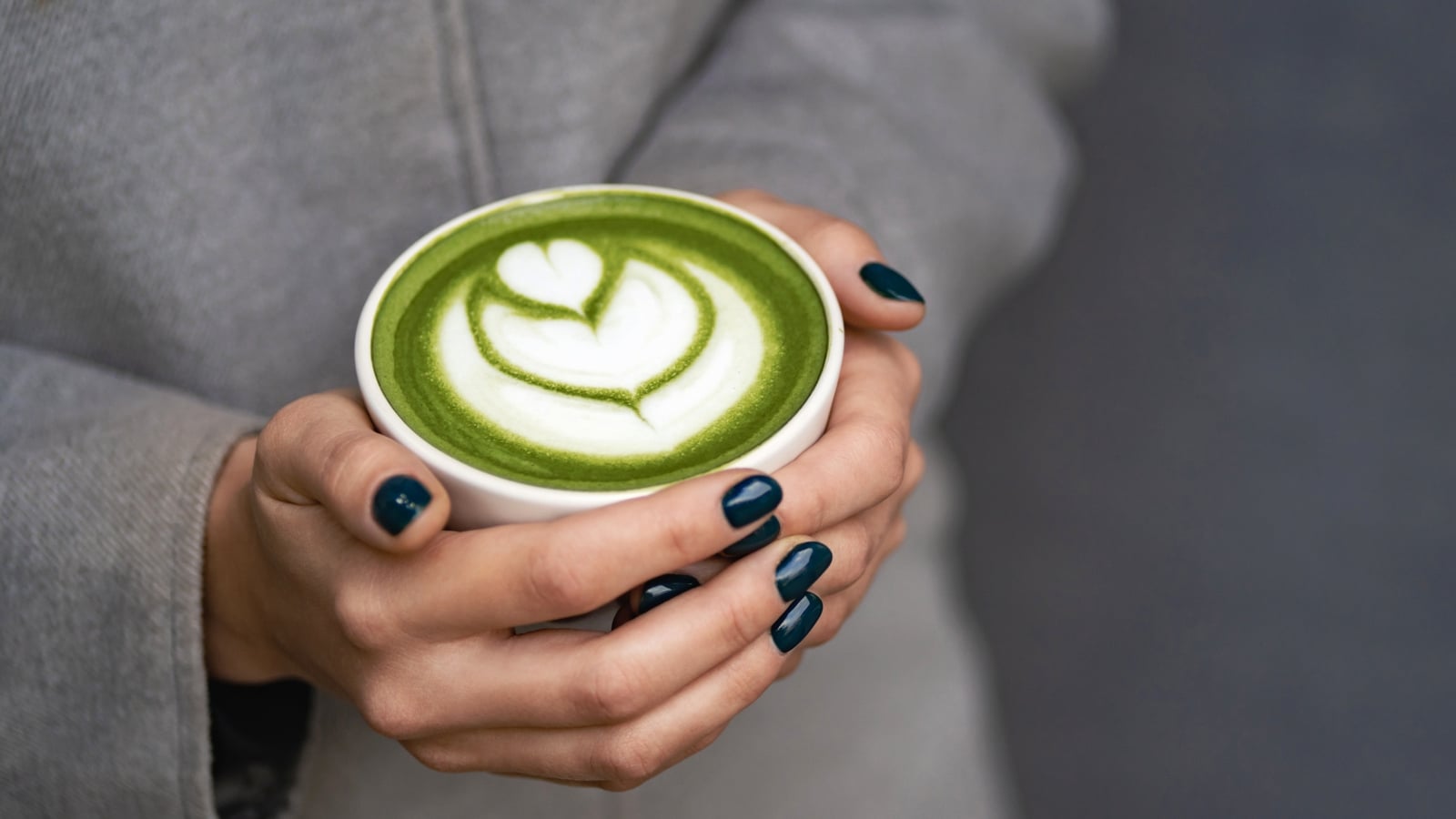
This is also part of the reason why we’ve seen Matcha become so on-trend lately. It’s not a new product but it’s really taken off lately, in part because it has a striking colour and, so, looks good online (it also ticks the box of being seen to be healthy too.)
We’re now seeing the same thing happen with Ube-based drinks. Again, you have a really striking colour, offering very eye-catching and distinct products – which also have the faint whiff of being plant-based and “healthy”.)
But this rapid-fire shift from one fad can have less obvious implications.
Last year there were reports of Japan’s Matcha supply chain coming under immense pressure due to the boom in global demand. This year, the same thing is happening with the Philippine’s Ube market.
Unreliable Feed
Another food fad that companies have to contend with as a result of social media is around disinformation.
Like fads themselves, that has been a feature of the food and drink industry for decades – what is and isn’t healthy seems to change every few years.
But, again, social media has accelerated the trend – and there are all sorts of claims and counter-claims online about what people should and shouldn’t be eating and what should and shouldn’t be in food.
According to Bord Bia, trust is a major issue facing food firms nowadays.
One trend that’s become common online today sees some influencers going around supermarkets, pointing out all the unpronounceable things on a product’s labelling and encouraging viewers to choose items with fewer ingredients.
But while added ingredients are not always the best for people’s health, many of these influencers don’t really know what they’re talking about. Often times they are not nutritionists or doctors or scientists and, as actual food experts have pointed out, that means they often criticise additives – like vitamins and minerals – that are added for the consumers’ benefit.
So really, in some cases, encouraging consumers to go for the version with the shorter ingredient list could actually mean sending them towards the less healthy option.