
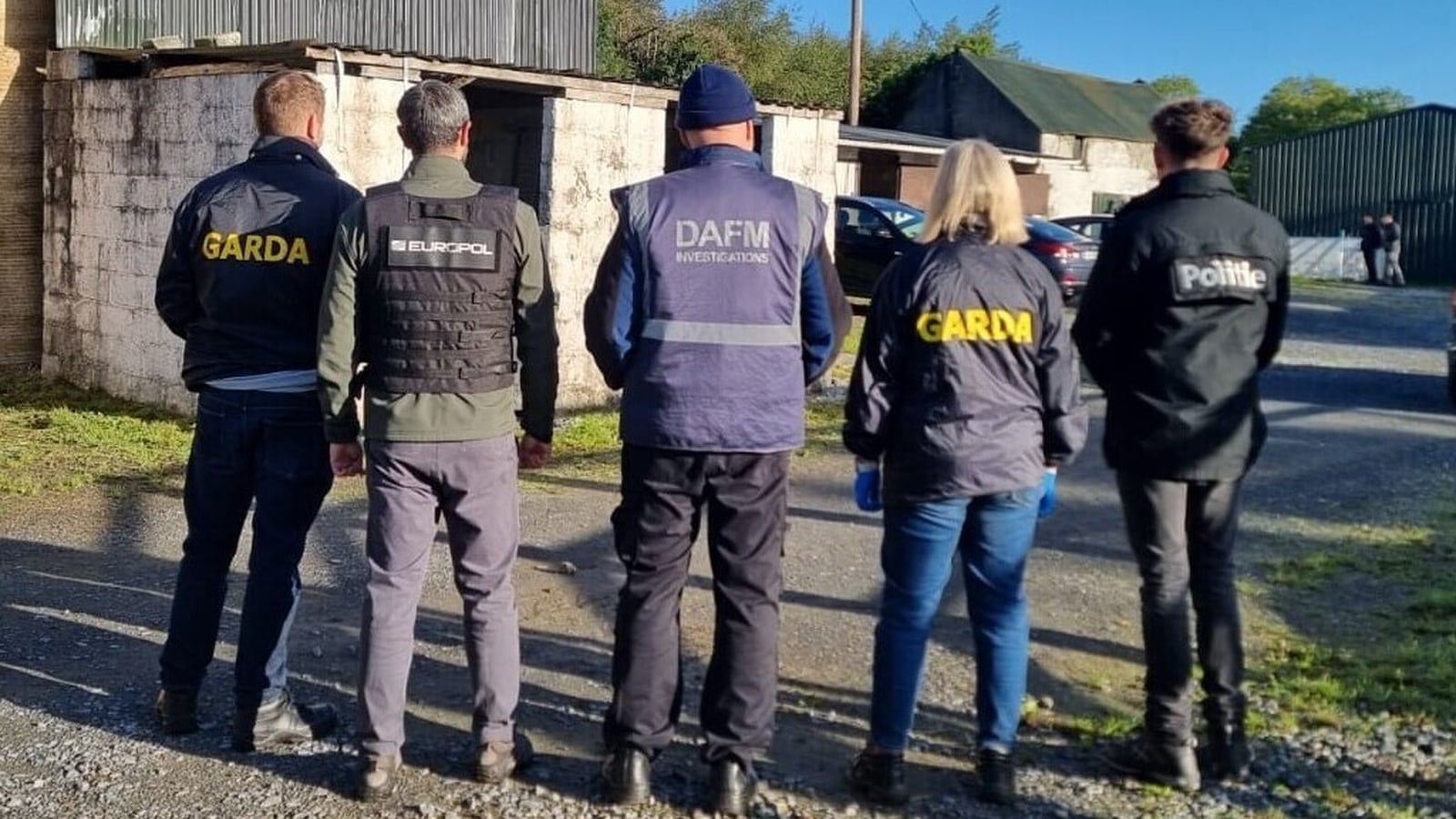
Searches have been carried out by gardaí as part of an international enforcement operation targeting a horse trafficking network.
The network is suspected of moving animals across Europe using falsified documents and manipulated microships to hide their true identities.
Europol, the law enforcement agency of the European Union, said that some of the horses may have entered the food chain without their true origin and history being known.
This could result in animals not intended for human consumption being illegally sent for slaughter.
Garda searches were conducted earlier this week in counties Galway, Kilkenny, Tipperary, Kildare, Dublin and Donegal by members of the Garda National Bureau of Criminal Investigation. (GNBCI).
The action was assisted by Department of Agriculture and Food staff, officers from the Federal Police of Belgium and Europol, the law enforcement agency of the European Union.
The investigation, led by Belgian authorities, centres on the large-scale trade of horses whose identification details and histories were altered, enabling their movement and resale throughout Europe.
The criminal network is suspected of forging passports and manipulating microchips to grant the animals new identities, obscuring their true background and eligibility for human consumption.
Gardaí said that 25 searches were carried out across Europe, including eight in Ireland, and evidence seized is being analysed.
Europol said that more than 1,000 horses were checked.