
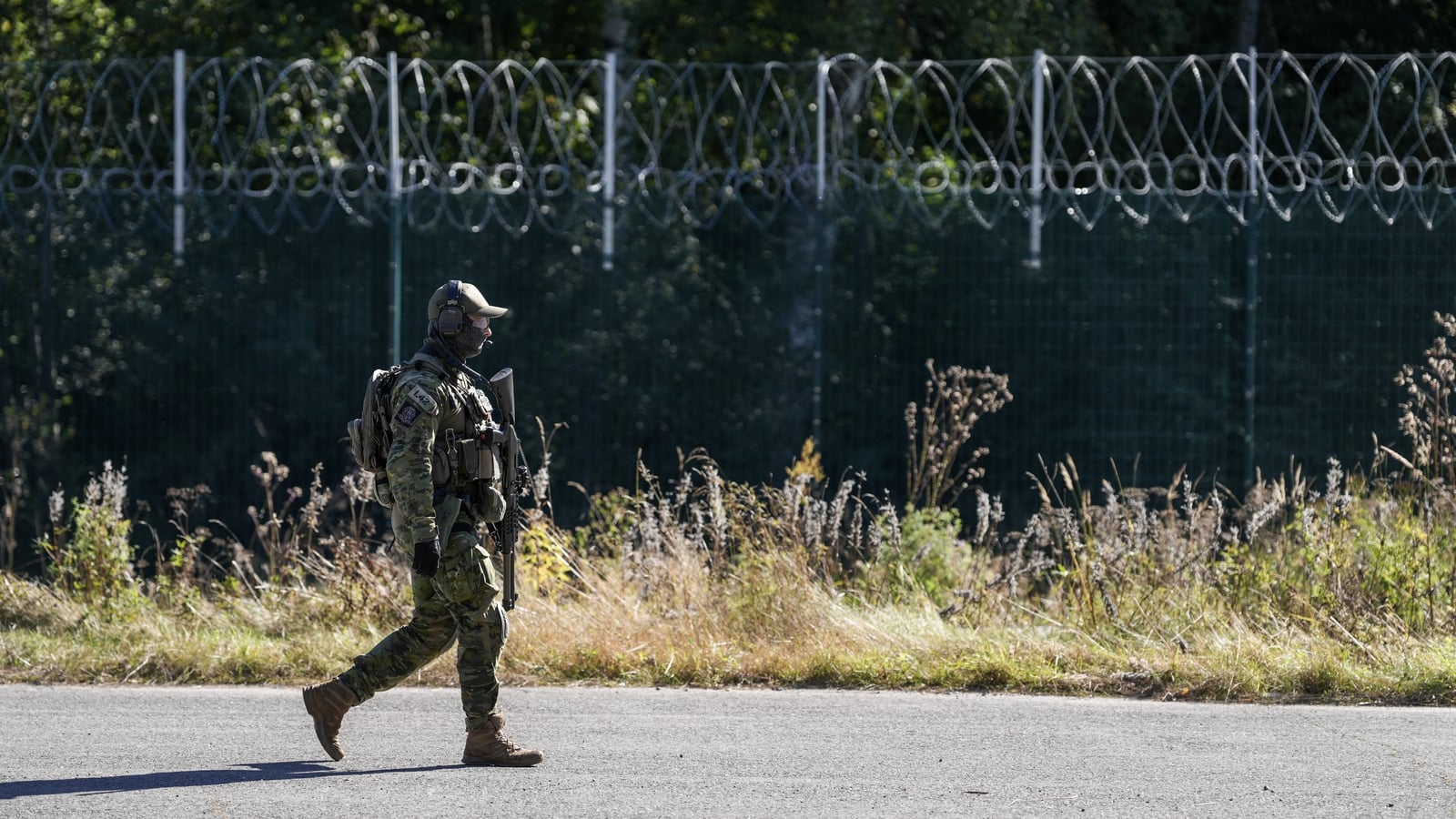
Finland has unveiled a 200km fence erected in sections on its eastern border with Russia to dissuade Moscow from “instrumentalising” migrants to destabilise the Nordic country.
Finland closed its 1,340km border with Russia in December 2023 after the arrival of more than 1,300 migrants without visas.
The situation has been calm since with only a few individual illegal border crossings.
“Today, it is calm but tense, and we really don’t know about tomorrow,” Interior Minister Mari Rantanen said at a media event near the Nuijamaa border crossing point in southeastern Finland, where operations shuttered almost three years ago.
“It can change really rapidly, and that is why we need to be very prepared,” she added.
She was standing next to a section of the 4.5m-high barbed wire fence, built in strategic areas and equipped with cameras and sensors.
In 2023, Helsinki accused Moscow of “hybrid warfare” in orchestrating the third-country nationals to its border – a charge the Kremlin denied.
That happened just months after Finland abandoned decades of military non-alignment by joining NATO in April 2023.
‘Keep people out’
“This is one part of our border security and it is helping us for surveillance, but also keeping people out of Finnish territory if needed,” Ms Rantanen said.
The “exceptionally extensive infrastructure project” had involved around 1,000 land owners and hundreds of companies, according to Finland’s Border Guard.
Similar fences have been erected in Estonia, Latvia and Lithuania as well as Poland on their borders with Belarus to stem migrants from crossing.
The Finnish project cost €356m, with an estimated €2-3m for annual maintenance, according to Border Guard project manager Erkki Matilainen.
Drone technology has advanced by leaps and bounds but a border fence was still “viewed as the best solution for crowd control,” Mr Matilainen said.
Read more:
Is Russia’s alleged hybrid war on EU a genuine threat?
Finland’s land border crossings with Russia will remain closed “until further notice.”
Last week, Helsinki proposed an extension of its Border Security Act until 31 December 2028 – a temporary one-year law that allows border guards to turn away asylum seekers under certain circumstances.
Dubbed a “pushback border law” in Finnish media, it can be applied for a month at a time in limited areas if Finland’s sovereignty and national security are deemed to be threatened.
Experts have said the law contravenes Finland’s international human rights commitments and its constitution, which the government has acknowledged.