
More than 25 bench warrants were issued by a single judge in under two hours, as the impact of the defence solicitors’ strike continues to be felt by court users.
Justice Minister Jim O’Callaghan has defended his reforms to the legal aid fee structure, which prompted a withdrawal of services by lawyers on the scheme, claiming last week that the criminal courts were running “effectively”.
This has been described as “simply nonsense” by a solicitor participating in the strike after a large number of defendants did not appear for their hearings on Friday and other matters were pushed back for months as they were too serious to proceed without lawyers present.
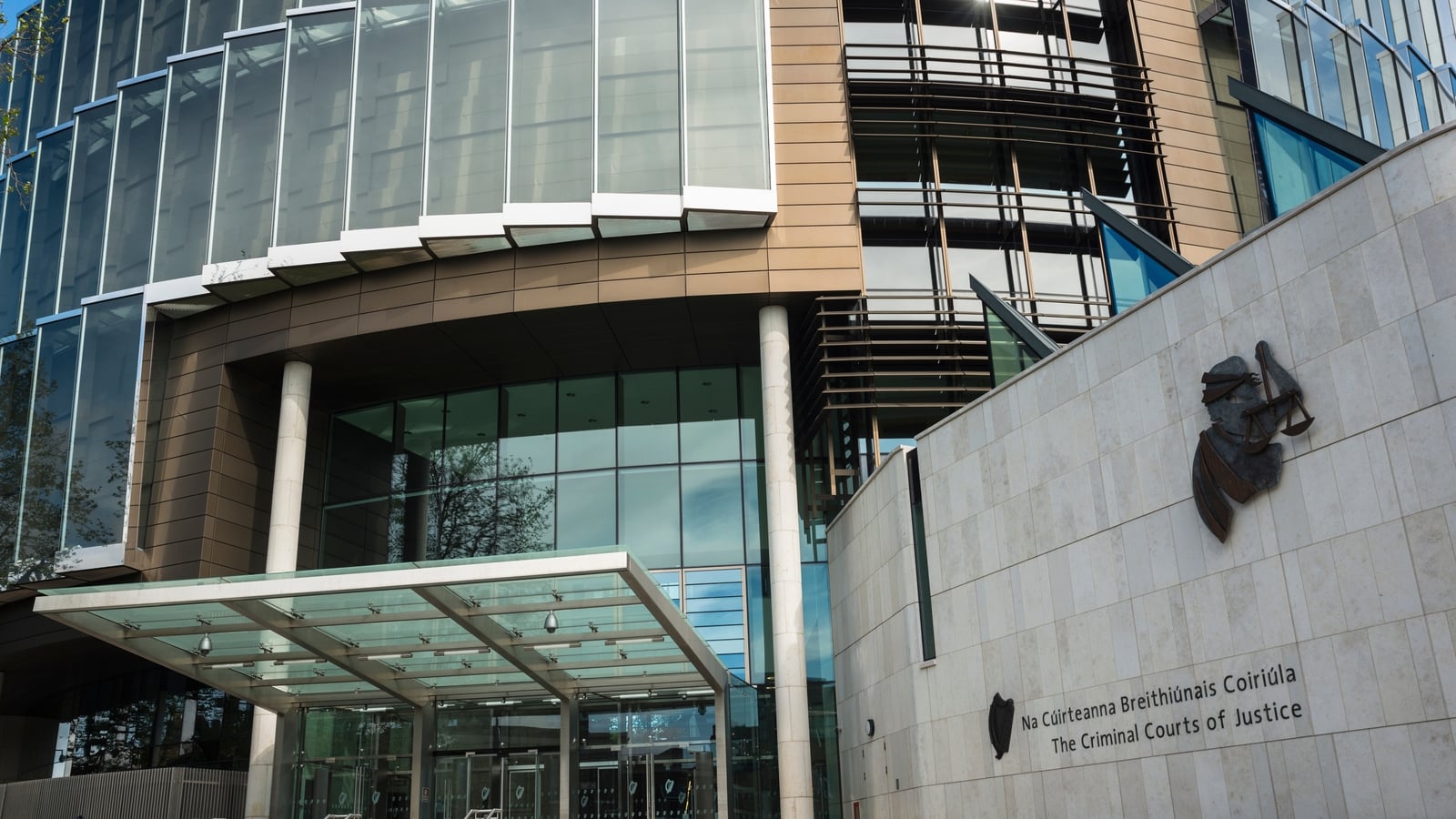
The strike manifested in varied ways as Dublin District Court sat across four courtrooms on the ground floor of the Criminal Courts of Justice (CCJ) on Friday – including a solicitor opting to work for free and books of evidence not being served despite being ready.
Friday’s sitting of Court 3 was defined by the issuing of back-to-back bench warrants as three quarters of listed defendants failed to appear for their hearings.
This could be for a number of reasons – but solicitors say it is another example of the impact of the withdrawal of services.
Many who rely on legal aid are vulnerable and have difficulties with addiction, homelessness and mental health issues – and lawyers say clients can miss court dates if they are not reminded by their legal representation.
For example, one man representing himself at the CCJ on Friday pleaded with a judge that his “life was in chaos” and that he had “been through hell and back” as he recounted growing up in care and made references to addiction services.
Solicitor Kate McGhee told the Press Association it is “not appropriate” for anybody to be facing serious charges without legal advice.
She said that while the minister “is continuously describing our jobs like we stand up for five minutes and that’s the end of it”, the “reality is there is so much more to the job” on top of looking at evidence and advising their clients.
She said that due to inadequacies in the State mental health and homeless services, solicitors are “acting as social workers” for “extremely vulnerable people who live terribly chaotic lives”.
She said: “For the minister to be saying that the courts are operating just fine is nothing short of laughable – but it’s also simply a lie because unless he is being told fibs in the Department of Justice, the fact is no one can pretend that this is going ahead even half as normal.
“It is at a standstill. There’s no other way of describing it.”
Elsewhere in Court 2, one woman who was already in custody was represented by a legal-aid solicitor on certificates predating the dispute – and, in fact, back to 2021.
The judge questioned whether the hearing could proceed if legal aid could not be applied to new charges she was now facing.
However, her legal representation said that – because she was already in custody and they did not want her to remain there longer than she had to – they were taking on the additional charges and working for free.
Later on in that court, an upcoming trial date for a man accused of exposing his genitals to a minor was pushed back until December due to the strike.
Gardaí said they did not want to bring a vulnerable child witness out of school and into court only for the matter not to go ahead because of the dispute.
There is a Constitutional right to legal advice in criminal cases and people accused of a crime who cannot afford a lawyer can receive legal aid from the State.
Solicitors had been paid up to €240 for a first appearance and €60 thereafter for a legal aid client.
However, Mr O’Callaghan – a trained barrister – introduced a flat rate in July to replace the old system, which he said incentivised adjournments, more appearances and more fees.
The new €520 flat fee is supposed to represent five appearances – the average for criminal legal aid cases plus an 8% increase in fees given to all criminal lawyers.
Solicitors have called for further negotiation on the reforms.
Appearance after appearance in Court 4 on Friday, defendants recounted they were not accompanied by a solicitor and had not had the opportunity to seek legal advice.
Most were deemed suitable for legal aid as they said they were not working on were in receipt of social welfare.
Some cases were put back until late November, with Ms Justice Karen Dowling offering: “Hopefully the solicitors will be back working by then.”
In some incidents, the judge had to ask the sergeant in the to write down details of the next hearing for the accused on sticky notes – after one man said he was “afraid” of missing a court date.
Ms Justice Dowling recommended the defendants try and find legal advice before their next date – but the repeated scene made that seem unlikely.
In one incident, a garda sought a remand in custody for an accused who did not appear to understand when asked if he needed a solicitor.
The judge intervened and put the matter back for another calling with the assistance of a Spanish interpreter.
One Dublin man said he had had the same solicitor for 25 years but was now finding he would not answer his phone, telling the judge he was “not happy with him”.
Ms Justice Dowling told another unrepresented man that “nobody knows when this dispute will end” but it was hoped that solicitors would be available when it did, as his case was put back until 26 November.
Another man who had been in custody for five weeks said he had not had an opportunity to speak to his lawyer as gardaí – who did not have directions from the Director of Public Prosecutions – sought his remand for another four weeks.
The delays were not all due to the strike, with one man facing charges originating from January having the matter pushed further back into 2027 as reports from Forensic Science Ireland were outstanding.
He was told the charges would be struck out if the reports were not ready in January.
A handful of cases proceeded as normal, with some defendants having privately retained solicitors.
Mr Justice Tom McSharry told one man accused of having a driving disqualification that “you’re lucky your solicitor is here” after she successfully secured an adjournment “to get documentation that might resolve everything”.
Mr O’Callaghan drew solicitors’ ire in June when he joked at an Oireachtas Committee that he did not do any criminal work at the Bar after being “told very young that crime does not pay”.
He wrote to the president of the Law Society at the end of August, where he said “substantial amendments” to his original proposal had demonstrated his willingness to engage constructively.
These included paying a first instalment of the €520 fee at the beginning of a case.
It is understood that the Dublin strike affects all but two solicitors’ firms working in the city, while other parts of the country have been described as a “legal aid desert”.
It has also been widely reported that there has been a 93% reduction in criminal legal aid certificates issued in July, compared with last year.