
European Commission President Ursula von der Leyen has that said an attempted attack involving drones at a German airport marks “a new escalation on European Union soil directly attributed to Russia”.
The drone carrying an explosive device was discovered at Leipzig Airport, close to Ukrainian cargo planes, on 4 August.
Ms von der Leyen’s comments coincided with an informal EU Foreign Ministers in Wicklow at which further sanctions against Russia are being discussed.
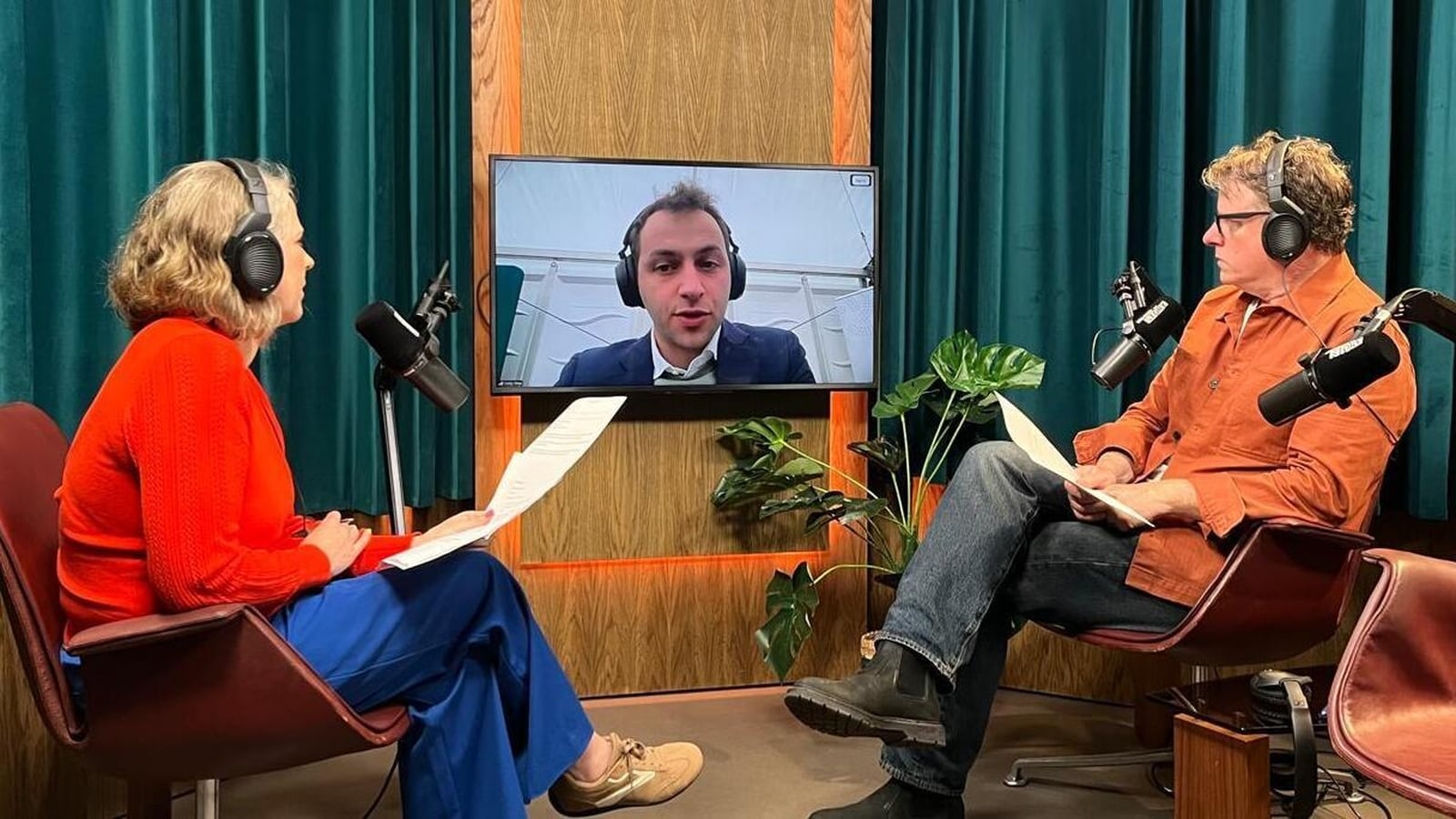
Journalist Eddy Wax from Euractiv told Behind the Story he believes there is no quick fix for the bloc.
“There’s no ready-made solution in a drawer which they can quickly just pull out,” he said.
“There’s certainly no fresh ideas; what they’re talking about here is more sanctions.
“We’ve already had 21 packages of sanctions and actually it’s getting harder and harder to even agree those sanctions.”
Mr Wax said the EU will have to find new areas to hit the Russian economy.
“We have to remember that – and this has been a success of the European Union – that a lot of parts of the Russian economy have already been sanctioned,” he explained.
“You can’t sanction the same thing twice, so there’s not that much left to really hit.
“It’s getting to the point where it’s getting very difficult to find areas that you can sanction in Russia which won’t damage the European economy.”
‘Sanctions haven’t worked’
Keir Giles, a senior consulting fellow of the Russia and Eurasia Programme at Chatham House in the UK, said he believes sanctions so far have not worked.
“Plainly, the sanctions haven’t worked because of this pattern of escalation,” he said.
“The fact that this isn’t an isolated incident, but it carries on from the steady ramping up of Russia being ready to be more bold (and) more aggressive.
“We shouldn’t be at all surprised that this attack on Leipzig Airport happened.”
Mr Giles said sanctions will only go so far with those who are driving Russia.
“The economic damage within Russia itself from the war is likely to be permanent,” he said.
“But that doesn’t matter to the people that are driving Russia – the people who see this messianic campaign to restore the empire through this colonial war of genocide against Ukraine as being more important than the economic survival of their country.
“It’s always been a country that prioritises military power over the comfort and wellbeing of its citizens.
“So economic levers can only go so far to try and change Russian behaviour.”
But he believes the fact the EU is responding with a united front on this is something to note.
“The part that is new is the fact that now, finally, Germany and the EU seems to be responding – and we’re waiting to see what NATO will do as well,” he added.
You can listen to Behind the Story on the RTÉ Listen app
You can also find episodes on Apple here, or on Spotify here.