
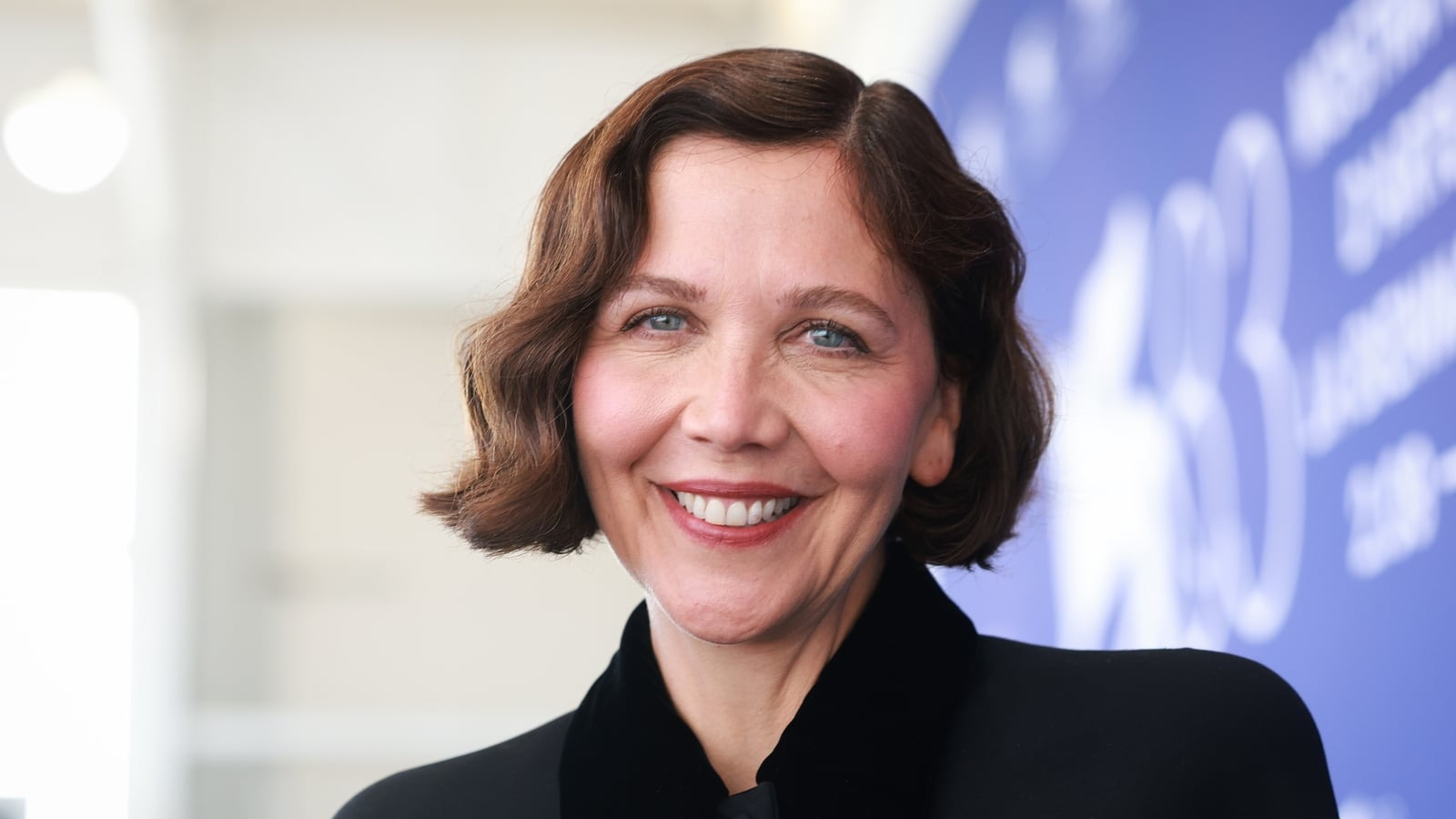
Maggie Gyllenhaal has said women continue to face “systemic” barriers in the film industry, as she questioned why so few female directors feature in the main competition at this year’s Venice Film Festival.
The actor and director, who is president of the festival jury, was speaking as Venice opened on Wednesday, with just two of the 21 films competing for the Golden Lion directed or co-directed by women.
“There’s a systemic problem,” Gyllenhaal told reporters.
“I do think it’s much harder for women to get their films financed,” she said, before questioning whether the stories women want to tell are always afforded the same status.
“Could it be possible that the things that women, having had a different experience of being alive in the world, want to make movies about are not always deemed high art?
“Who decides what’s good? Who decides what’s valuable?”
Danish-Egyptian filmmaker May El-Toukhy’s Woman Unknown was initially the only film by a woman director among the 20 titles selected for the main competition.
The later addition of NAZA, which is co-directed by Oscar-winning Israeli filmmaker Rachel Szor, brought the total to two.
Festival director Alberto Barbera has defended the selection process, saying it was carried out “without prejudice” and pointing out that 24% of submissions this year came from women, down from 30% last year.
His comments in July that the quality of submissions from women directors had not been enough to secure more places in competition prompted criticism from campaign and industry groups in Italy.
Gyllenhaal acknowledged the imbalance while also noting the significance of her own appointment as jury president.
“I really am walking in with a question as to why there’s so few women in the main competition as filmmakers this year,” she said.
“But I think asking me to be the head of the main jury competition after the two films that I have made is a very important thing to consider too.”
Gyllenhaal made her directing debut with The Lost Daughter in 2021, which premiered at Venice, and said she now feels more comfortable behind the camera.
“I was probably always a director. But I didn’t see anyone around me that was a woman doing it,” she said.
She also addressed the role of cinema during periods of war and political upheaval, saying she did not believe films could be separated from politics.
Movies which honestly reflect people’s lives are “fundamentally, unavoidably political”, she said.
“Personally, I don’t believe that there is any subject or any filmmaker that shouldn’t be heard.”
The Venice Film Festival runs until 12 September.
Source: AFP, Reuters