
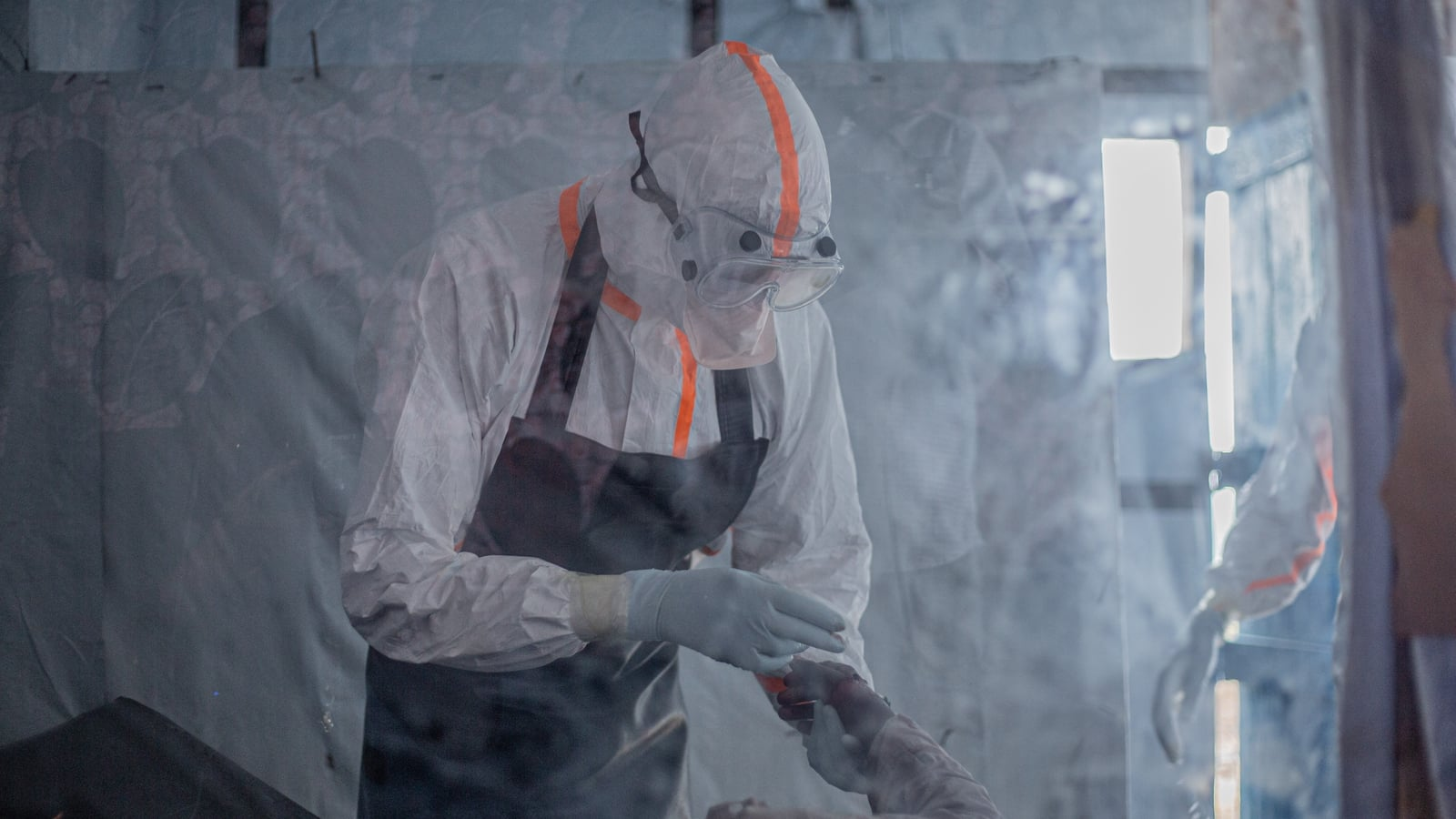
The deadliest ever Ebola outbreak in the Democratic Republic of Congo has now claimed the lives of more than 3,000 people, according to the latest official toll released today.
The epidemic, which has struck the conflict-hit east and northeast of the country, has caused 3,007 deaths and infected 6,186 people, the Congolese National Institute of Public Health said.
The fatality rate is 48.6%, while a total of 1,409 people are reported to have recovered, it added.
The disease is spreading at an unprecedented speed, faster than efforts to track and slow it.
The outbreak has continued to spread rapidly for several reasons, including conflict, attacks on health workers, miners constantly on the move and inadequate health infrastructure.
The resumption of schools in the middle of the outbreak has also raised concerns about transmission in classrooms.
The virus has spread to six provinces and is ravaging areas where the presence of the Congolese state is weak and insecurity is widespread due to the presence of armed groups.
The health response lacks sufficient resources and has been overwhelmed by the surge in cases, while there has been widespread mistrust in parts of the community.
Ebola, which is transmitted through contact with bodily fluids and causes haemorrhagic fever, has killed more than 15,000 people in Africa in the last 50 years.
No approved vaccine
The current outbreak originated in the remote northeastern province of Ituri and is caused by the Bundibugyo strain, for which there is currently no approved vaccine or treatment.
Several treatments and vaccines are being tested, but approved vaccines are only effective against the Zaire strain which is responsible for the largest-known Ebola outbreak to date.
The World Health Organization (WHO) has recommended the implementation of a phase three clinical trial using the Ervebo vaccine, which has been deployed against the Zaire strain.
WHO experts are still unclear as to whether Ervebo protects humans against Bundibugyo, but initial data suggests that it could offer a degree of protection.
A batch of 16,250 doses for use by frontline medical personnel arrived in DR Congo at the end of last month, and vaccination began shortly afterwards in Kisangani, the capital of Tshopo province in the northeast.
The WHO has said the outbreak is on track to exceed the deadliest Ebola outbreak on record: the West African outbreak between 2014 and 2016, which killed around 11,000 people.