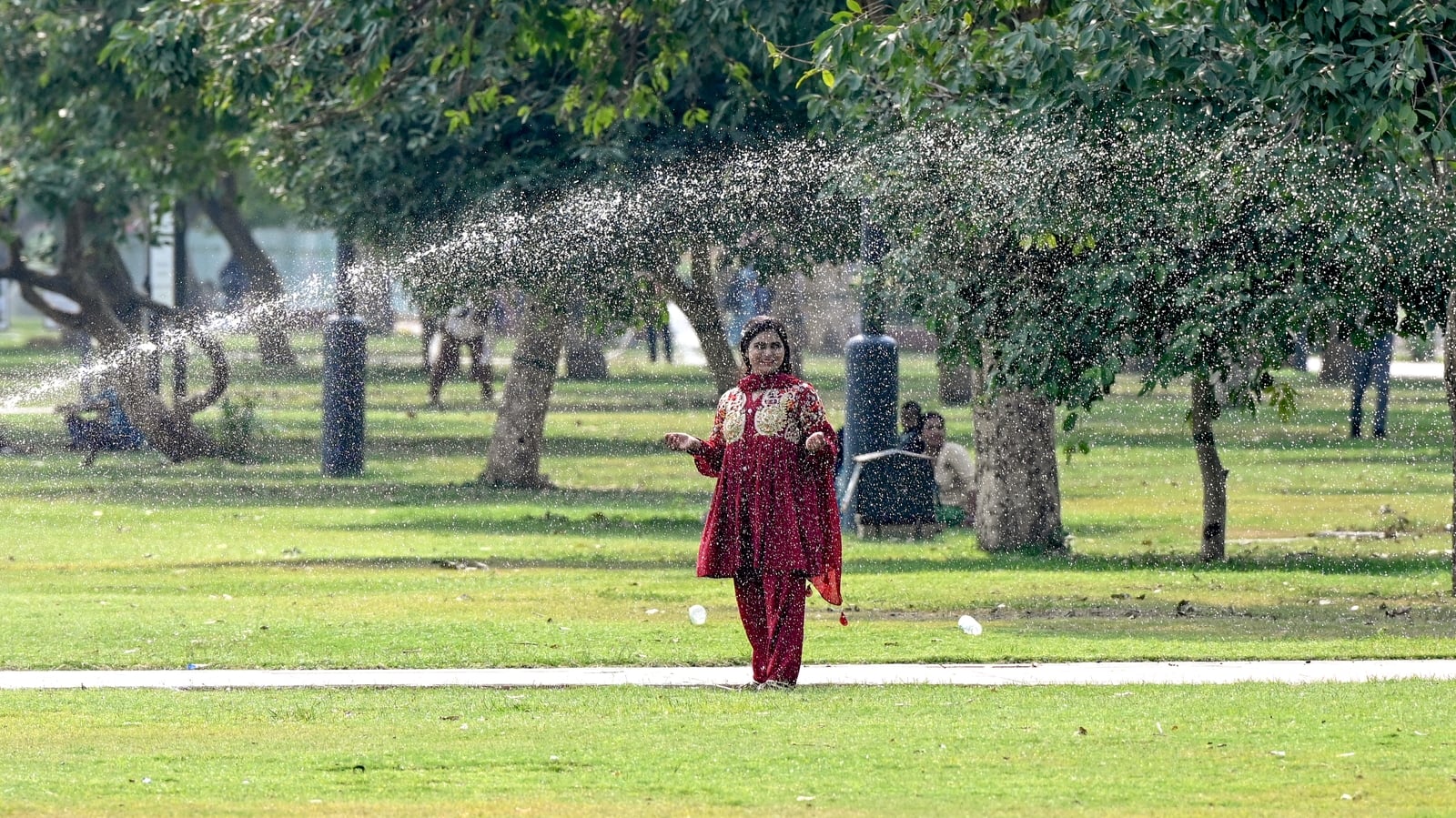
Record August temperatures are expected to be reported in a number of countries globally after a summer of intense heat, while the impact of strengthening El Niño conditions are beginning to be felt in the Pacific.
India endured its hottest August since records began in 1901, with the country’s mean temperature reaching 28.01C, the India Meteorological Department said.
The mean temperature was 0.67C above the long-term average for August, the department said, releasing the results at the end of the month.
It broke the previous record for August set in 2023, when the mean temperature was 28.0C, it added.
India’s monsoon rainfall was 16% below normal in August, the meteorological department said, which increased heat, due in part to El Niño conditions.
El Niño is a naturally occurring climate phenomenon that brings worldwide changes in winds, air pressure and rainfall patterns.
In India and Southeast Asia, it typically causes drier conditions. Scientists fear it will exacerbate the heat of a planet already warming from burning fossil fuels, while amping up weather extremes.
India, the world’s most populous country, is particularly vulnerable to extreme heat.
Climate change is increasing the frequency and intensity of heat extremes, with temperatures soaring to dangerous levels in parts of the country in recent years.
In the UK, the Met Office is expected to confirm that summer 2026 was the hottest on record.
Several records tumbled as five heatwaves hit the country this meteorological summer, which ended yesterday.
The Met Office previously said the UK was on course for its hottest summer on record, provided temperatures remained around average for the rest of August, and it is expected that final figures for the month will mean the previous record is broken.
The national weather service began recording this temperature data for the UK in 1884 and usually confirms its provisional seasonal figures on the first day of the new season.
Summer 2025 is currently the UK’s hottest on record, when the mean average temperature across June, July and August was 16.10C, beating the previous seasonal high of 15.76C set in 2018.
The final day of August 2026 saw a high of 25.6C recorded in Teddington, south-west London, and temperatures were at or above averages for much of the month.
Most of England and the whole of Wales remain in drought and experts say drought conditions will continue to worsen until there is sustained rainfall across the country.
Read more: Strengthening El Niño could bring wet and stormy weather – Met Éireann
What is El Niño and why is it generating so much attention?
Australia declares possible strongest El Niño pattern in decades
Meanwhile efforts to reduce wildfires ablaze across Indonesia will be challenging as the El Niño weather phenomenon will peak this month, the forestry minister said, describing the devastation as largely man-made.
Indonesia has intensified efforts to contain haze from forest and land fires across six provinces in Borneo and Sumatra islands.
The haze has caused respiratory illnesses and forced thousands of schools to move classes online, including in neighbouring Malaysia.
The “super-El Niño” weather conditions exacerbate the fires, causing drought.
Hot spots were reduced across Kalimantan and Sumatra by the end of August, minister Raja Juli Antoni said.
“Our problems are not over. September is the peak of El Niño,” he said.
“September is the main fight for us.”
The haze caused more than 50,000 cases of acute respiratory infection across seven provinces between July and August, health ministry official Andi Saguni said.
Winds blows haze to surrounding provinces and cause infections in places without wildfires, Mr Saguni added.
Wildfires burned about 200,000 hectares of land from January to July, forestry ministry data showed, increasing from 107,465 burned hectares from January to June.
Raja Juli said the fires were in large part deliberately set, either by individuals or corporations.
Despite crackdowns, burning forests to clear land for agriculture and other economic activities has been a common practice in Indonesia. Borneo has vast stretches of peatland where fire can smoulder underground for weeks.
Six forestry permit holders have been fined and the ministry has said a criminal probe was possible.
Satellite imaging has revealed that 42 companies hold concessions with high wildfire potential, senior environment ministry official Rizal Irawan said.
Authorities used weather modification to trigger rain and have “water bombed” areas to contain the hot spots and mitigate the fires, Raja Juli said.
The Philippines said haze blanketed the capital Manila, pushing air quality to “very unhealthy” and “acutely unhealthy” levels in some areas.
The air quality in six areas in Malaysia’s state of Sarawak reached hazardous levels, data from Malaysia’s environmental department showed.
Anchovy migration
Peru, the world’s largest catcher of anchovy, is facing a “devastating blow” from warming seas that have gutted production, sparking an unemployment crisis, industry officials said.
Anchoveta is a key ingredient in fishmeal, which is used to make animal feed and organic fertilizer, with Peru catching 1.3 million metric tons of the small, silver fish in May last year, according to government data.
But this year’s El Niño phenomenon – which scientists predict will be the biggest in over a century – has been blamed for warming sea surface temperatures and forcing the creatures to cooler seas.
Peru caught just 32,800 metric tonnes of anchovies in May this year, and is one of a string of Latin American countries to declare an emergency over the weather pattern.
El Nino raises surface temperatures in the central and eastern equatorial Pacific Ocean, generating global changes in winds and rainfall as well as erratic weather conditions.
Scientists predict the current occurrence will reach its peak by the end of the year and cause record global heat in 2027.
Accustomed to cold waters, anchovy have migrated to deeper waters, said the Institute of the Sea of Peru (IMARPE), which recorded temperatures up to 6C higher than normal in some areas.
“It’s a devastating blow to the sector,” said Jessica Luna, president of Peru’s National Fisheries Society, which represents industry stakeholders.
Job losses
The group commissioned a study that found fishing and related industries will account for 1.1% of Peru’s gross domestic product this year, down from 2.1% in 2025.
Peru counts about 8,000 registered industrial fishermen, but the sector is also a big employer on land.
“We usually create 250,000 jobs” but “122,000 will be lost” by next year, said Ms Luna.
A second fishing season normally starts in November, but that looks uncertain.
“We already know from the projections,” she said.
“El Niño comes into full force that month.”
Additional reporting PA