
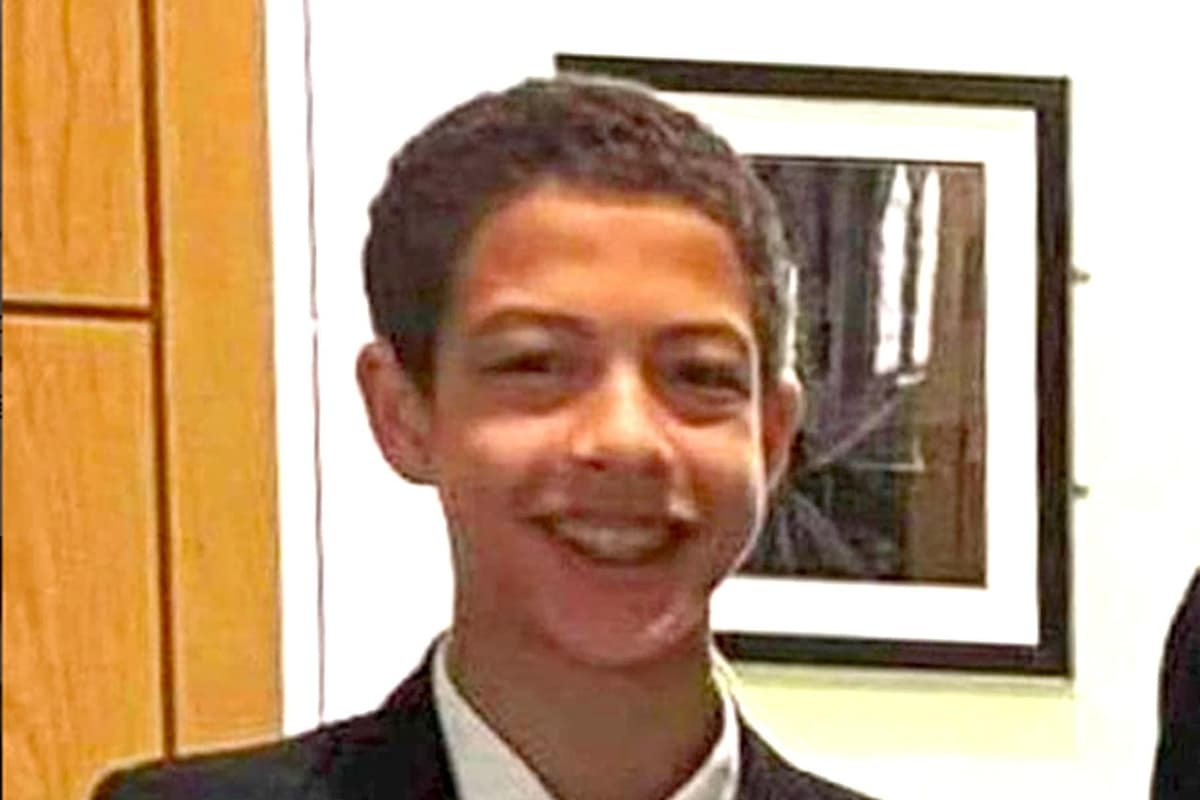
Management of culvert access possible factor in Noah Donohoe death, jury findsThe schoolboy was found dead in the north Belfast culvert after going missing in June 2020.Noah Donohoe who was found dead in June 2020 (Family Handout/PA)PA MediaRebecca Black2 minutes ago
Failings by a Stormont department around its management of access to a water culvert in north Belfast possibly contributed to the death of schoolboy Noah Donohoe in June 2020, an inquest jury in the city has found.
The jury found there were no police failings that contributed to the 14-year-old’s death – after unanimously agreeing that he died before he was reported missing.
However, jurors identified a series of subsequent investigative errors by officers that impacted the ability of the jury to reach conclusions on aspects of the long-running case.
The findings were read to Belfast Coroners’ Court by the foreman of the jury after 32 hours of deliberations.
Fiona Donohoe (right) was at Belfast Coroner’s Court (Rebecca Black/PA)PA Wire
Noah’s body was found in an underground water tunnel in north Belfast and a post-mortem examination concluded that the cause of his death was drowning.
While the jury found it was not “probable” that failings by the Department for Infrastructure (DfI) contributed to Noah’s death, they did agree that it was “possible”.
Jurors said a failure to identify the culvert entrance as a location that the public could possibly access meant no warning signs were erected at the location and it was only covered by a debris screen.
The jury foreman added: “As a consequence, Noah was able to access the culvert via the debris screen.”
Noah, a pupil at St Malachy’s College, went missing after leaving home in south Belfast on his bike to meet two friends in the Cavehill area of the city.
He took a detour on his journey and shortly before entering the area where the culvert was located he was captured on CCTV cycling naked.
The case had long been surrounded by mystery, and Noah’s mother Fiona campaigned for answers.
The inquest was heard at Belfast Coroner’s Court (Mark Marlow/PA)PA Wire
The jury found there was insufficient evidence to explain Noah’s behaviour after he left his house at 5.40pm on June 21. Jurors determined that he died in the culvert between 7pm and midnight that night.
Read More
‘Inquisitive, kind and bright’: Inquest heard details about character of Noah Donohoe
Fiona Donohoe: How Noah’s mother turned grief into determined battle for answers
What we know about the disappearance and death of Noah Donohoe
Discover a hidden island paradise in the Indian Ocean
Given Noah was reported missing to police the following day, the jury found that police errors or inaction did not contribute to his death.
However, jurors identified 13 subsequent failings that impacted upon the ability of the inquest to reach a conclusion on aspect/aspects relevant to the circumstances of the death.
Most of the errors related to the police investigation.
They included a failure to secure some CCTV footage; failure to view some other CCTV footage contemporaneously; failures related to the search of a house linked to a man who stole Noah’s discarded laptop; and errors with inquiries on the whereabouts of the teenager’s coat.
Jurors said the overall house-to-house search strategy for Noah was “poorly” executed, managed and recorded. They found that some statements were not taken within a reasonable timeframe and the quality of entries in police notebooks was poor.
Noah Donohoe’s body was found in a culvert (Handout/PA)PA Media
Jurors said there had been a misinterpretation of phone location data and a failure to identify the potential relevance of a photo of an unknown handprint captured on Noah’s phone around the time of his disappearance.
The jurors said there was uncertainty around anonymous call evidence presented to the inquest and there had also been delays in searching the culvert as a potential location for Noah.
The jury of seven men and two women also found that some DfI records relevant to the circumstances of the case were absent.
The lengthy inquest commenced in January this year. It heard evidence from 76 witnesses and statements from a further 42 people, and involved maps, video footage, photographs, police logs and expert reports.
Jurors commenced their deliberations at the end of June however failed to reach unanimous findings before the court rose for summer recess. They resumed their deliberations on Monday.
After the findings were delivered, coroner Mr Justice Rooney thanked the jurors for their “time”, “dedication” and “commitment” to the case and excused them from jury service for the rest of their lives.
He did not formally close the inquest and instead adjourned it as he told the legal parties there were still some outstanding matters he would have to deal with at a later date.
MORE ABOUT