
Subscribe to Independent Premium to bookmark this article
Want to bookmark your favourite articles and stories to read or reference later? Start your Independent Premium subscription today.
`;
document.body.appendChild(modal);
modal.addEventListener(‘click’, () => {
document.cookie = ‘mos-plan-select=; Max-Age=0; path=/; expires=Thu, 01 Jan 1970 00:00:00 UTC;’;
});
modal.querySelector(‘.subscribe-link’)?.addEventListener(‘click’, (e) => {
e.preventDefault();
document.cookie = ‘mos-plan-select=; Max-Age=0; path=/; expires=Thu, 01 Jan 1970 00:00:00 UTC;’;
setTimeout(() => {
window.location.href = ‘https://www.independent.co.uk/subscribe?regSourceMethod=Bookmarks’;
}, 500);
});
});
Labour has pledged to make it harder for employers to block staff doing their job from home, in a bid to hand more power to workers.
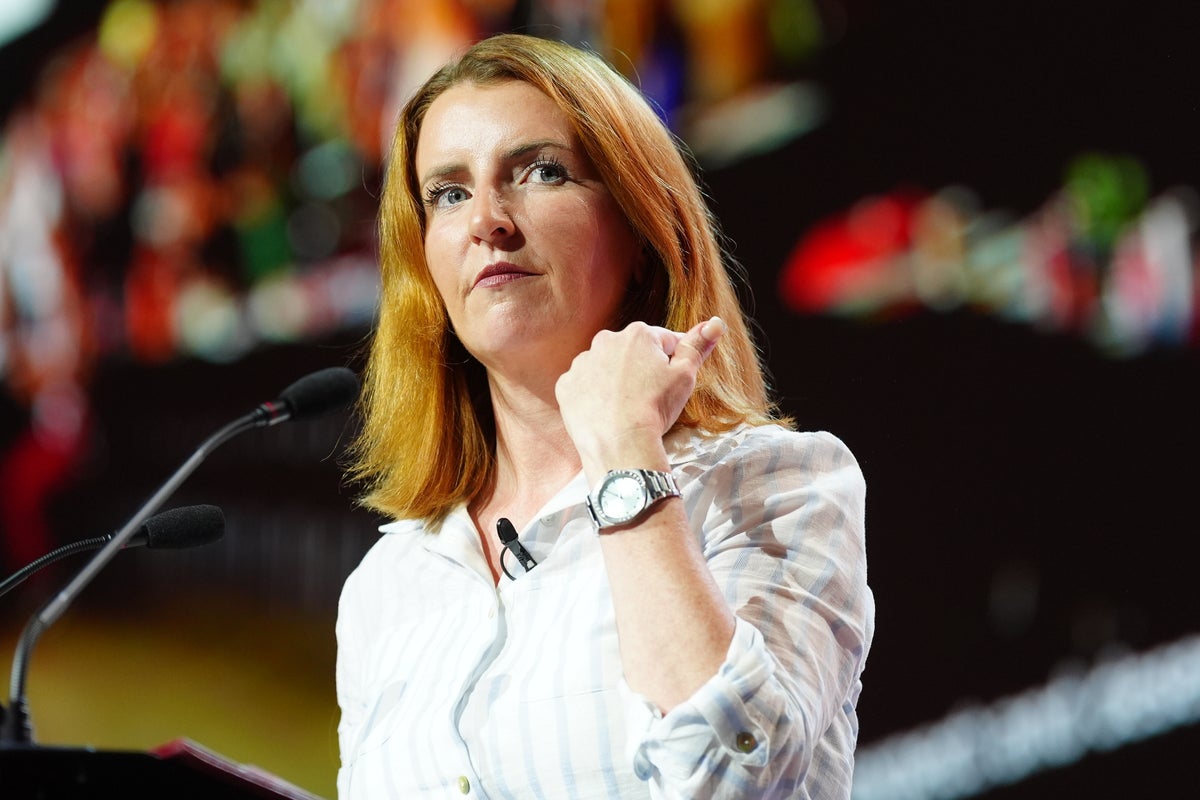
Speaking to the annual Trade Unions Congress (TUC) in Brighton, Louise Haigh, the de facto deputy prime minister, said businesses would have to show they had “properly” considered a worker’s request before rejecting it.
“That is what putting power back into the hands of working people looks like,” she told delegates.
She added that “life isn’t always as neat as employers would like it to be”.
“There’s kids to pick up. Parents to look after. Families who rely on us at short notice. And sometimes, a little bit of flexibility can make all the difference,” she said.
Ms Haigh added that while “not every job can be done from home and not every request can be agreed”, each request “can be taken seriously”.
She said: “If an employer wants to turn down a request, they will have to sit down with their employee, properly consider and explain why.”
She also praised the unions for their work campaigning for the Employment Rights Act, which she said was “the biggest uplift” in workers’ rights in a generation.
Paul Nowak, the general secretary of the TUC, said flexible working was not “just a perk – it’s a lifeline”.
He added: “That’s why this move is a welcome step forward. It makes it harder for employers to turn down requests while giving workers a stronger voice in the process.
“Improving access to flexible working benefits workers, businesses and the economy – whether it’s through increasing staff productivity or higher retention.”
Research last year suggested almost half of all businesses across the UK now want staff back in the office on a full time basis, in a push to pre-pandemic levels.
The survey by the British Chambers of Commerce (BCC), of more than 500 businesses, also found one in ten businesses reported that staff had quit over a lack of flexible working.
While work from home is not a new phenomenon, its popularity soared after it became a necessity during the Covid pandemic.
Since then, some workers have preferred not to return to the office full-time, even as senior leaders call for their return and some say productivity and innovation increases when all employees are together.
Ms Haigh also used her speech to warn artificial intelligence (AI) poses “huge risks” to national security unless the proper safeguards can be put in place.