
Advertisement
September 16, 2026 — 5:00am
You have reached your maximum number of saved items.
Remove items from your saved list to add more.
I have one thing to say to our politicians, economists and readers of this august organ: no, it’s not the economy, stupid … it’s wages.
At present, the economy is not in a healthy state. It’s going nowhere fast. Although its growth of 2 per cent over the year to June sounds reasonable, the great majority of that growth is attributable to our growing population. Little of the remaining growth represents the rest of us becoming a bit better off.
The economy is close to stalling speed, and if we’re not careful, it will start contracting – getting smaller rather than bigger – otherwise known as being in recession. After reaching a low of 3.5 per cent in late 2022, the rate of unemployment has crept up slowly but inexorably to 4.5 per cent.
And, unless something major is done, it’s likely to keep edging up until, with more and more people unable to find work, it’s high enough to stop people banging on incessantly about the cost of living.
Advertisement
As I may have mentioned before, the cost of living is not really the problem. It’s just the bit you see when you go to the supermarket or fill up your car.
We’d all like to live in a world where our wages went up every year while prices didn’t change. Unfortunately, it’s the other way round: rising prices are the main reason we get a pay rise each year. If we didn’t, the real value of our wage would keep declining, making it harder to afford to buy as much as we used to.
At 3.5 per cent over the year to July, the rate of inflation, aka the cost of living, is too high – the goal is price rises of 2 to 3 per cent – but not exceptionally so. So why so much fuss? Because wages haven’t been keeping up.
You’ve seen me say that once or twice before of late. What I haven’t done is explain how and why wage rises have fallen behind price rises. That’s because I didn’t know. Why didn’t I know? Because no official body – not the Reserve Bank, not Treasury, not the treasurer nor the prime minister – and no private economist have pointed it out to me.
Did none of them know? I find that hard to believe. Much easier to believe they kept it dark because they didn’t want people to know about it. They didn’t want to say rude words in public.
Advertisement
When I became an economic commentator many moons ago, I wrote incessantly about “excessive wage growth”. I said it because everyone else was saying it and, in that long-gone world, it was true.
I now realise that though everyone is free to say the rise in wages has been excessive, it is not done to say the reverse – that wage increases have been inadequate. Why not? Because the bosses wouldn’t like it. For that matter, nor would the unions thank me for pointing out their failure to do their jobs properly.
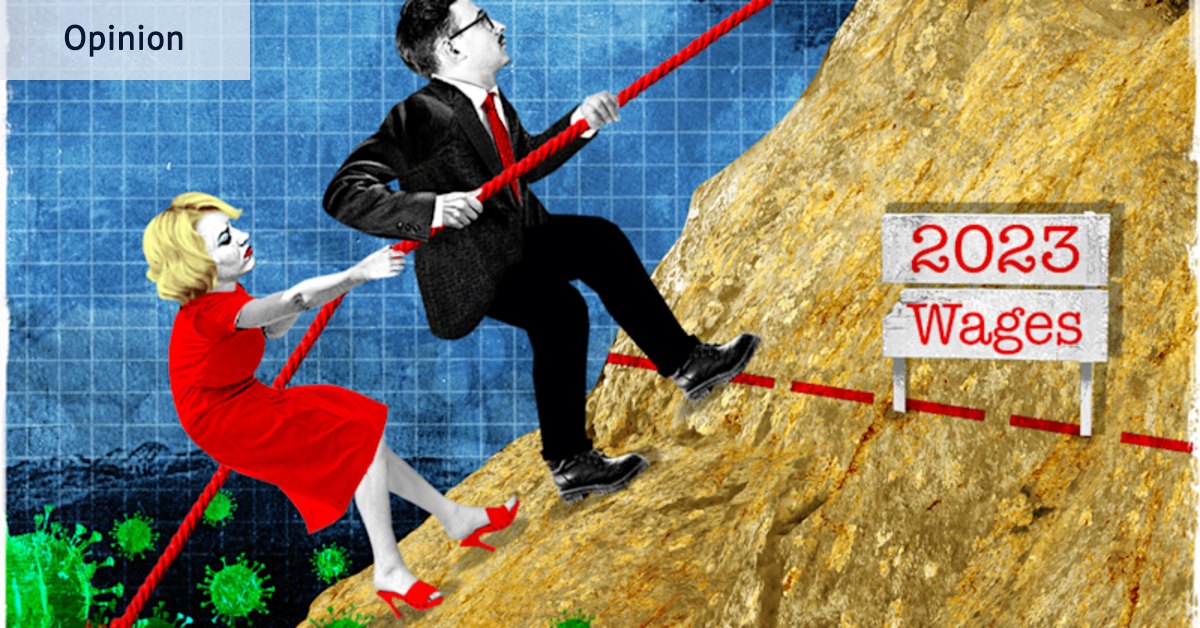
So I’m indebted to the Australia Institute’s Greg Jericho for being the country’s first economist to blow the whistle. He’s actually looked up the numbers and seen that, though businesses kept increasing their prices in the first two years following the COVID pandemic – March 2021 to March 2023 – the workers weren’t game to ask for a pay rise.
Since then, the system has got back to normal and wage rises have pretty much kept up with price rises. The need for some sort of catch-up was forgotten.
Advertisement
As a result, by March 2023, the purchasing power of everyone’s wage was cut by 5 per cent, and nothing’s been done to reduce that cut to people’s “real” wage.
Now do you wonder why balancing the household budget has become so much harder for so many people and why the economy is weak and getting weaker?
Jericho projects that, if things continue on their present path – that is, if there’s no recession – the purchasing power of wages won’t have returned to what it was in 2023 until the end of 2036. Wow. What an enticing prospect. Isn’t it great to be an Aussie!
When the nation’s worthies preach their sermons about the need for improved productivity, the big come-on for you and me is that an X per cent improvement allows an X per cent increase in wages without adding anything to inflation. How do you get a “real” increase in wages? By improving productivity.
But from now on, any increase in real wages will be used to make up for the pay rises foregone in 2021 and 2022. Again, the boss does a lot better out of this deal than the workers do.
Advertisement
What the bosses and economists don’t get – or don’t want to get – is that they’ve got productivity the wrong way around. They say, “give us an improvement in productivity and we’ll increase your wages”. But it works the other way: make employers increase wages, and they start looking for ways to improve the productivity of their workers, thereby cutting the cost of their labour.
There’s nothing glamorous about improved productivity, which is achieved not by people working harder but by bosses investing in more or better machines to work with.
Get it? It’s up to the bosses, not the workers. And for as long as you keep wage costs low – say, by skipping a couple of years of pay rises – you give businesses little incentive to improve productivity.
Meanwhile, although the Reserve Bank has increased interest rates three times this year, many people are convinced it will soon increase them again. I don’t think it’s that stupid.
Advertisement
The economy is weak and getting weaker because the unions lack the power to insist that employers give pay rises sufficient to match price rises. So whatever’s keeping inflation high, it’s not the workers.
The Reserve has insisted that the consumer price index exclude mortgage interest rates, but that doesn’t stop those rates being a major factor in the living costs of people with mortgages. Should they be punished for crimes they didn’t commit?
Ross Gittins is economics editor
Get a weekly wrap of views that will challenge, champion and inform your own. Sign up for our Opinion newsletter.
You have reached your maximum number of saved items.
Remove items from your saved list to add more.
More:
Ross Gittins is the Economics Editor of The Sydney Morning Herald.Connect via X, Facebook or email.AdvertisementAdvertisement