
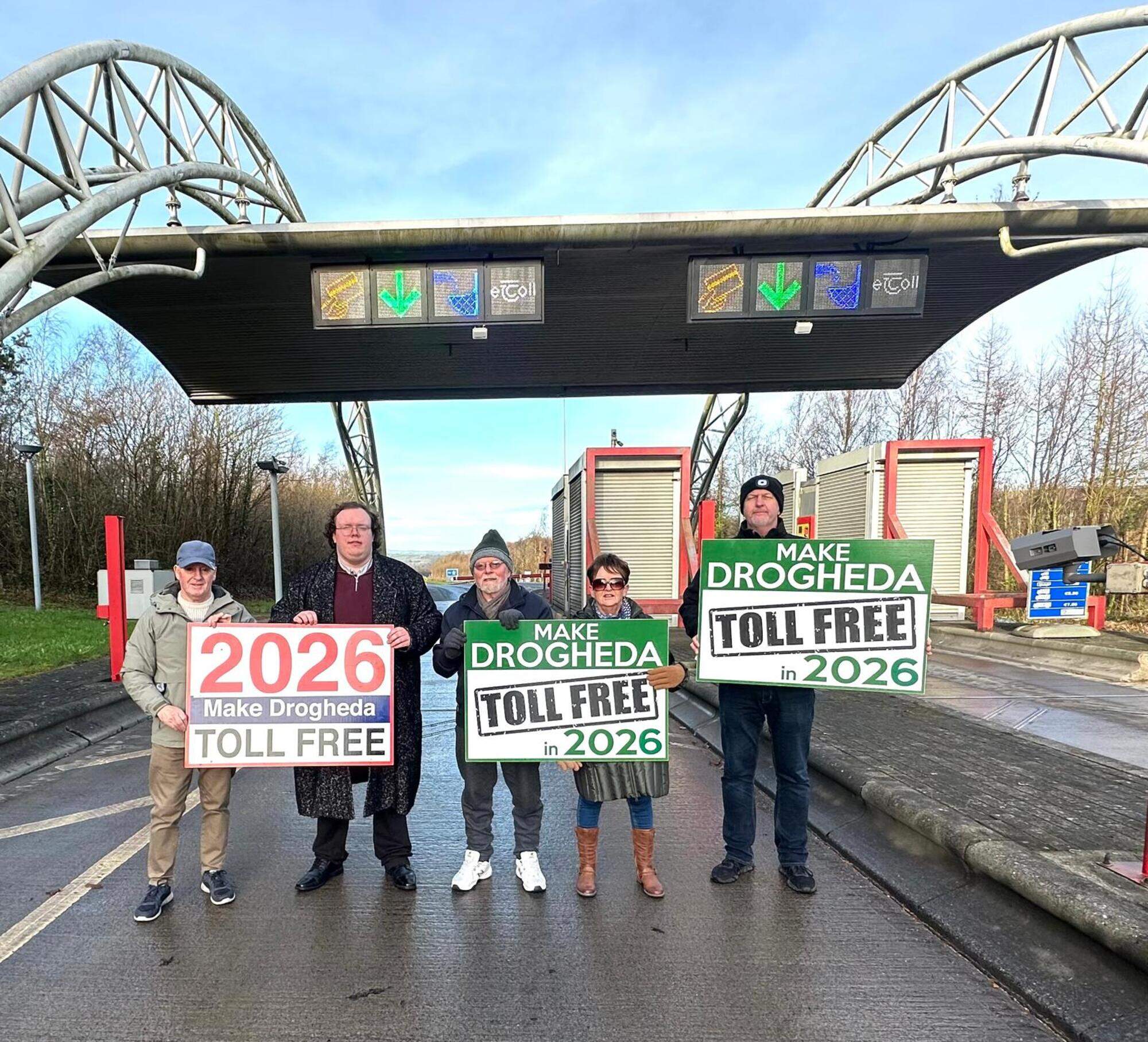
Calls are growing for a coordinated emergency traffic management plan for Drogheda after an M1 closure resulted in severe gridlock across the town last week.
The Make Drogheda Toll Free campaign has raised questions over what contingency arrangements currently exist for a major closure of the motorway.
Spokesperson Ken O’Heiligh said the campaign’s first concern was for those involved in the serious collision.
He also recognised the work of the emergency services and everyone involved in safely clearing the incident and reopening the motorway.
However, Mr O’Heiligh said what happened afterwards exposed a problem that Drogheda “cannot ignore”.
“The result was severe congestion on a local road network that is simply not capable of absorbing motorway volumes of traffic.”
He added: “Drogheda cannot keep absorbing this traffic.”
Mr O’Heiligh has now forwarded a formal request to North-Link and Transport Infrastructure Ireland seeking the current M1 Emergency Incident and Traffic Diversion Arrangements covering the Mary McAleese Boyne Valley Bridge and the motorway between Junctions 9 and 10.
He is seeking details of the designated diversion routes that are supposed to be used during a major incident.
The campaign also wants to know whether the capacity of those routes to absorb motorway volumes of traffic has actually been assessed.
“This is not about questioning the emergency response to the collision,” Mr O’Heiligh said.
“It raises a much bigger infrastructure question – does Drogheda have a realistic contingency plan for the consequences of a major closure of the M1?”
The campaign believes the incident last Tuesday also highlights the relationship between the motorway and Drogheda’s long-running traffic problems.
Mr O’Heiligh said the M1 cannot be considered in isolation when discussing how to tackle congestion in the town.
“Tuesday demonstrated something very clearly: the M1 is not separate from Drogheda’s traffic problem,” he said.
“It has to be part of the solution.”
The Make Drogheda Toll Free campaign has also used the latest disruption to renew its long-running call for the removal of the M1 ramp tolls.
The section of the M1 between Junctions 9 and 10 forms the Drogheda Bypass.
Campaigners argue that the ramp tolls create a financial barrier which discourages local motorists from using the bypass for shorter journeys.
They believe removing the tolls could encourage more local traffic onto the motorway and take vehicles off roads through Drogheda.
“The section of the M1 between Junctions 9 and 10 is the Drogheda Bypass,” Mr O’Heiligh said.
“Yet the Ramp Tolls create a financial barrier to local motorists making full use of that bypass in their everyday journeys.”
He said the campaign has consistently argued that the bypass should play a greater role in tackling everyday congestion.
“If we are serious about tackling congestion in Drogheda, we cannot continue treating the bypass as though it has nothing to do with the town’s local traffic network,” he said.
“The Drogheda Bypass should be helping to take traffic off Drogheda’s streets, not putting a price on doing so.”
Mr O’Heiligh said the disruption had brought the vulnerability of Drogheda’s road network into “very sharp focus”.
He said a wider discussion is now needed about how the motorway, Drogheda Bypass and local road network work together.
“We now need a serious conversation about how the M1, the Drogheda Bypass and our local road network work together,” he said.
“And that must include the future of the Ramp Tolls.”
Mayor of Drogheda Declan Power said the incident effectively turned Drogheda into the “relief route for one of Ireland’s busiest motorways”.
Mayor Power said the incident demonstrated just how vulnerable Drogheda’s road network becomes when there is a major closure of the motorway.
“Tuesday morning’s M1 collision caused severe disruption right across Drogheda, with the town effectively becoming the relief route for one of Ireland’s busiest motorways,” he said.
He believes there should be clear protocols setting out how the different agencies respond when motorway traffic is forced onto Drogheda’s local road network.