
This section is The content in this section is supplied by GlobeNewswire for the purposes of distributing press releases on behalf of its clients. Postmedia has not reviewed the content. by GlobeNewswire Article content
New system combines X-ray microscopy and microCT for seamless multi-scale imaging in one connected workflow
Sign In or Create an Account
or View more offersArticle content
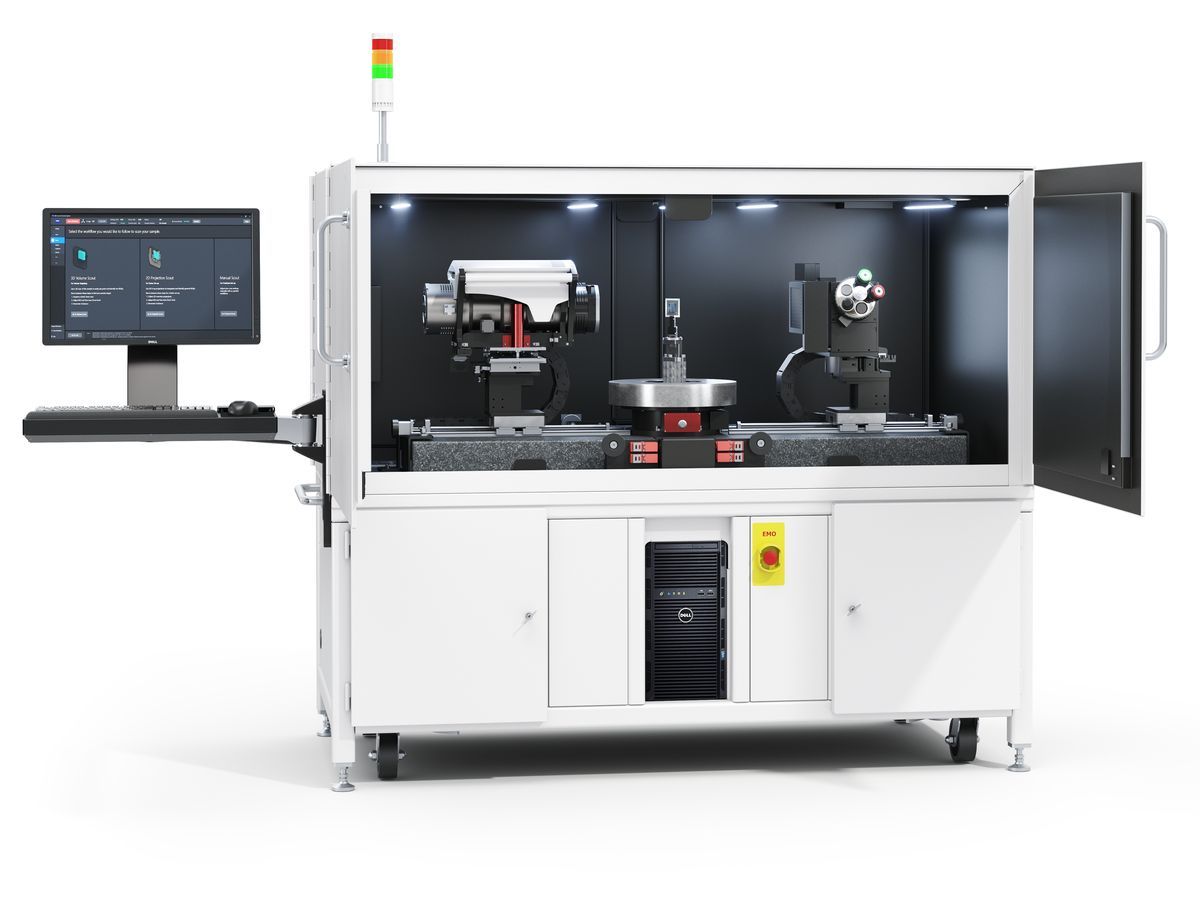
ZEISS today introduced ZEISS VersaXRM 5 Insight, a hybrid 3D X-ray microscope designed to help researchers and engineers understand samples faster. Combining X-ray microscopy and microCT in a single platform, the system delivers multi-scale imaging, guided workflows, and automated AI-enabled reconstruction for efficient non-destructive 3D imaging. Built for performance and engineered for value, ZEISS VersaXRM 5 Insight helps researchers and engineers in materials research, industrial inspection, and life sciences reduce tradeoffs between throughput, resolution, and usability.
Article contentWe apologize, but this video has failed to load.Try refreshing your browser, or
tap here to see other videos from our team.Article content
Story continues below
This advertisement has not loaded yet, but your article continues below.
Article content
Multi-scale imaging without workflow disruption
Article contentArticle content
Researchers, engineers, and life scientists often need to examine complex samples at different length scales to reveal internal features that affect performance, behavior, or failure, or to understand the structure and spatial organization of biological specimens. ZEISS VersaXRM 5 Insight addresses this need by combining large field-of-view and high-resolution imaging in one system. Users can inspect larger samples, zoom into regions of interest, and capture detailed 3D insights without changing hardware configurations or interrupting their workflow or experiment.
Article content
The system combines the throughput, flexibility, and efficiency of microCT with the detailed imaging and insights of lab-based X-ray microscopy. This hybrid capability enables a unified workflow for imaging both large-scale structures and fine internal features while preserving sample integrity.
Article content
High-resolution imaging which preserves sample integrity
Article content
ZEISS VersaXRM 5 Insight includes Resolution at a Distance (RaaD), which enables high-resolution imaging of small features and internal defects within larger samples. By reducing the need to cut, trim, or refixture samples, the system helps users across science and industry save time, reduce preparation errors, and protect delicate or difficult-to-reproduce specimens.
Article content
Story continues below
This advertisement has not loaded yet, but your article continues below.
Article content
This non-destructive imaging approach helps users identify regions of interest inside a sample before additional preparation or follow-up analysis. This enables more targeted investigations, reduces unnecessary sample processing, and improves confidence in inspection, research, and quality assurance applications.
Article content
Guided operation for faster, more reliable results
Article content
Productivity in 3D X-ray imaging depends on more than scan speed. ZEISS VersaXRM 5 Insight addresses setup time, operator variability, and workflow decisions with ZEN navx, an intuitive software environment with intelligent guidance and sample-aware navigation. This software simplifies setup, supports sample-specific imaging decisions, and protects both the sample and the system.
Article content
FAST Mode adds rapid imaging feedback for three-dimensional navigation, whole-part inspection, and intermediate-resolution scans. This helps users accelerate screening, positioning, and in-situ experiments while improving the overall time to results.
Article content
“For teams that need both day-to-day productivity and advanced 3D imaging capability, ZEISS VersaXRM 5 Insight offers a practical path forward,” said Dr. Keith Duncan, Research Scientist and Director of X-ray Imaging at the Danforth Plant Science Center, Missouri, USA, after beta-testing the system. “The improved detector architecture, which combines a flat-panel detector with Resolution at a Distance (RaaD), delivers impressive image quality. It helps users move from overview to detail quickly while keeping samples intact and workflows streamlined.”