
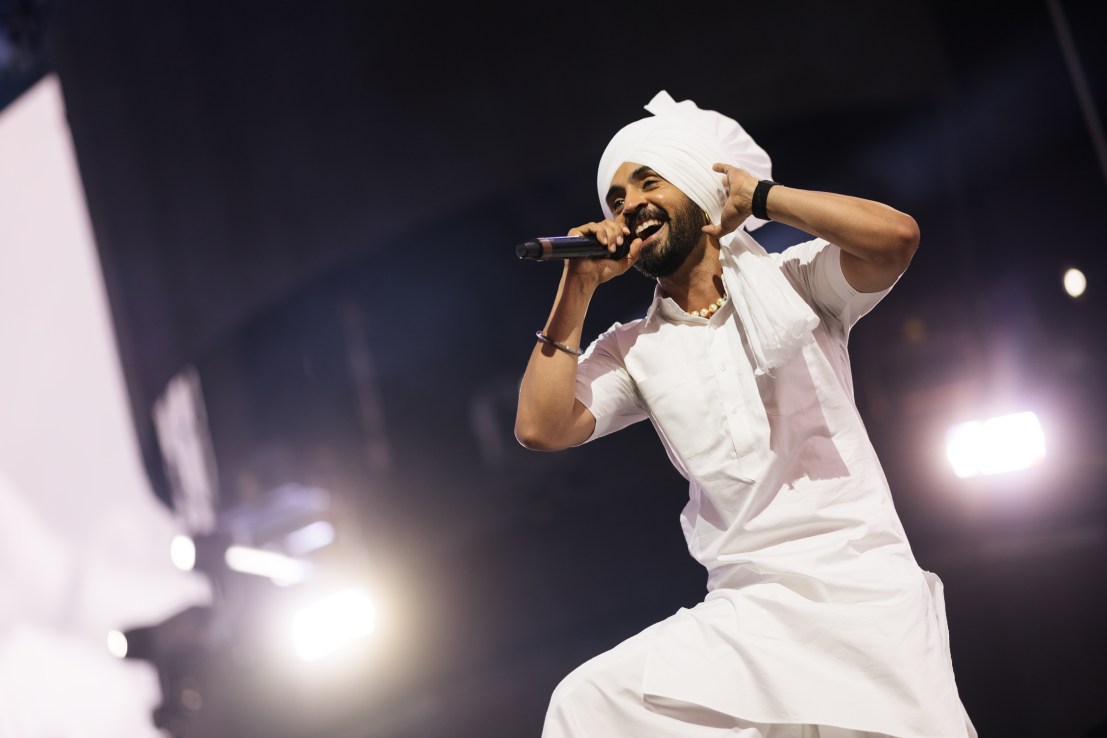
Diljit Dosanjh sell-out performance at Wenbley was not some niche cultural showcase, it was a superstar coming home – and a sign of how far Britain has come, says Lord Ranger
There are some places that hold memories. And then there are places that hold generations of them. For me, Wembley Stadium is one of those places.
I first went to Wembley in 1987. I was a young Spurs fan, who had badgered his father to take me to the FA Cup Final. Tottenham lost to Coventry but, if I am honest, the result is not what I remember most vividly. I remember the cages. We watched the game from behind metal fencing, surrounded by the atmosphere and, at times, the intimidating behaviour of 1980s football crowds. I remember looking at my father and sensing his fear. For a young Sikh boy growing up in Britain, with a turban-wearing father beside him, that memory became about more than football. It was about belonging. About being in a place where you were not always certain how you would be received. Wembley looked and felt very different then.
I went back in the 1990s but for a very different reason. First Madonna. Then Michael Jackson. These were global superstars at the absolute peak of their powers. Wembley was where the biggest names in the world came to perform and cemented their status in front of tens of thousands of people. I adored them.
Over the decades countless global stars have followed them onto that stage. But last night, standing in Wembley again, something felt different. This time the star on the stage looked rather more like me: Diljit Dosanjh, a fellow Sikh. A global Punjabi superstar in front of a huge Wembley crowd, he had arrived. When he shouted from the stage, 90,000 people screamed back, “YESSSSS!”
And I thought, wow! Not simply because a Punjabi singer had sold out Wembley. But because of what it represented. Let me tell you something about Diljit Dosanjh, he is no overnight success. His Wembley show sold out in 48 hours, but that speed obscures decades of work behind it. Years of singing, acting, performing and building an audience that crosses borders, generations and languages.
The Prince of Punjabi music
Let’s be honest, Diljit is the Prince of Punjabi music, and I mean ‘Prince’ in the sense of the late, extraordinary artist formerly known simply as Prince. He has the catalogue. He has the charisma. He can sing. He can dance. And, judging by last night, he can keep going all night with hit after hit. At one point, a voice behind me shouted: “I LOVE YOU DILJIT!” It was difficult to disagree. Within a few beats of every song, the crowd recognised, acclaimed and bhangra danced for their lives. There was something wonderfully unselfconscious about it. People were not watching a niche cultural performance, they were watching a superstar, and that matters.
It would be easy to describe what happened at Wembley as evidence of a “solid underbelly” of Punjabi culture in Britain. I think that rather misses the point. This is not an underbelly. It is not an underground movement. It is not a cultural footnote. It is front and centre. Punjabi culture is alive and kicking in Britain and globally. And what we saw at Wembley was not simply Punjabi Britain celebrating itself. It was modern Britain celebrating a cultural icon.
My generation grew up in a Britain where we sometimes had to explain who we were. Were we British? Punjabi? Indian? Sikh? The answer, increasingly, is simply, yes. We do not have to choose. That is why I took my wife and our two young sons to Wembley tonight. I wanted them to see it. Not just because their father grew up listening to Punjabi music, or because their family has roots in the Punjab, or because Diljit is an extraordinary performer. I wanted them to experience what it feels like to see someone who looks like them, speaks languages they hear around them and shares a heritage they are growing up with, commanding the national stadium. Not as a curiosity, or an exception, or because someone has kindly given him a place at the table but because he is the star of the show. And representation can change the expectations of the next generation.
When I was a boy at Wembley in 1987, I could not have imagined standing there nearly four decades later, with my own children, watching a turban-wearing Sikh bring the stadium to its feet. That is progress you can see and feel, and it is why I am optimistic about Britain. Modern Britain does not have to mean leaving our heritage behind. It can mean taking the best of it with us. You can love football and bhangra. You can cheer for Spurs and Diljit. You can grow up in Britain, have roots in the Punjab and wear a turban, without having to choose between identities. Britain is at its best when different cultures do not simply coexist, but collide, mix, evolve and create something new. That is what Wembley represented to me on Saturday night. This is the country I belong to, work for and cherish. In these times of division and, in some areas, growing sectarianism, let’s see and acknowledge how far we have come and how great a united Britain can be, both now and for our children.
Lord Ranger is a conservative peer