
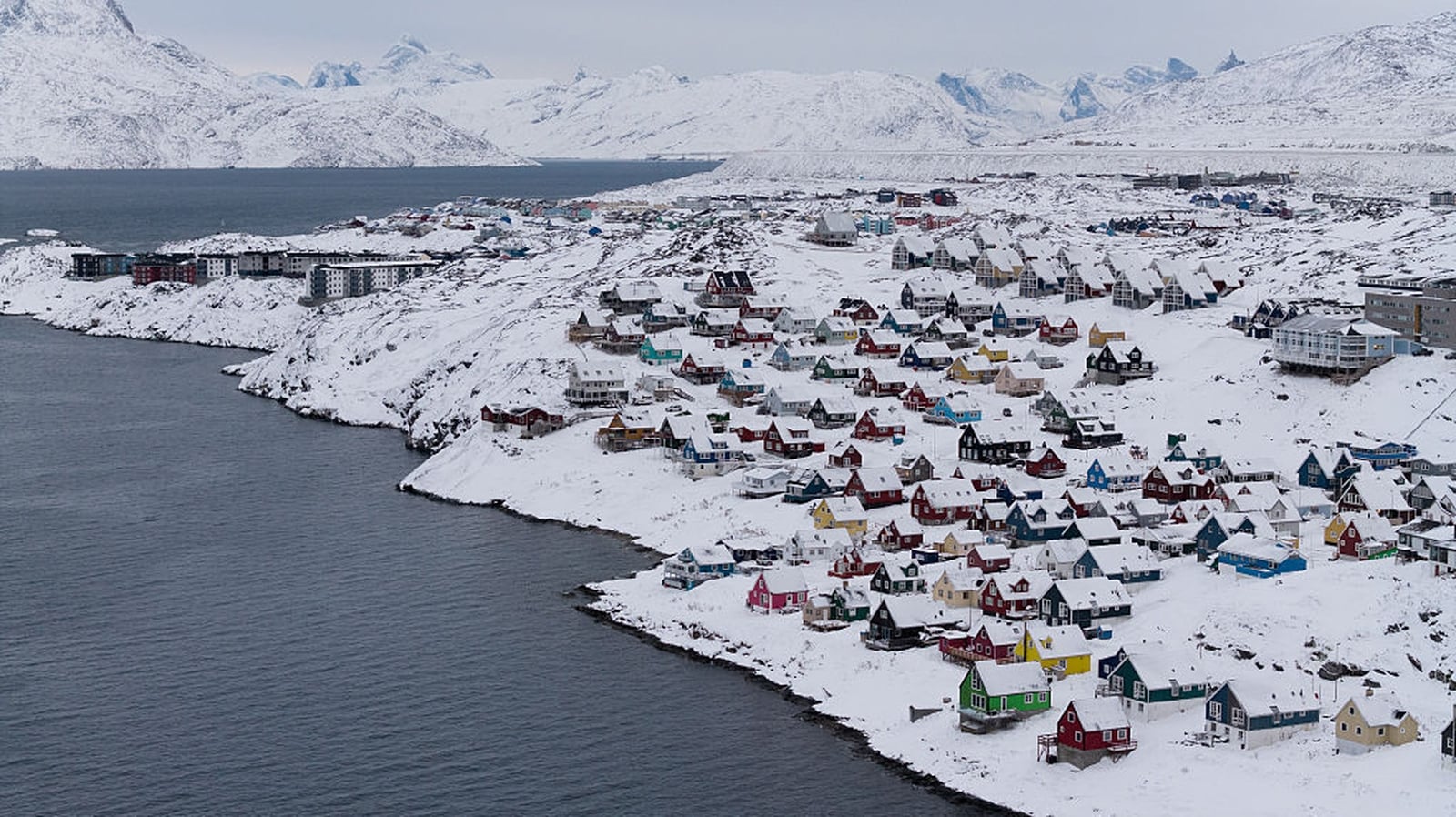
EU leaders are due to meet in Finland’s northern city of Rovaniemi today to discuss how to strengthen the bloc’s presence in the Arctic amid an international showdown over the strategic region.
US President Donald Trump’s repeated threats to bring Greenland – an autonomous Danish territory – under US control, has triggered a diplomatic crisis among allies.
Leaders including Germany’s Chancellor Friedrich Merz and Danish Prime Minister Mette Frederiksen are scheduled to attend the ‘European Arctic Summit’ in Rovaniemi, along with EU foreign policy chief Kaja Kallas and EU Council President Antonio Costa.
“The idea is essentially to strengthen the EU’s common strategic approach to the Arctic in this situation, where the geopolitical and economic significance of the region is growing considerably,” said Tuomas Tikkanen, Senior Adviser on European Affairs to Finnish Prime Minister Petteri Orpo – who initiated the summit.
The summit comes as the European Commission is expected to present a new Arctic strategy in a matter of weeks, which will steer the union’s approach to the Arctic over the coming years.
Countries and leaders can still have a say to impact the final document, “so in that sense this is quite a timely meeting,” Mr Tikkanen said.
Interest in the region has increased significantly since the EU’s last Arctic policy was adopted in 2021, reflected in the number of high-level guests from non-Arctic countries expected to attend.
“The security environment has changed a great deal, and there has been a lot of interest in the region recently,” Mr Tikkanen said.
While no formal decisions are expected, leaders are set to discuss topics ranging from economic interests to security and present a joint declaration today.
The Arctic region is warming nearly four times faster than the global average as a result of climate change, according to experts, leading to severe consequences for both the environment and local livelihoods.
As sea ice melts, countries such as Russia, China and the United States have been ramping up activity in the region, racing to claim natural resources and new maritime routes.
China and South Korea sent container ships in August aimed at transiting the Northern Sea Route in Russian territorial waters, testing its viability as the passage remains free of ice longer each year.
Mr Trump insisted earlier this year that Washington needed to control Greenland for national security reasons, though he ultimately ruled out annexing it by force.
Soon after, in an apparent move to assuage Mr Trump, NATO launched a new mission to bolster security in the Arctic.
During a visit to the vast island on 7 September, European Commission President Ursula von der Leyen announced a €200m package for Greenland, vowing to “be more present and to be more engaged in Greenland and in the Arctic”.