
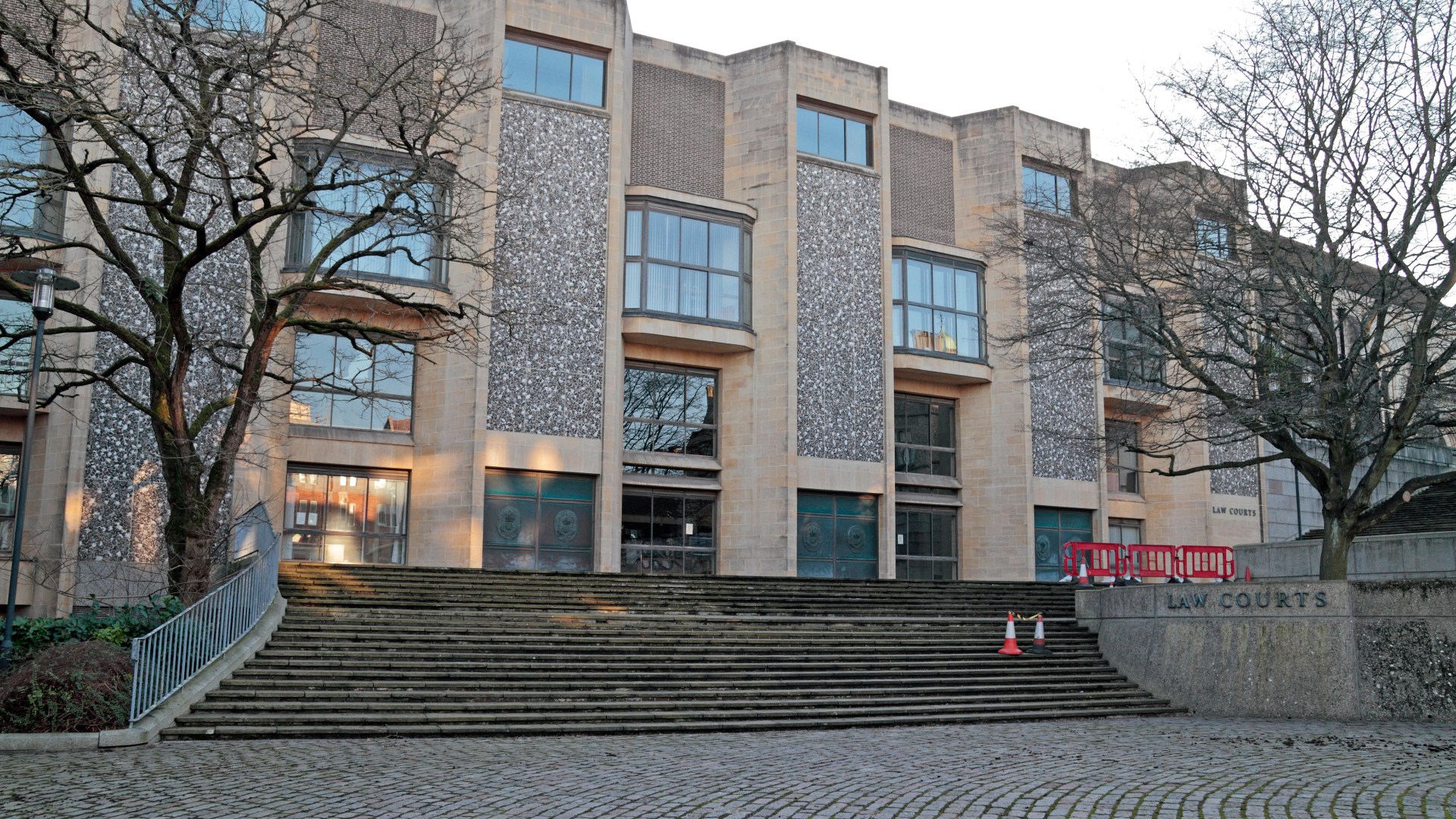
AN ALBANIAN drug dealer who illegally entered the UK 10 years ago under a fake name has been spared jail because his wife suffers depression and chronic pain.
Umi Morina was sentenced to two years and four months after admitting to supplying cocaine through a county lines gang and possession of a document in a false name.
His sentence was suspended for three years at Winchester crown court in line with new guidance introduced to stop prison overcrowding.
Judge James Bromige said that while “authorities refer to the need for deterrent sentences”, jailing Morina would cause harm to his partner.
Morina’s wife suffers from depression and fibromyalgia, a chronic pain and fatigue condition.
The judge accepted that Morina, 27, therefore cooks and cleans for his family and takes his wife to her medical appointments.
read more UK news
INDEPENDENCE DAY
‘Ground zero’ migrant village braces for unprecedented vote on LEAVING UK
ON PATROL
Council deploys security guards to patrol towns over ‘groups of male migrants’
The judge cited the guidelines from March this year which allow sentences to be suspended for three years, up from the previous two.
This was designed as a way to reduce the number of lower-level criminals being put behind bars.
Morina was advised to use a false name to enter the UK after being sent by his father “in the hope of finding a better life for himself”.
He was arrested in March after police raided his home in connection with a county lines drugs gang.
Most read in The Sun
DISHED OUT
All 15 new school dinner rules in England explained – including fish & chips BAN
‘DISGUSTING’
Schoolgirl, 17, missing for 263 days is found at home of shamed teacher
FREAK ACCIDENT
Boy, 11, killed after go-kart overturns into pond and traps him underwater
GHOST RIDERS
I went inside Britain’s ‘ghost plate’ epidemic – and bought a fake reg for £40
Cops recovered a black mobile phone showing Morina had been supplying cocaine for 18-months. They also found £670 in cash and a UK certificate of travel for a man called Valon Binaj.
Alongside the certificate was a letter to the Home Office from an immigration barrister in 2025, informing the department that his identity was false.
Morina had written to the department requesting to change his name, it is not known whether the Home Office allowed his request.
The court heard how Morina entered the country on March 12, 2016, as Binaj.
Bromige said: “It’s perhaps still unclear why you ever needed a false identity [when you arrived in the UK]. It may be because you were aged 16 and you wanted to be aged 15 at the time.”
Mahesh Karu, mitigating, said Morina “has tried to do the best he can” but was “forced into drug dealing” to pay off a loan.
He said: “He approached loan sharks, which is not uncommon in his community, but they said there would be a £10,000 minimum loan and interest of £5,000.
“Mr Morina thought he could pay it back and unfortunately that was his undoing and he was forced into drug dealing, which we are also used to seeing, to pay off his debt.
“He himself doesn’t use drugs. He has done his utmost to support his family.
“He hasn’t committed any offences until this time. He has obtained BTECs and GCSEs and various professional qualifications and has tried to do the best that he can.”
Mr Karu called for the judge to give a community order “to help with the progress he has already made.”
Morina pleaded guilty to supplying cocaine between September 2024 and March 2026 and being in possession of a document in a false name.
The typical sentence for supplying cocaine is three years and nine months, Morina’s was downgraded to two years and four months due to his previous good character and “strong work ethic”.
The judge told him “your strong work ethic is evident” and that he had lived a “law-abiding life” in the last decade.
Morina had become a drug dealer “through naivety” he added, but still acknowledged the “significant role” he had in the operation.
The sentences, served consecutively, were suspended and Morina was ordered to complete 175 hours of unpaid work and 25 rehabilitation days.
The Ministry of Justice said: “Sentencing decisions are made by independent judges, but our message is clear — prison will always remain the place for dangerous offenders.
RECOMMENDED STORIES
“We inherited prisons on the brink of collapse and are pulling every lever possible to fix this including building 14,000 new places. Where a custodial sentence is not imposed, offenders can face our toughest-ever range of controls including world-first restriction zones, the largest expansion of electronic tagging, and face being put behind bars if they break the rules.”
The Home Office said: “We will always check previous and new names against law enforcement records and will firmly refuse individuals who are committing fraud or evading detection.”