
AI data centre company Firmus lodges TASCAT appeal against council’s ‘unreasonable’ restricted generator use
Posted Tue 15 Sep 2026 at 5:54amTue 15 Sep 2026 at 5:54amTue 15 Sep 2026 at 5:54am
In short:
Firmus Technologies is appealing against a council condition that restricts the use of backup generators at its 288-megawatt AI data centre to be built at Bell Bay.
The company, which plans to have 276 diesel generators, has called the condition “unreasonable” in its restrictions.
What’s next:
Along with the outcome of the appeal, Firmus Technologies is awaiting a decision by the state’s electricity supplier on a request for 450 megawatts of energy for its three Tasmanian data centres.
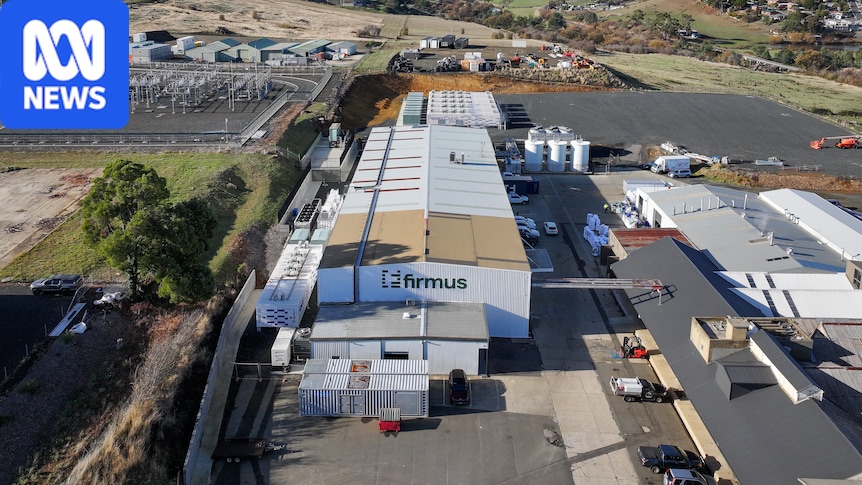
AI data centre company Firmus Technologies has submitted an appeal to the Tasmanian Civil and Administrative Tribunal (TASCAT) against conditions imposed on its recently approved data centre at Bell Bay in the state’s north.
In August, the George Town Council green-lit the 288-megawatt data centre to be built 15 kilometres south of the town.
Its approval has meant the company will become the state’s largest power user.
On September 10, Firmus sought to vary a strict condition relating to the use of its “backup” diesel generators.
The data centre has attracted staunch opposition from the community, with an online petition garnering more than 6,000 signatures, while dozens of community members protested outside the council chambers ahead of the vote.
Firmus is not the only party to have appealed, with community members opposed to the council’s decision to approve the centre also appealing.
Condition for limited generator use
Fifteen conditions were imposed on the data centre by the George Town Council, which came into effect when councillors voted 6–1 in favour of the build.
Condition 13 states that generators must run only during an unscheduled failure or interruption to the mains electricity supply; during a routine inspection, testing or maintenance; or in response to a genuine emergency.
The hours of routine inspection, testing and maintenance of the backup diesel generators must only occur “between 8am and 6pm, Monday to Friday”, and “exclude public holidays”.
The condition specifically states that:
“The backup diesel generators must not be operated to provide electricity during normal operations, or to augment the mains electricity supply.”
Simultaneous routine inspections and testing of more than one generator also cannot be undertaken for more than a total of 24 hours across any calendar year.
The condition also calls for strict usage times and the reporting of when generators are used.
Other requirements include an updated bushfire hazard and emergency management strategy, no vegetation clearing during eagle season, and air and noise quality assessments.
Before commencing building works, Firmus will need to submit a new bushfire and emergency management plan, after the company reported the number of diesel generators it would have on site as 128 instead of 276.
‘Unreasonable’ operating conditions
In its appeal, seen by the ABC, Firmus has called the George Town Council condition “unreasonable” as it restricts the use of approved generators, stating:
“Condition 13 is unreasonable because it restricts the operation of the approved backup diesel generators in a manner that fails to adequately recognise both the operational requirements of the facility, including the need to maintain operational efficiency and a secure and reliable electricity supply, and the benefits of their limited use during periods of electricity supply curtailment, network constraints or energy market stress,” the application states.
And that:
“Accordingly, it is sought that Condition 13 be amended to allow the operation of the backup diesel generators for limited augmentation of the mains electricity supply to offset curtailment, manage energy security and maintain operational reliability during periods of energy market stress.”
In response to ABC questioning on how often the company anticipated the generators would be used, Firmus said in a statement that it “won’t be commenting at this time”.
Residents oppose light, noise pollution
Rowella resident Nicholla Thompson moved to the rural locality about six years ago, keen for a quiet life surrounded by nature.
She said Firmus’ appeal showed the company planned to use the generators more than it had disclosed.
“Everything went Firmus’ way, bar one thing, and that was their diesel generators. That’s what they’re appealing for, so that they can pretty much run them all the time,”
Ms Thompson said.
Rowella is a riverside community in the East Tamar local government area and sits across the river from the data centre site.
Along with five other Rowella residents, including Anne-Marie Bastian, Ms Thompson has filed an appeal to TASCAT on the data centre’s approval.
Their concerns centre on light and noise pollution; the effect on the quality of life; and the impact on the local tourism industry, as there are several wedding venues nearby.
“We don’t want generators running all the time,”
Ms Thompson said.
“We have award-winning vineyards sitting over there.
“We don’t want diesel dust over the top of everything. I moved here for health reasons. I don’t want to be breathing bad air again.”
Last month, Ms Thompson was one of the protesters outside the council chambers.
She said she was “flabbergasted” to see Firmus’ appeal when she filed hers.
“We’re only a few small local farms trying to defend ourselves and this big company who has all the resources in the world going up against us,”
she said.
“We need to slow things down and really have a good look before we just start slapping [data centres] up anywhere.”
Ms Thompson said that to date, three other appeals were listed on the TASCAT website in addition to hers and the Firmus one.
Appeals are only visible to the interested parties.
The appeal comes as state electricity supplier Hydro Tasmania has said it expects to decide whether to approve Firmus’ request for 450 megawatts (MW) of power across its three facilities — equivalent to up to 30 per cent of the state’s current energy use — by the end of the year.
Along with Firmus’ recently approved data centre in the Bell Bay Advanced Manufacturing Zone, its 104-megawatt facility outside Launceston is under construction, and a development application has been submitted for a 52-megawatt centre in Wesley Vale, east of Devonport.