
Article content
Canada is in talks to back an EU loan for Ukraine, as Prime Minister Mark Carney seeks closer transatlantic ties to reduce his country’s dependence on the U.S.The two sides hope to agree on how much Canada will contribute to a Brussels-led €90 billion loan to Ukraine before an EU summit in Montreal at the end of October, according to people briefed on the matter.The prime minister was seeking to build an alliance of Liberal powers committed to the multilateral order thrown into chaos by Donald Trump, and hoped to show commitment to European allies by contributing to the Ukraine Support Loan, the people said. The U.K. is the only other non-EU country to have participated in the loan.
“We are grateful for all the support that Canada is providing to Ukraine and we are ready to do more together,” one European official said.
Carney heads to Europe this week where he will meet European Commission president Ursula von der Leyen for her State of the Union speech in Strasbourg on Wednesday. He is then expected to fly to Liverpool to meet new U.K. Prime Minister Andy Burnham.
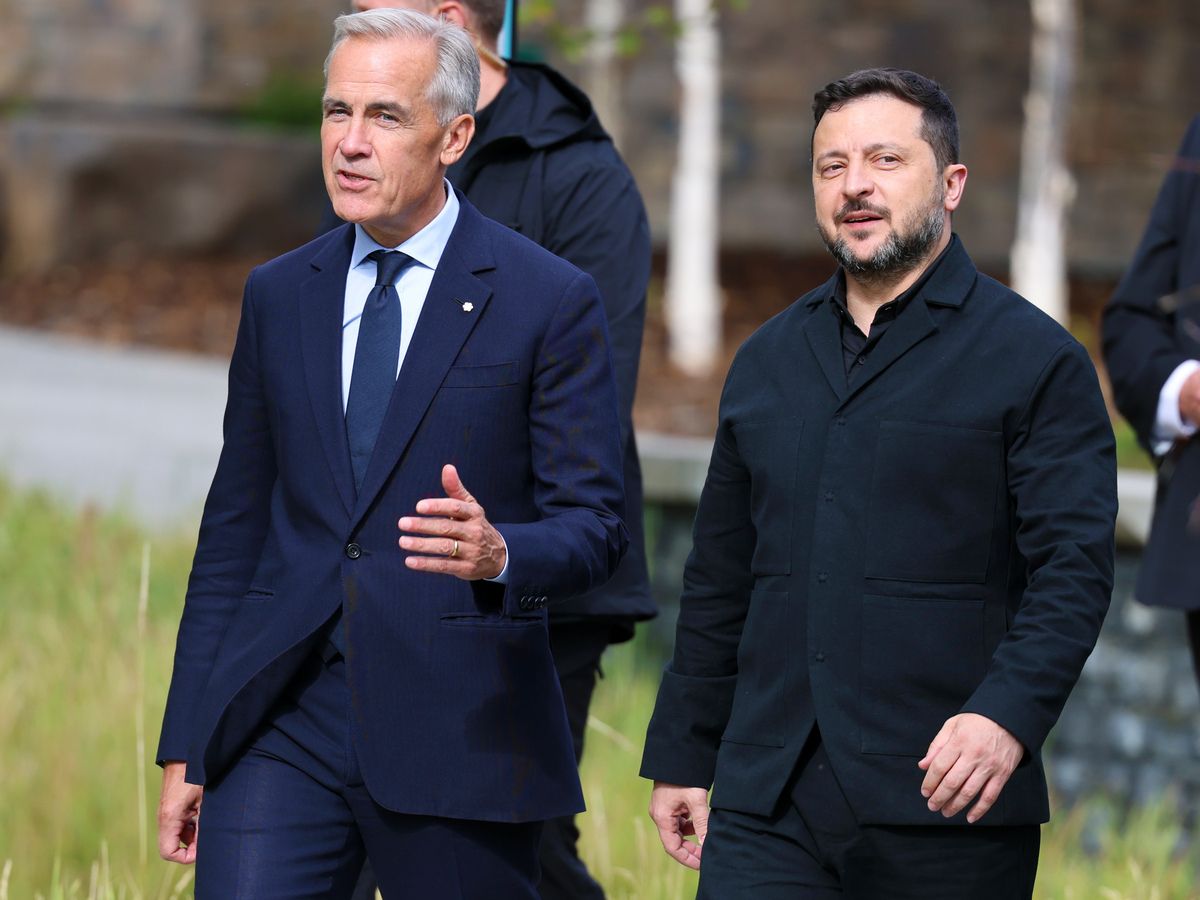
Canada has already allocated $6.5 billion in military assistance to Ukraine, and last Thursday Carney and Ukrainian president Volodymyr Zelenskyy in Canada signed a “100-year partnership” between the two countries. Kyiv faces a budget hole next year given the escalating cost of its war with Russia.
Canada is hoping to negotiate other deals with the EU as it seeks help in its trade war with the U.S. Ottawa is also set to join an EU supercomputer network to work together on AI and sign a digital trade agreement with Brussels.
Since taking office last year, Carney has aimed to diversify Canada’s global relations in an attempt to unite the world’s “middle powers” as an alternative to the U.S.-centric world order, which he argued at Davos was undergoing a “rupture, not a transition.”
These tensions boiled over last month when Ottawa’s trade talks collapsed with Washington. Carney said: “You’re at war when you’re attacked, and we got attacked.”
Behind the scenes, Carney has also pitched the EU an ambitious “association membership” model, but officials in Brussels have distanced themselves from the branding given their closer ties with countries such as Norway, Turkey and the U.K.
The two sides have agreed to work on six areas including trade, security and regulations, critical raw materials, energy and clean technologies, visa liberalisation and financial systems.
“It’s my strong personal view that the international order will be rebuilt, but it will be rebuilt out of Europe,” Carney said at a summit in May.
Mark Camilleri, president of the Brussels-based Canada EU Trade and Investment Association, said that, while relations were deepening, Ottawa and Brussels were not expected to make a deeper overarching agreement any time soon.
But Camilleri said a picture was developing of what it “actually means to be a ‘trusted partner’ in the context of economic security.”
“If Canada and the EU can get this right, it is a model that can be adapted to other like-minded countries such as the U.K., Norway, Japan and Australia,” he said.
However, EU officials said they could not offer Ottawa an equivalent relationship to countries such as Norway and Switzerland that pay into its budget for market access.
“We need to be realistic and pragmatic and manage Canada’s expectations,” said a second EU official.
Another said: “The EU wants the closest possible relationship with Canada and that is what we are working towards.”
Some 10 of the EU’s 27 member states have still not ratified a trade agreement with Canada that went into provisional effect in September 2017 because of concerns about its agricultural exports damaging European farmers.
Sign In or Create an Account
or View more offersArticle content
Story continues below
This advertisement has not loaded yet, but your article continues below.
Article contentWe apologize, but this video has failed to load.Try refreshing your browser, or
tap here to see other videos from our team.We apologize, but this video has failed to load.Try refreshing your browser, or
tap here to see other videos from our team.Article contentArticle content
The US remains Canada’s largest trading partner, historically receiving about 75 per cent of its goods in an annual relationship worth some €620bn. Trade with Europe is significantly smaller, at roughly €130 billion in 2025.
The people noted that Canada’s standards were closer to those of the US than the EU, and would remain so because of its dependence on that market. They wanted Canada to reduce tariffs on EU steel and aluminium exports and soften its “Buy Canadian” policies before next month’s summit in Montreal.
Article content
© 2026 The Financial Times Ltd
Article contentThis advertisement has not loaded yet.