
Andy Burnham will be the last Prime Minister of the United Kingdom, Scottish First Minister John Swinney has predicted.
The SNP leader said a Scottish independence referendum should happen within the next five years.
The devolved leaders are seeking to pressure Andy Burnham into agreeing to hold independence referendums.
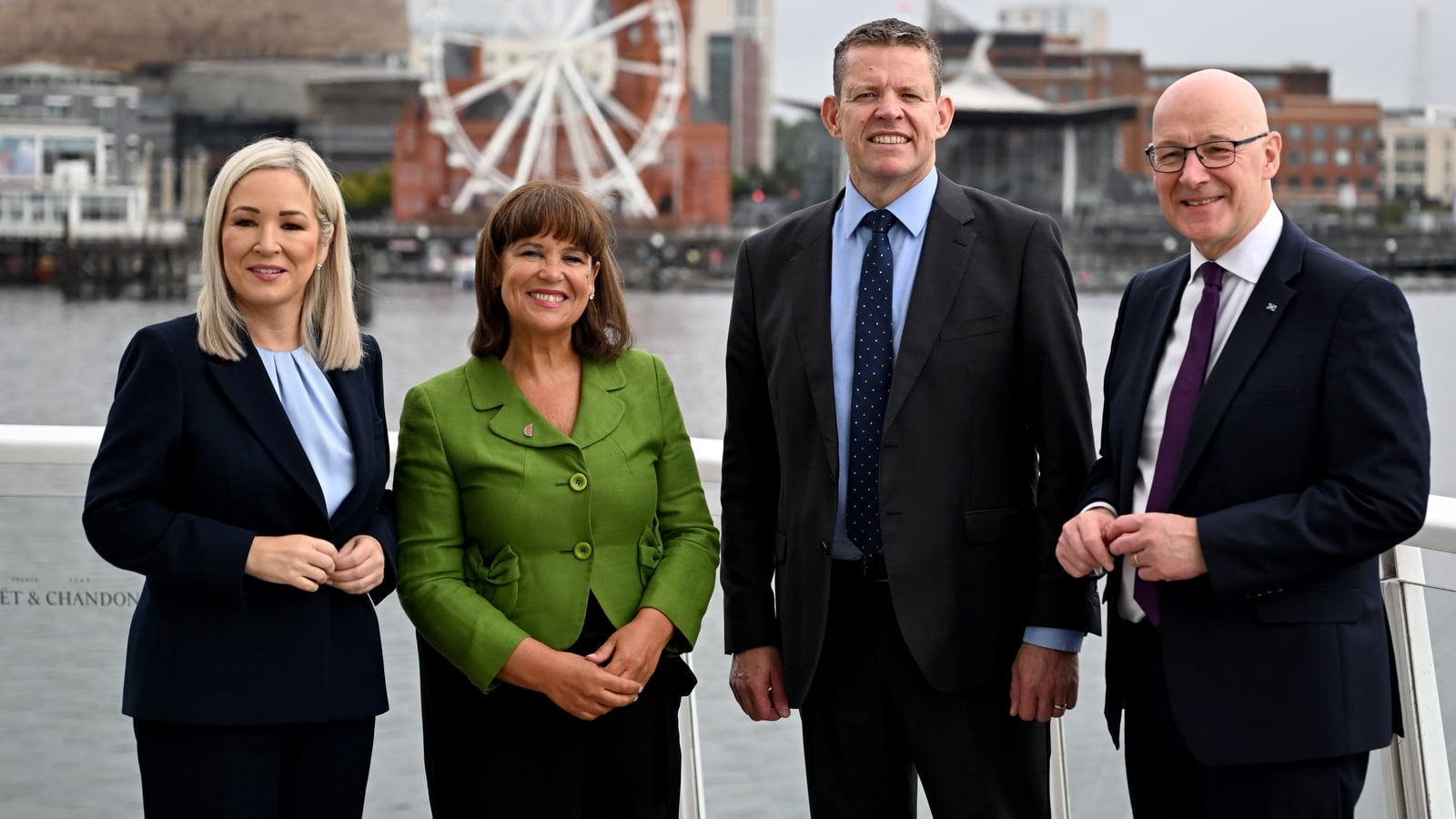
Mr Swinney, along with Sinn Féin vice president Michelle O’Neill and Plaid Cymru leader Rhun ap Iorwerth, signed the memorandum of understanding during a meeting in Cardiff in Wales this morning.
Along with Sinn Féin president Mary Lou McDonald, the leaders said each has “the right to self-determination” and called for the UK government to “prepare for, plan and facilitate constitutional change in each jurisdiction”.
During a press conference in Cardiff, the leader of the SNP said he believed Scots, who rejected independence in 2014 by 55%-45%, would now vote to leave the union.
Mr Swinney said the “logic” of Andy Burnham’s belief in devolution “leads you to the logic of recognising the right of the people of Scotland, in my case, to decide their own future”.
He said: “If there is to be consistency in his thinking, the point that he made to the House of Commons on Wednesday is, for me, the absolutely crucial point, which is why I think he will be the last prime minister of the United Kingdom, because the people of Scotland, if given the choice of independence in a referendum, will take that choice, because all of the information that we see in front of us about the trends in opinion polling indicate that’s the preference of the people of Scotland.”
Mr Burnham told the Commons last week that a vote on Scottish independence could be held if there was a “clear consensus” north of the border for it, but a letter sent to Mr Swinney later said a referendum remained “off limits”.
The First Minister said he was “crystal clear” that there should be a referendum during the current Holyrood term, which ends in 2031.
“There is a very clear recognition there can be a mechanism to allow that to happen,” he said of Mr Burnham’s comments.
“There is a particular mechanism in the Good Friday Agreement. I believe that we should have an orderly approach to enabling us to decide on our future.”
The SNP leader said the Prime Minister should keep his word, adding: “When you say things to the House of Commons when you’re the prime minister, you should stick to them. That’s vital. That’s the whole purpose of parliamentary accountability.”
Earlier, Scotland’s Deputy First Minister said the trigger point for another Scottish independence referendum had already been met.
Jenny Gilruth also said she did not believe Mr Burnham was an “ardent unionist”, following his previous comments about the union.
She told BBC’s Radio Scotland Breakfast programme: “Fundamentally, the trigger mechanism should be to respect the right of the Scottish people and we only need to look at the last election result to say that we’ve met that requirement.”
The Conservative Party described the “separatist summit” in Cardiff as a “blatant distraction to the real issues facing Scotland”.
Shadow Scottish secretary Harriet Cross said: “Andy Burnham’s naive and incorrect comments at PMQs last week have been jumped on by nationalist leaders across the UK and given them fresh ammunition to plot the break-up of the United Kingdom.
“John Swinney happily sitting shoulder to shoulder with the leader of Sinn Féin shows just how far he is prepared to go in pursuit of his lifelong dream of independence. It is a sight that will anger many Scots who remember the Troubles.
“Labour have shown they are too weak to stand up to the SNP’s demands. The union will only be truly safe when Kemi Badenoch is in Number 10 and the Conservative and Unionist Party are back in power,” Ms Cross said.
A UK government spokesperson said: “The Prime Minister is committed to delivering change across all four nations of the United Kingdom and believes strongly in the union.
“The United Kingdom is at its best when people come together around our shared values and problem-solving rather than division.
“The government is focused on addressing the issues that matter most to families, including easing pressures on household finances and delivering greater economic security, rather than engaging in constitutional debates or further referendums.
“The Prime Minister’s approach to working with the First and Deputy First Ministers in Scotland, Wales and Northern Ireland is based on partnership and collaboration, focused on delivering growth and good jobs for people across all parts of our country.”